Sannah and The Pilgrim, and Pia and The Skyman, by Sue Parritt

Sue Parritt’s Sannah and The Pilgrim is the first title in her climate fiction trilogy. It is followed by Pia and the Skyman and The Skylines Alliance. I found Sue Parritt’s vision what a future world might turn out when wrecked by climate change to be scarily plausible.

The story: Australia and Aotearoa (New Zealand) are ravaged by droughts. In Australia in particular. The coastal plains have been inundated by rising sea levels. The ‘Whites,  although impoverished by today’s standards, hang on to power through apartheid. They force the ‘Browns’, mostly refugee populations from the drowned Pacific Islands, to labour on the little arable land that remains.

We see this future from the point of view of a resistance movement, the ‘Women’s Line’, as they endure dangers to help the serfs held in the underground prisons to escape to what we hope will be a better life for them in Aotearoa. This is an Underground Railroad of the future.

Sannah, “The Storyteller”, belongs to the Women’s Line. When a light skinned stranger calling himself Kaire arrives at her dome she must consider whether he is a spy. The twin mysteries of Kaire’s origins and Sannah’s purpose in “storytelling” drive along the narrative in the first novel. Kaire’s background when revealed gives us another viewpoint of the conditions on the planet.

We have escapes by desert and by sea, rescues, betrayals, brutalities and passions. Yet Parritt’s low key writing makes this stark way of life seem almost normalised, which makes it all the more disturbing; and the wreckage of not just the planet but of humanity springs out at us.

In Pia and the Skyman the story picks up from the bases in Aotearoa.

Parritt writes on her website –

“I want readers to grasp what is happening not only in contemporary Australia, but throughout the world with regard to refugees and the ongoing environmental degradation that poses increasing problems for humanity… By writing fiction that I believe could easily become fact, I hope to inspire more ‘ordinary’ people to take a stand and work for a more equitable and sustainable world.”

Sannah and the Pilgrim was Commended in the FAW Christina Stead Award, 2015. Pia and the Skyman was commended for the Christina Stead Fiction Award 2016 in the National Literary Awards of The Fellowship of Australian Writers. You can learn more about Sue Parritt and these books at her blog.

Where to find the trilogy: All the books are published by Odyssey Books and available through Waterstones, Indigo and Amazon. The third book, The Skylines Alliance, is also now available.

Another Cli-Fit series I loved and is the Chronicles of the Pale by Clare Rhoden. You can see my review here.

You are at Baffled Bear Books, the blog of Mark, guardian and blundering typist for Mawson Bear, Ponderer of Baffling Things and one of this bright world’s few published bears. Mawson is writer bear of It’s A Bright World To Feel Lost In.

Songlines, The Sentinels of Eden Book 1, by Carolyn Denman

I got four angry strides away before Harry changed the course of my life with six easy words. “Can you hear the river crying?” Lainie, Ch. 8

From Back Cover Description: ‘In the heart of the Wimmera region of Victoria, an ancient gateway to Eden is kept hidden and safe by a creature so powerful that even the moon would obey her commands – at least it would if she had any idea that she wasn’t just a normal girl about to finish high school.

‘Your mother’s grave is a lie.’ Harry to Lainie.

Synopsis:  Lainie’s days are filled with study, repairing fences,  ‘pulling stubborn lambs out of angry ewes’, and contemplating a future beyond this one-grain-silo town.

When the two important adults in her life, Aunt Lily and Harry, try to tell her that the mother she never knew is actually alive in some ‘Eden’, she reacts with anger. Though not clued up on the Book of Genesis, Lainie is sure the original Garden was not in the Great Southern Land (Australia). Besides, her mother lies buried. Harry, though, disappears. This is the catalyst for Lainie to seek out her roots.

This unusual adventure, aimed at Young Adults, is so thoughtful it deserves a wide readership. It mixes a coming-of-age tale and romance with ancient memories, religious motifs and mythologies.

The slow burn narrative begins in a nowheresville ‘where the creeks are named after dead animals’. Carolyn Denman  builds the details of school life, farm work and hikes through the fire-prone bush until the fantastical elements seem to arise quite plausibly from this backdrop .

I see it as an engrossing story of protecting the one Eden we all have now, our Earth. Lainie and her friends, Bane, Noah and Tessa, represent our only hope –  young people. Earth’s enemies are symbolised by the mining giant Kolsom. But there is more going on than the struggle between these Sentinels of a special place and Kolsom’s devious agents. Something seems to be going badly wrong with the nature of Eden itself.

Don’t be fooled by the early steady pace; the acceleration toward the utterly unforeseeable events took me by surprise. You are bound to want to know what on earth – and Eden – is going to happen next. Fortunately, the sequels are now available too.

I smiled at him, winked, then stepped across the boundary into Paradise.

Note on song lines: To Indigenous Australians, a songline, or dreaming track, is one of the paths across the land or sky which mark the route followed by creator-beings. These made the earth and everything in it. This early time is called the Dreamtime or the Dreaming. Carolyn Denman  says in the foreword, ‘My desire is that this tale reflects the co-existance and interconnectedness of belief systems.’

A word on the dialogue: Some of the lively terms sprinkling the novel might be new and fun to readers beyond Australia: you will hear of colours, for instance, ‘as bright as a tradies wardrobe’, and of dorks, drongos, fairy bread, even a mention of the legendary drop bears*.

Songlines: The Sentinels of Eden is now a complete series. You can read more about them at Carolyn Denman’s website.

Where to find them: through Bookshop Org and Amazon.

*What’s a drop bear? Not telling.


Courtship Dance of the Terns: Birds on Lady Elliot Island

Fellow Baffled Ones and Gentlebears, We hope you are enjoying our tales of Lady Elliot Island. BeeBear went along on behalf of all of Mawson’s friends because she was small in the luggage (Mawson’s own generous proportions were WAY too big) and because she is an experienced aviator. She was thrilled to fly out there across the sea. She came home to tell all of Mawson’s household about the island, the corals she saw in the lagoon, and the great day that she saw turtles at dawn.

A map and brochure of Lady Elliot Island on the Great Barrier Reef

There are thousands of birds on Lady Elliot Island too, and BeeBear did her best to explain how numerous and noisy they all were.

COURTSHIP DANCE: And now fellow BaffledOnes and Gentlebears, as promised, we are proud to present to you, direct from the dance troupes of Lady Elliot Island, the amazing, the wonderful, courtship dance of the terns.

Courtship dance of terns on Lady Elliot Island

‘Oh, will you do the courtship dance, will you do the courtship dance,
Will you do the courtship dance, with handsome, hopeful me?’

‘I might I guess, I really might, I’m making up my mind.
Then again, I like your looks, so let’s lose no more time,’

Courtship dance of terns on Lady Elliot Island

‘Stick your tail feather up,
Drop your right wing down,
Stand on a leg and pirouette round. .’.

Courtship dance of terns on Lady Elliot Island

‘Its just a waddle to the left –
no, to your left, your other left –
And let’s do the wing dip now!

Yes, let’s dip the wing dip now!

Courtship dance of terns on Lady Elliot Island


.. And a chest boop, And a chest boop,
‘And let’s choose a tree, my dear’.

 Couple in tree ready to nest

And soon you see couples perched in the trees and making renovations for the nest.

In the nests, on the ground, even right next to the walkways and the buildings, there are parent birds minding fluffy chicks.

Fluffy chick and parent  bird by the path on Lady Elliot Island

‘Will you just stay where I put you, junior.’
‘Don’t want to. It’s boring. I’m bored. Where’s Dad and the food?’

Chick screaming to be fed
Feed me, feed me, feed me NOW.

And many chicks are in nests on their own, waiting for their parents, insisting they are famished, that they are fading away, that they need FOOD NOW. Right NOW.

This very new fluffy little fella was right under the veranda of our cabin! Shy though, understandably, and only peeked out briefly when his parent returned.

If you love birds you will absolutely enjoy visiting Lady Elliot Island on the Great Barrier Reef, Queensland, Australia – if any of us can ever travel anyway again. (As a travel tip, we suggest not looking at a rerun of Hitchcocks movie The Birds before you go to the island).

And that’s all we have for you from Lady Elliot Island.

Mark is guardian and blundering typist for Mawson, one of this bright world’s few published bears.

Munro’s Mountain Poems (part 1)

Munro and his bold team of Mountain climbing bears have known our Mawson Bear for a long time. Why not take a look at Munro’s web den for epic climbs and grand adventures. just click on the link above.

Birds, Birds, Birds at Lady Elliot Island on the Barrier Reef

Bee Bear has been telling her friends about Lady Elliot Island, her journey there, her explorations of the island, the corals she saw in the lagoon, and whether she saw turtles. But her bird friends at home especially want to know if she saw tropical birds.

She certainly did! Lady Elliot Island is paradise for twitchers (bird spotters.) On this coral quay which is so small that the air-strip cuts right across it (see picture above) there are thousands of birds. They come for the nesting season and peak around November.

It’s high density living here. Birds that usually nest on the ground get squeezed out by the earliest arrivals of the season and so take to the trees instead. They are all over every branch of every tree.

The birds in the picture above were in the trees three metres from our veranda. You can simply sit on your cabin veranda with a camera and take pictures of domestic life among the birds.

Birds that prefer trees have to find themselves a place on the ground. It’s all about high demand for premium real estate.

Everyone is making a racket.
‘Mummy, where are you, I’m hungry!’,
‘Harold, you’ve been ages. It’s your turn to mind your kid’,
‘Steady on, Mabel, I only just got back’,
‘You stayed out at sea deliberately, didn’t you, leaving me stuck here with this squawker’,
‘I did not, Mabel, you’ve no idea how far I had to go for fish ‘,
‘ Hah! A likely story’,
‘Its true. I blame those line trawlers. They’re killing everything.,
‘Oi, You, get off my branch’,
‘Your branch? Hah! It so is not.’
‘It is, it is. Me and Narelle got it first. So get lost’.
‘ You did not, you great big liars, we got it first,’
‘You pinched it!’
‘ You get over here, mate, and try saying that, go on, go on.’
‘ Mummeee, Daddeeeeee! Where’s my fooooood!’

Screeches, calls, warnings, quarrels. On, and on, all night it goes. The resort even provides ear plugs so that guests can sleep at night.

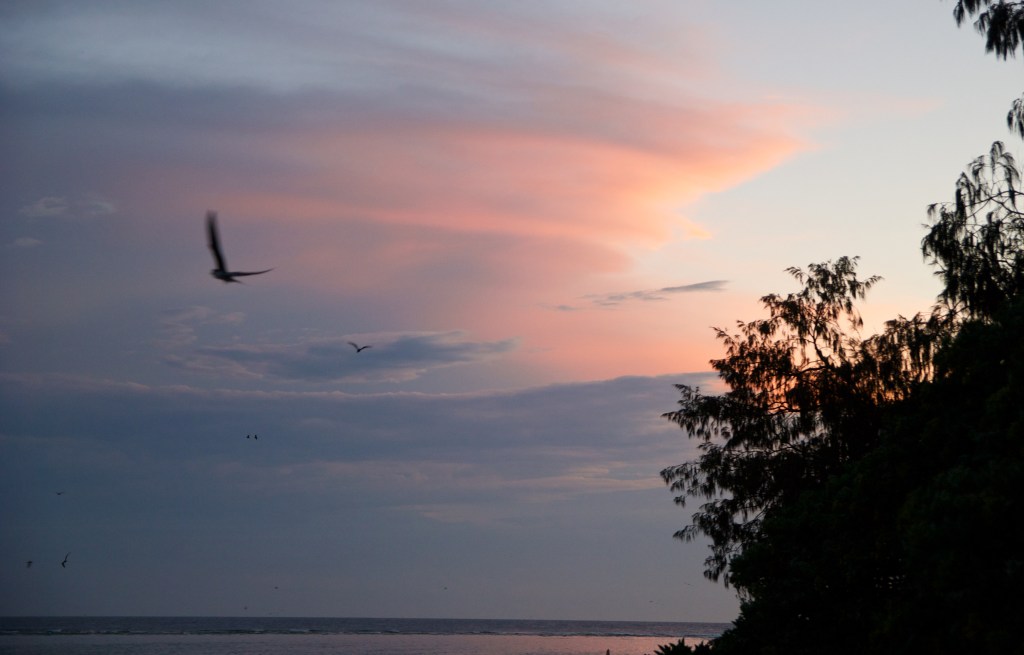
Birds soar everywhere. Outgoing- traffic of the parents leaving chicks to find food in the ocean crosses through incoming traffic of food-laden parents in what looks like an air-traffic controller’s worst nightmare.

The birds are all protected from humans these days, of course, and completely at ease with people. They perch all over the cabin verandas and some venture hopefully toward the diners in the restaurant. They even raise their young right next to the walkways and buildings, including the most unusual bird you see below.

This is the rare Red-tailed Tropic Bird. It’s one of the world’s oldest and most elusive birds. Read more about them here and here. We had the most wonderful good fortune to see a young one and only hundred metres from our cabin.

Just look at this Red-tailed Tropicbird chick hunkered into its ground-nest waiting for its ocean going parents. It was enormous. It was bigger than a full grown chicken. . ‘Food”, it cried, ‘Gimmee foooooood!’ Of course, we didn’t- no feeding of the birds on Lady Elliot Island. But we did wonder how the parents could ever bring back enough food to satisfy this big lad. Both of them were out at sea trying to do just that.

In the next post, fellow Baffled Ones and Gentlebears, we bring you even more birds and more chicks.

You are at Baffled Bear Books, brought to you by Mark, guardian and blundering typist for Mawson Bear, Ponderer of Baffling Things and one of this bright world’s few published bears. Mawson is writer bear of It’s A Bright World To Feel Lost In and of She Ran Away From Love.

Turtle Dawn on Lady Elliot Island on The Great Barrier Reef

Welcome back to Lady Elliot Island, a coral quay on The Great Barrier Reef, Queensland, Australia. We flew here with BeeBear (read all about it here) and walked around exploring (read it here.)

ComingIn1
Lady Elliot Island at the southern end of Great Barrier Reef

Almost every tree you see on the island in the photo above has been planted in the past 30 years during the patient restoration process. The island was stripped for the guano in the years before that. But it is a conservation success story now, and safe again for the turtles to nest on.

Those buildings in the photo below are some cabins of the Eco Resort. See how close they are to the beach. We stayed in one of those. They are not fancy because this is a low-impact eco resort.

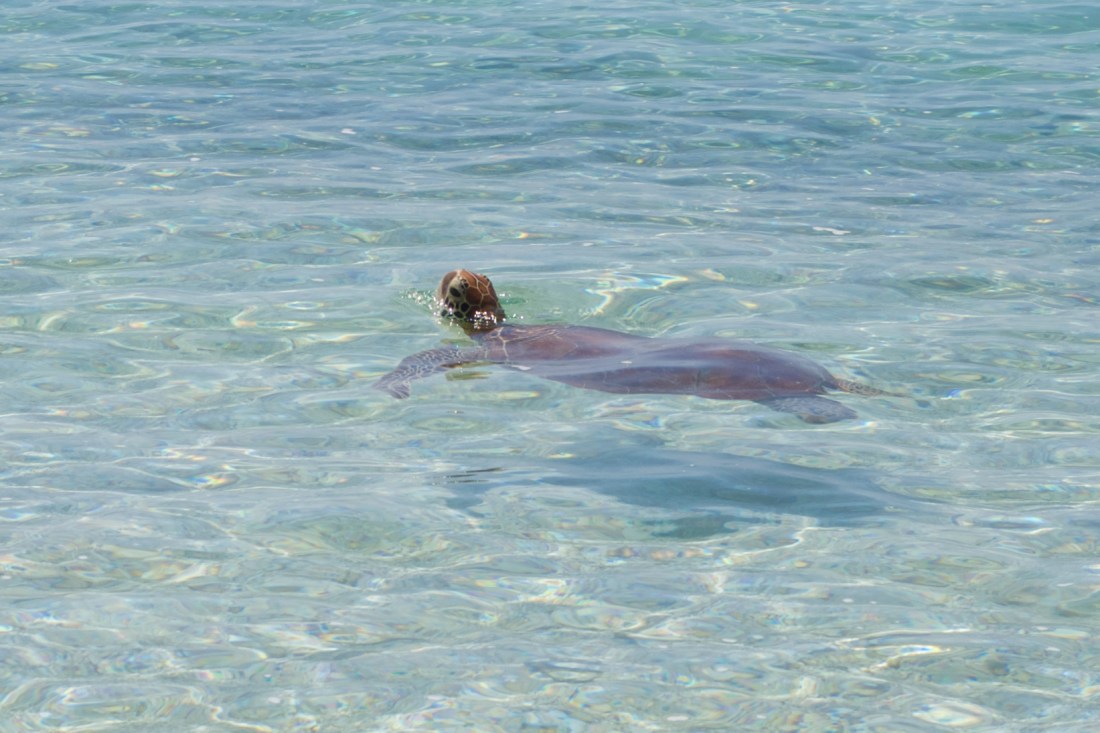
During our stay in November, turtles were heaving themselves ashore after years at sea. On our first night we sat by the seats you see above watching the turtle who made these very tracks. Ironically, she dug right next to the sign about turtles.

Laboriously she dug, then moved, then dug, and moved again, not satisfied with the particular holes. On and on she dug. We were exhausted, and we were only watching. We went to bed and left her still digging. In the morning we saw that she had not been happy with any of the holes. No eggs laid.

We rose before dawn and set off stumbling along the crumbly edges of the island peering for obstacles. We did not take torches because the lights can disturb the turtles. We were part way around the island at the point where the runway comes almost down to the water when we saw tracks. Our turtle seemed to have lumbered ashore, gone into the bushes, worked her way through them and circled back around towards the sea. It must have been a very long trek for her, and all of it over ground deemed unsuitable for laying in.

There was a mound by the runway edge that might be a successful nest. (We would report it to the staff who monitor all the possible turtle nests). But where was she? Oh no, Look there! Our heroine is that rounded shell in the middle of the photo being watched over by a heron. She had taken so long at her mission that the tide had gone out. She was stuck within the reef.

We watched over her for a while as the sun came up. Sometimes she circled hopefully. Most of the time she rested. She had worked all night to clamber up the shore, to dig, to lay, and to get back down to the water – she must have been exhausted.


We moved away to leave our “Dawn Turtle” in peace. On returning from our walk, we were delighted to see her checking possible exits through the rocks and coral. As the tide came in the water lapped higher and she got a bit further out. And then with a splash and a surge she made it over the big outer reef.

There she goes, one turtle taking on the vast Pacific Ocean. We were so happy to see her making her way out, but worried too. The scourge of plastic is out there, just waiting to uselessly fill her stomach. And the long nets of the predatory trawlers show no mercy. But if .. she can still find real food and if .. she somehow escapes entanglement, she will be return one day to Lady Elliot Island. Let’s hope so.

Swim, turtle, swim.

Lady Elliot Island on the Great Barrier Reef: the Lagoon

Welcome back to Lady Elliot Island, a coral quay on The Great Barrier Reef, Queensland, Australia. The Barrier Reef, as everyone knows, is the mighty reef down which Nemo’s dad swam to find his little son. We flew here from Perth with BeeBear and walked around exploring ( read about it here.).
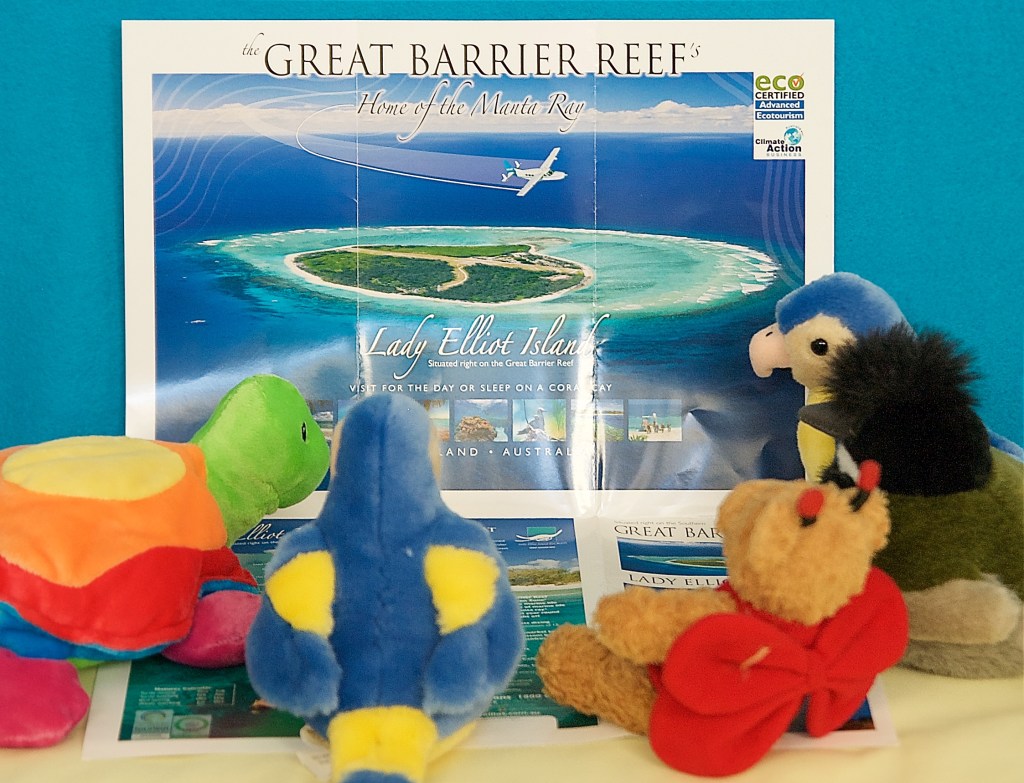
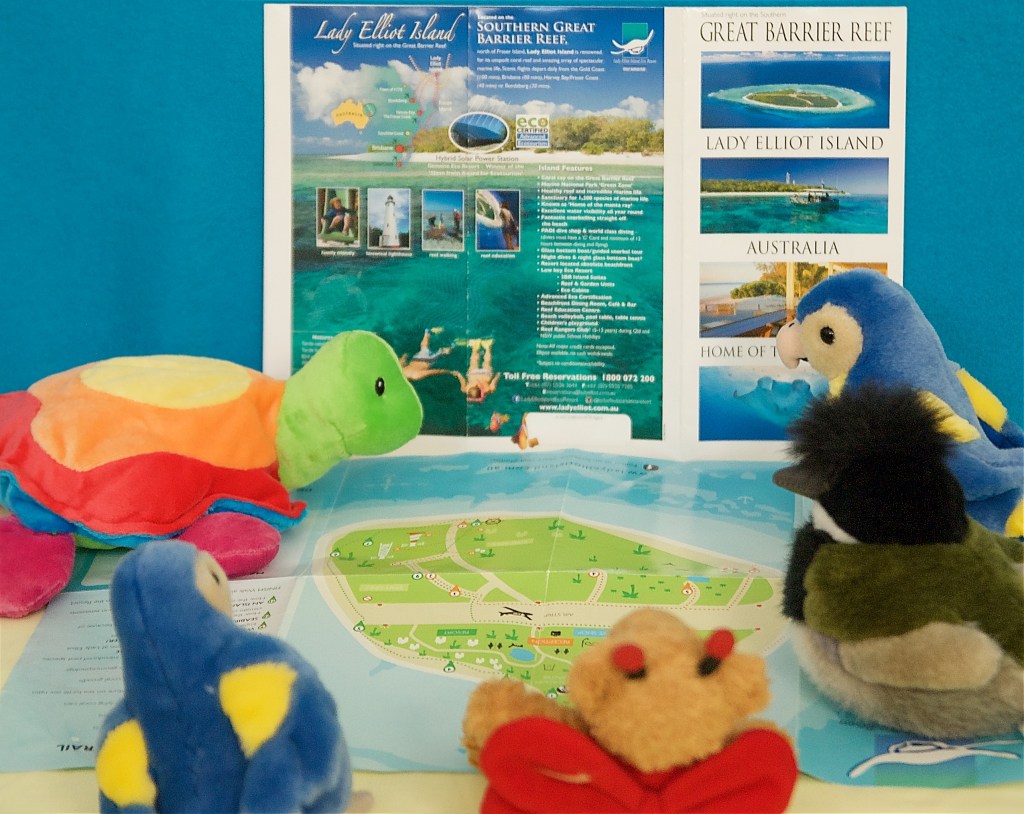
BeeBear and the birds and turtles look at a map of Lady Elliot Island

But what do you really want to see at a coral lagoon? The lagoon of course! The glass bottomed boats leave from the beach at the end of the runway that runs through the middle of the island (see aerial viewing pic below)
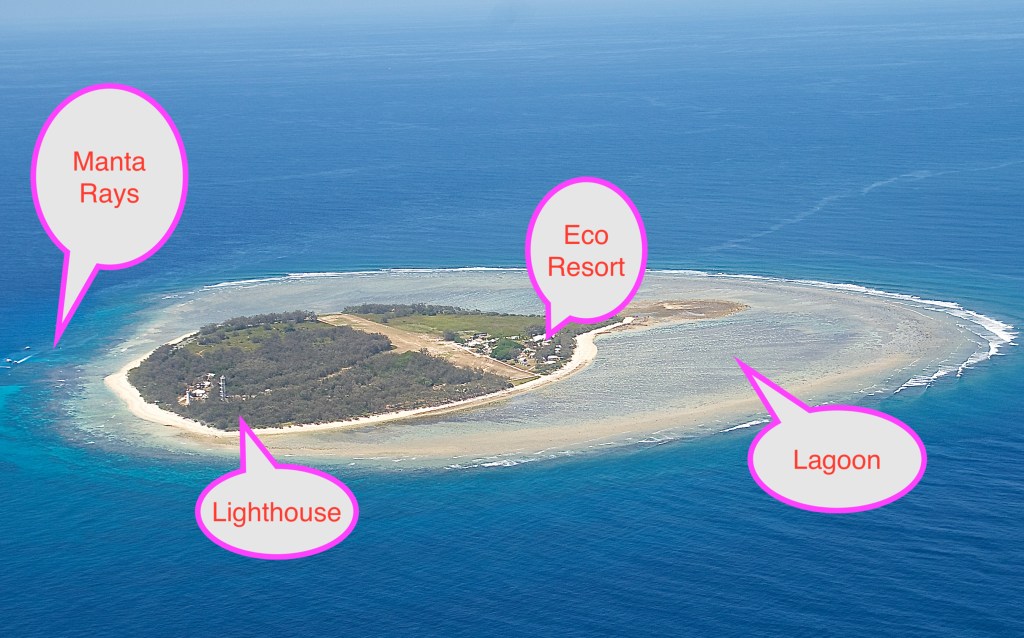
Lady Elliot Island. The runway stretches from one side to the other

Almost all the trees you see here have been planted in the past 30 years during the patient restoration process – it had been stripped down for the guano in the years before that.
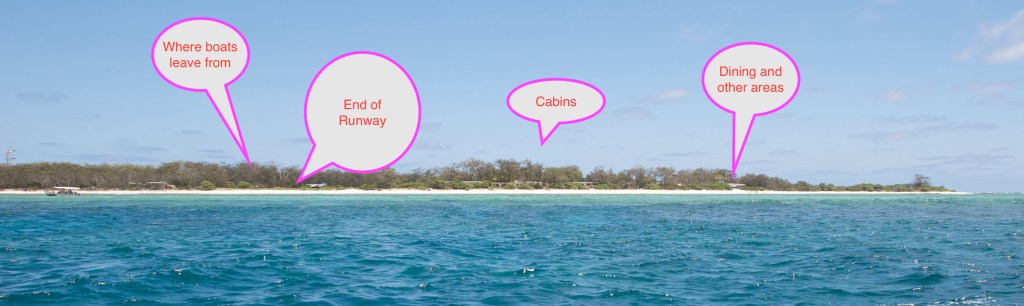
Glass bottom boat on lagoon of Lady Elliot Island

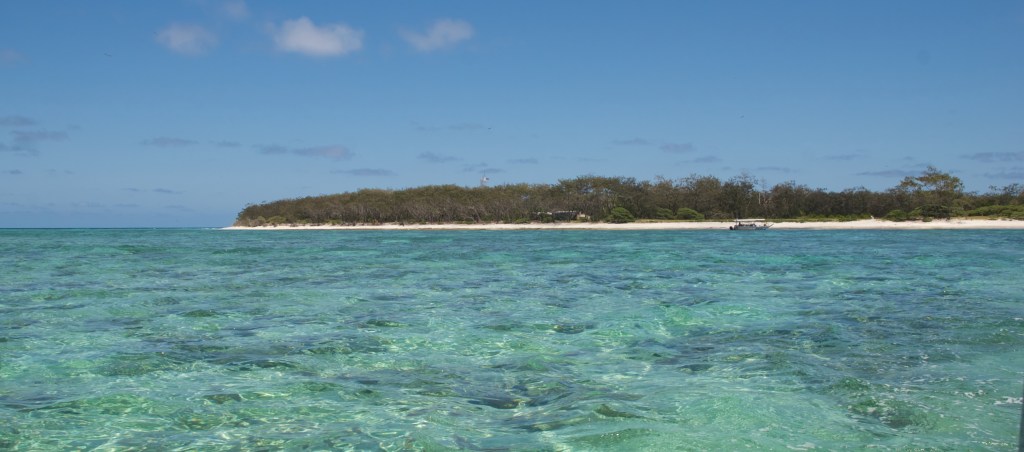
Those buildings on the far left of the photo below are some cabins of the Eco Resort. See how close they are to the sea. We stayed in one of those. They are not fancy because this is a low-impact eco resort. Our glass bottomed boat took us further out to just above the main reef where the water gets more blue and you can see the whole island from here.
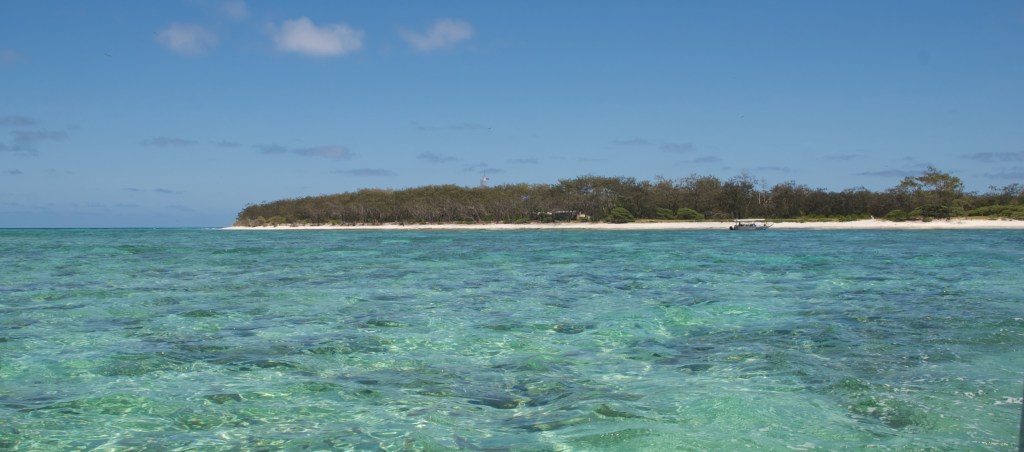
View of the beaches of Lady Elliot Island

 Out and out we went. In the deeper water above the reef we tourists went snorkling with the boat crew keeping on eye on us so we felt quite safe. The staff on Lady Elliot Island must have the best job in Australia, in the world.
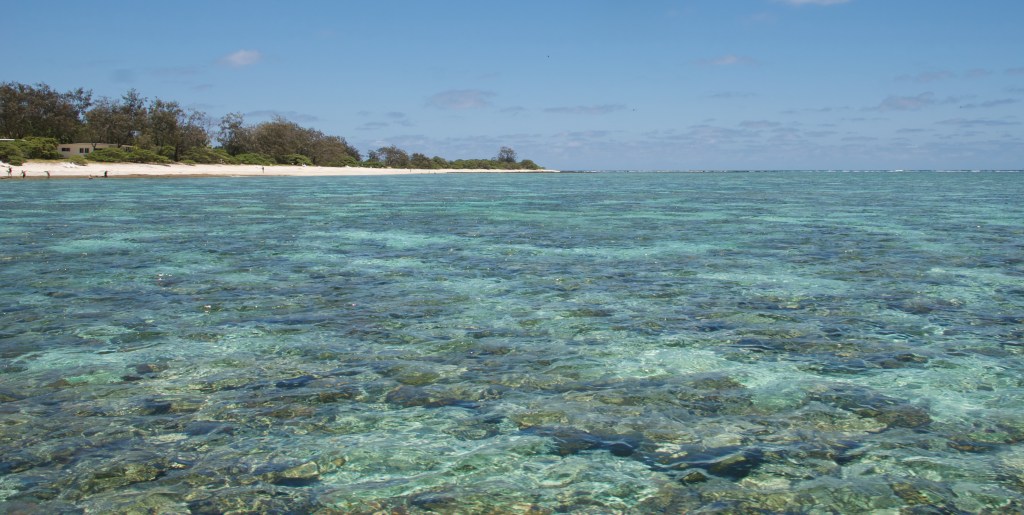
Looking back over the water to Lady Elliot Island

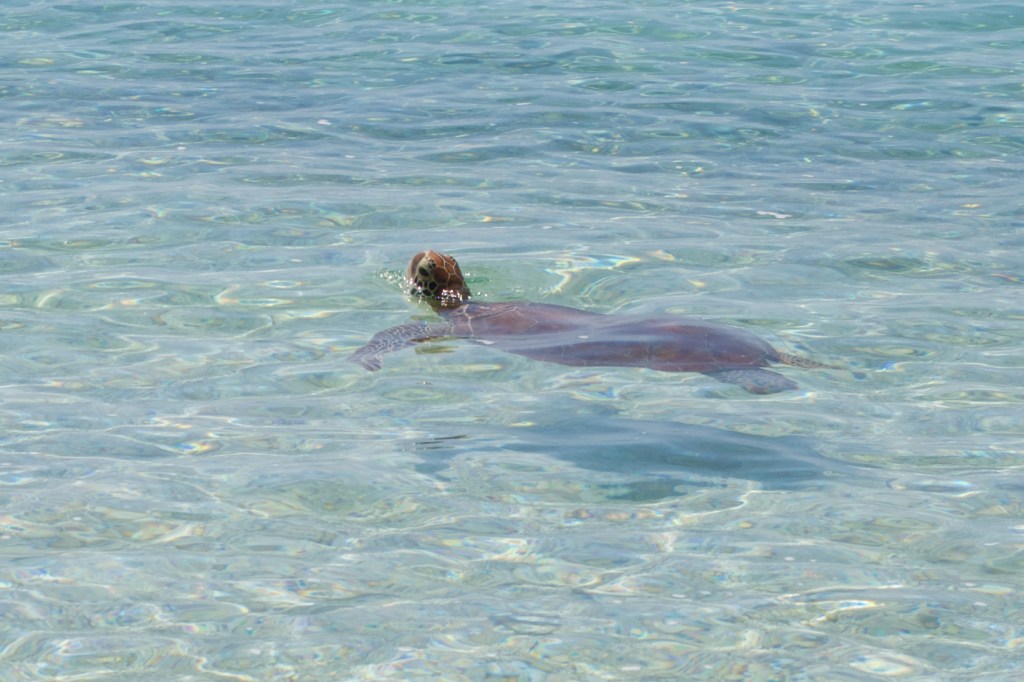
From the boat we saw all kinds of fish and a huge groper and even, briefly, a manta ray.  A large green turtle came up from under a coral shelf right in front of me. It was one of those moments that stay in your mind forever.  I have no pictures – didn’t have that kind of camera. Besides while you are down there, you just want to experience the moments fully, right there, as you are.

Just visible are the buildings of the eco resort

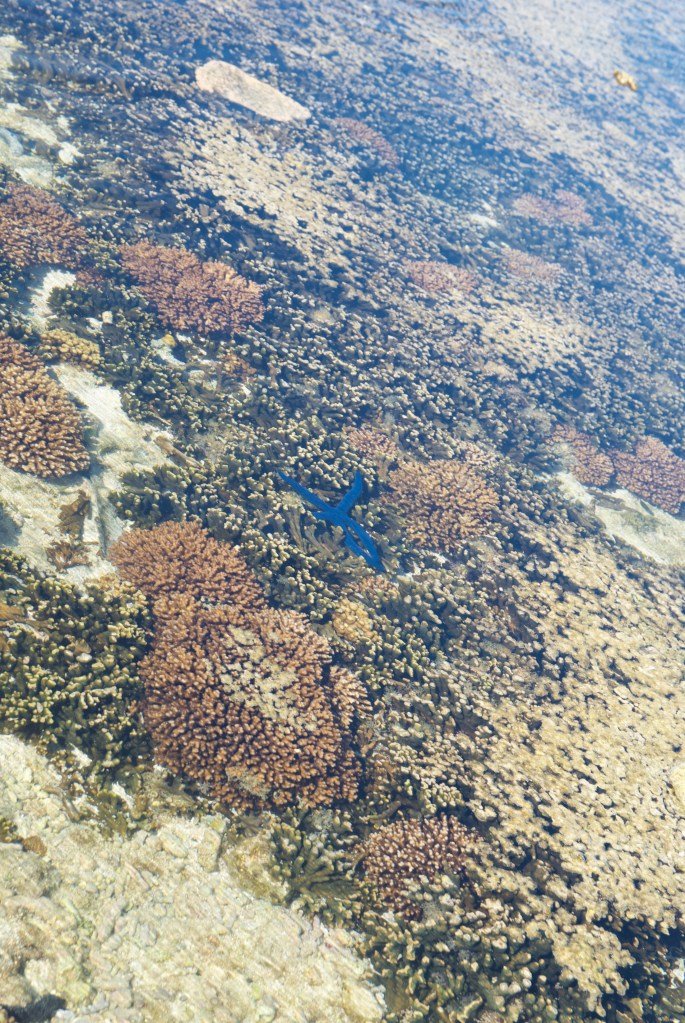
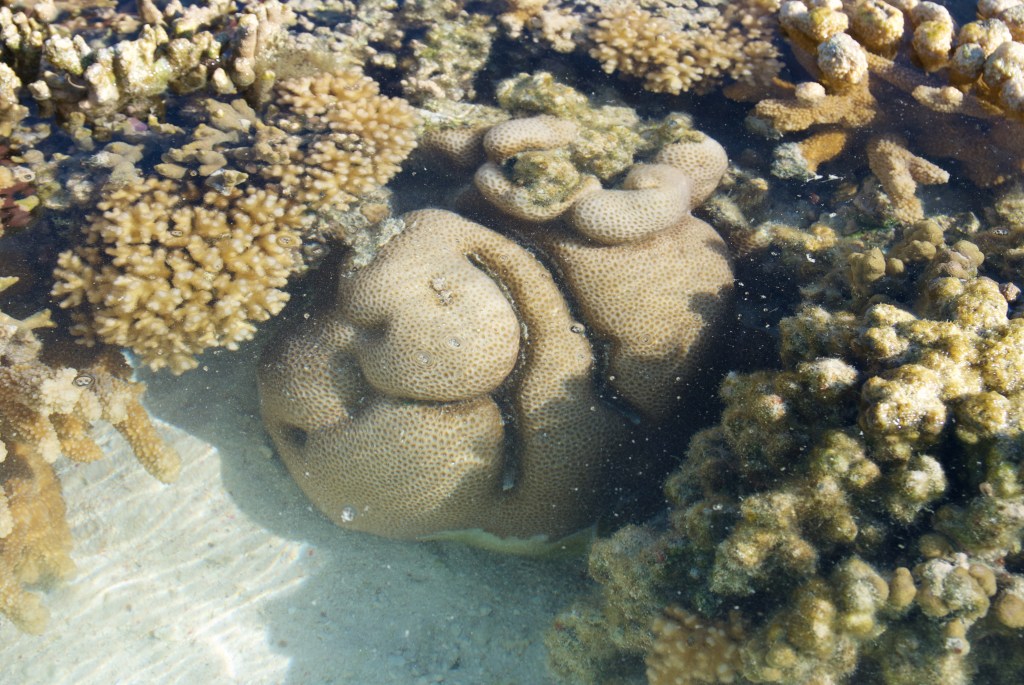
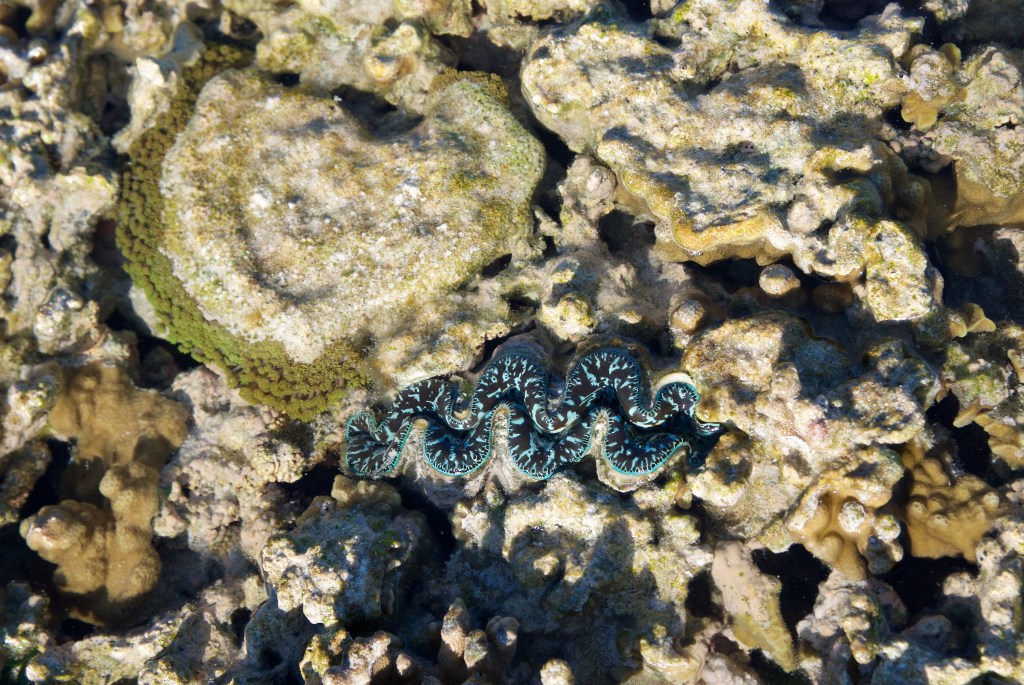
And what of the coral? The coral is not easy to see in the deeper water especially as the swell builds, and from the boat itself this is about all you can make out (below). The startling blues of the starfish are clearly visible though. We saw lots of coral at low tide and I will show you that later.
Don’t worry, I won’t leave you without any photos at all of the wonderful animals in the lagoon, for once back on shore we saw this little fella. He was just turtling along right among the people! It is after all, a turtle’s home, not a peoples’ home.
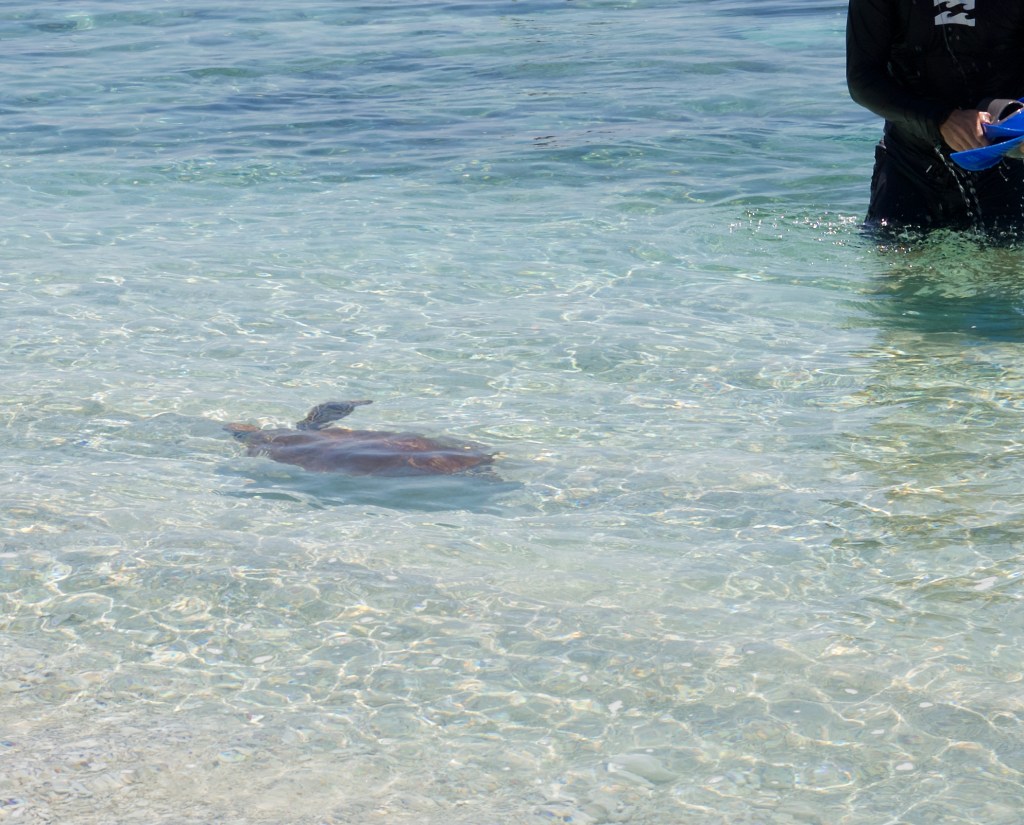
” I’m just a turtle,
Turtling along,
A happy green turtle,
Burbling a song…”
Green turtle 6

We settled on a deck chair as evening fell. Would the big female loggerhead turtles clamber up this very beach in the night? Yes, they did! But that’s for another post.

Beach 3 low tide

Slow Life on Lady Elliot Island, Queensland, Australia: Coral, turtles, serenity

Hope you enjoyed reading about BeeBear’s BeeBear Flies to Lady Elliot Island on The Great Barrier Reef to Lady Elliot Island, the southern most coral quay on the Barrier Reef.

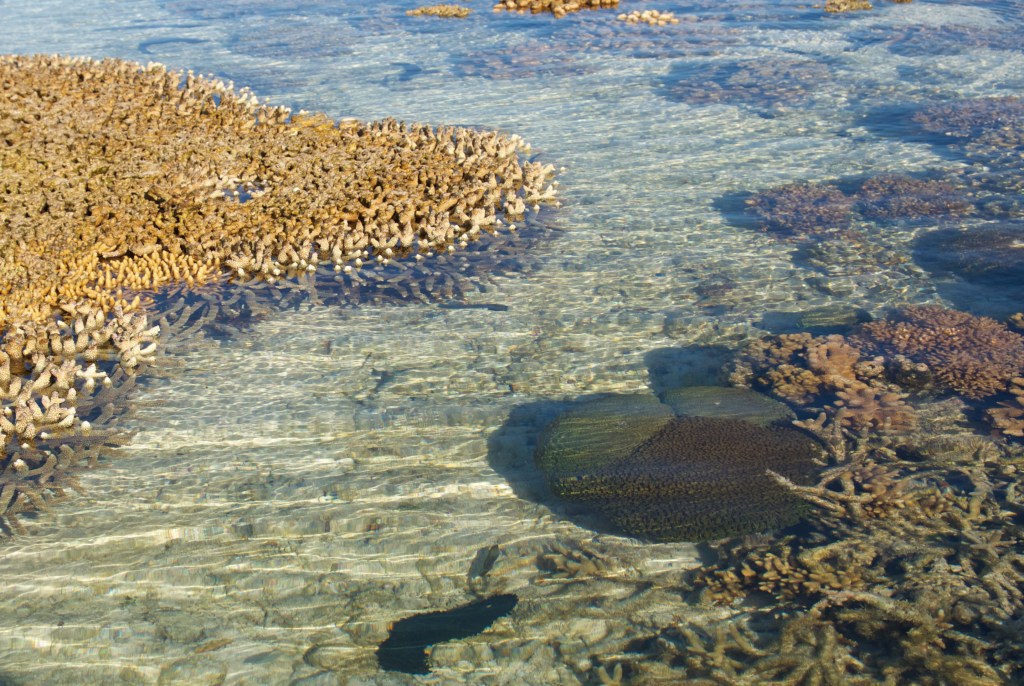
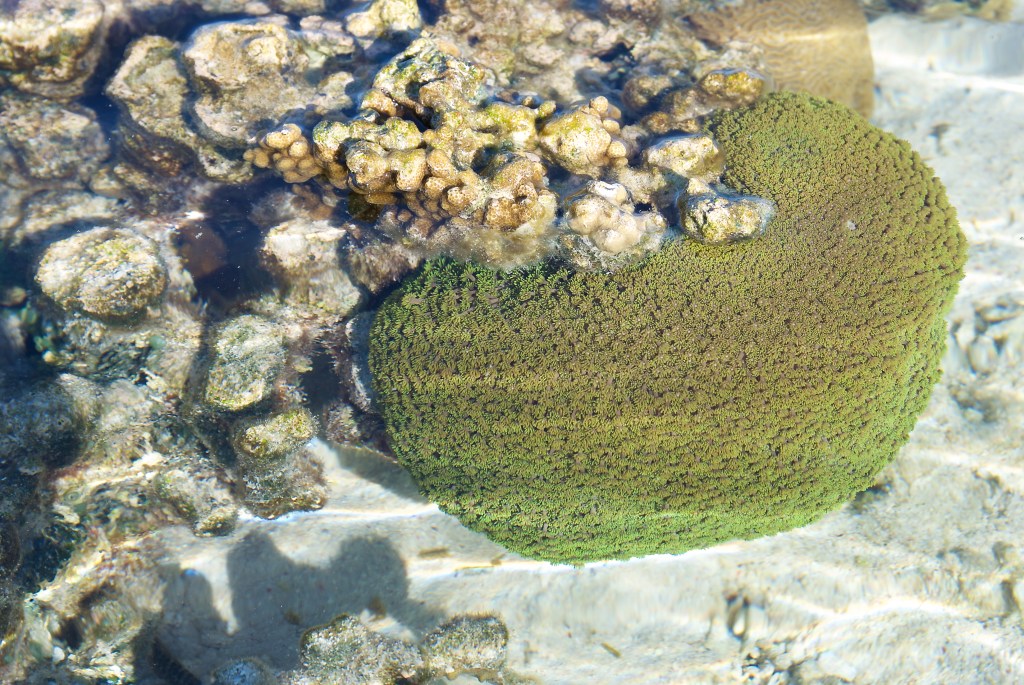
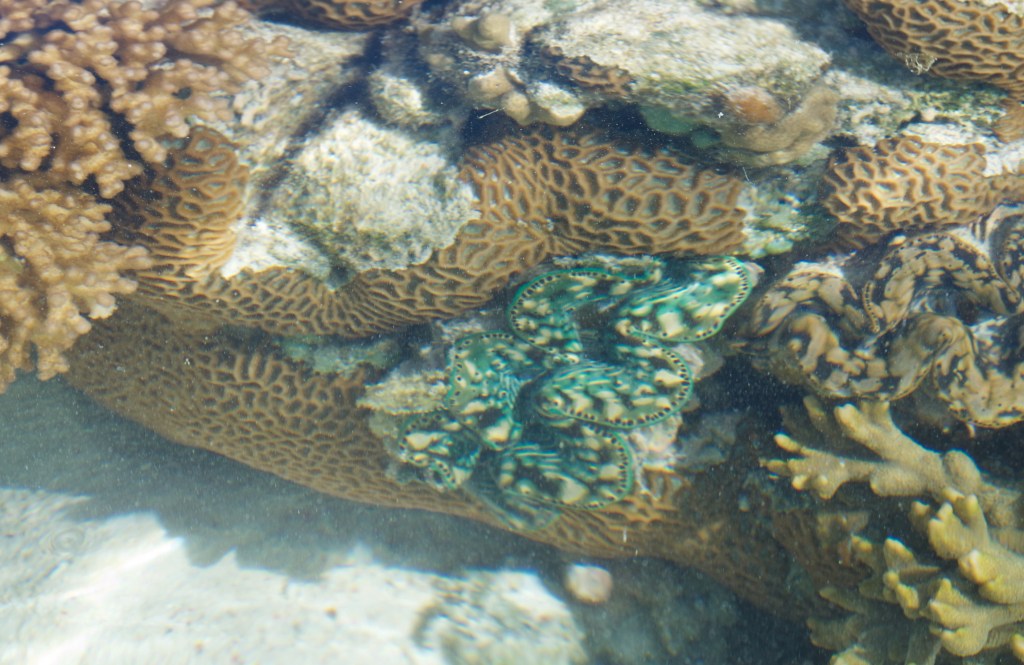
We settled into the cabin and stepped out on to our little veranda just 50 metres from the beach by the lagoon. The tide was half out. Later, we joined a guided reef walk at low tide. Snorkelling is only allowed at high tide.

Beach 5

Overhanging our veranda were our closest neighbours: a few hundred of the thousands of quarrelling birds here to nest in November. This kind of high density living would make anyone quarrelsome! Birds that usually nest in the sand taken to the trees due to lack of ground space. Every pandanus tree branch is weighed down with occupants. The noise is constant. The staff kindly leave ear plugs in the cabins so that people can sleep at night. More about the birds later.

Bird 16

What does everyone want to do on their first day on a tropical island? Explore! We collected the essentials for Brave Explorers: strong shoes, hats, sunnies, water bottles, and we were ready. Oops, nearly forgot the SLR camera.

Studying a map of Lady Elliot Island

For most of our explorations we saw few other people. There are at most 160 people staying and working here. This is done deliberately to keep down the impact of we humans on the wildlife. Of course, they are all doing things too like swimming, snorkelling, going out in the glass bottom boats, or just lazing on their cabin verandas.

Beach 1

Some way around the shore we came upon a stretch of coarse sand. Here we could lurch along reasonably well, sinking into the whiteness.

Beach 4 Coconut

But long stretches are a difficult scramble between the sea and sharp coral on one side and lumpy rocks on the other. The coconut here was washed ashore from elsewhere. There are no coconut trees here.

Beach 2

Between the trees that begin just up from the rocks and sand the nesting turtles were digging nesting holes at night. The staff teams go around each morning to count and inspect them. We hoped to see some later.

Beach 9 Light 1

If you look at the map BeeBear is showing her friends (above), you can see a compass (or steering helm) symbol at the top. The lighthouse is up there. It’s keepers were the island’s only occupants for many years.

Beach 3 low tide

Over the next two days we took a reef walk, went snorkelling in the lagoon, and looked for turtles. More about that in future posts. For now let’s try to ignore those raucous birds and loll about on this coral quay looking toward the sunset.

followMark, your host at Baffled Bear Books, is guardian and blundering typist for Mawson, one of this bright world’s few published bears.

Of Mawson’s first book, It’s A Bright World To Feel Lost In, a reviewer said, ‘Reading this book is like receiving a great big hug of reassurance and a huge hot chocolate with fluffy marshmallows.’

BeeBear Flies to Lady Elliot Island on The Great Barrier Reef

Lady Elliot Island is a coral quay on the south end of The Great Barrier Reef. The tiny island has featured on an episode of David Attenborough’s TV series, Great Barrier Reef  not only because of the bird life, turtles and manta rays there but also because it is a conservation success story.

Our BeeBear spent two amazing days and nights there. Naturally, she is bursting to talk all about it to the birds of Mawson’s house and to Tammy Turtle and to YOU.

Tammy Turtle and The Birds listen enthralled as BeeBear tells of her journey to Lady Elliot Island on the Great Barrier Reef

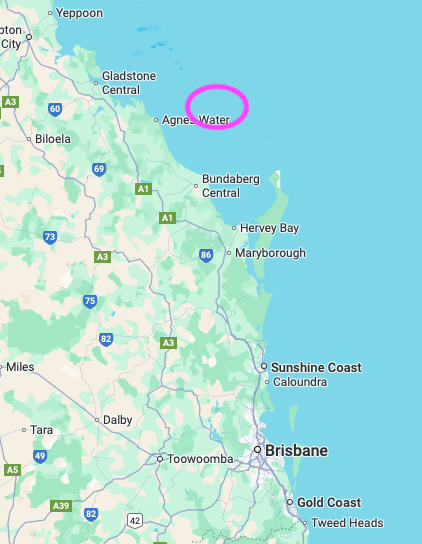
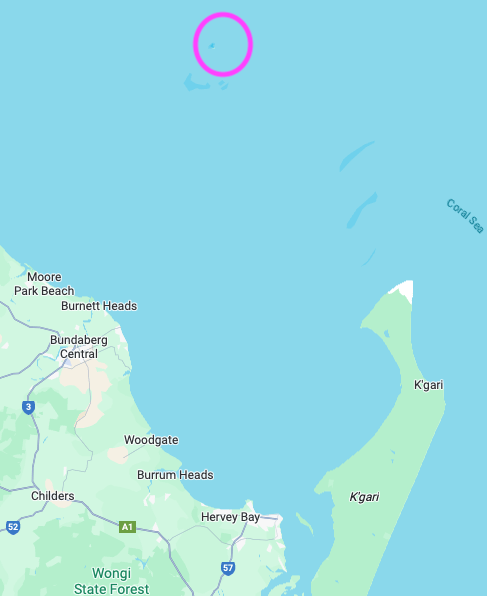
Where is Lady Elliot Island? Zoom in on a map of Australia. Find Queensland. On the east coast of Queensland, you can see a large island, Fraser Island / K’Gari which is the largest sand island in the world. Lady Elliot Island lies north of K’Gari. 

Just getting there was an adventure. First, BeeBear (and her people) flew ALL DAY from Perth in Western Australia to Brisbane in Queensland in Boeing 737 (comfort and movies) then on a turbo prop aircraft to Hervey Bay (shaking and rattling and sandwiches). Then the planes got even smaller. We hoped none would shrink too small to carry a small bear.

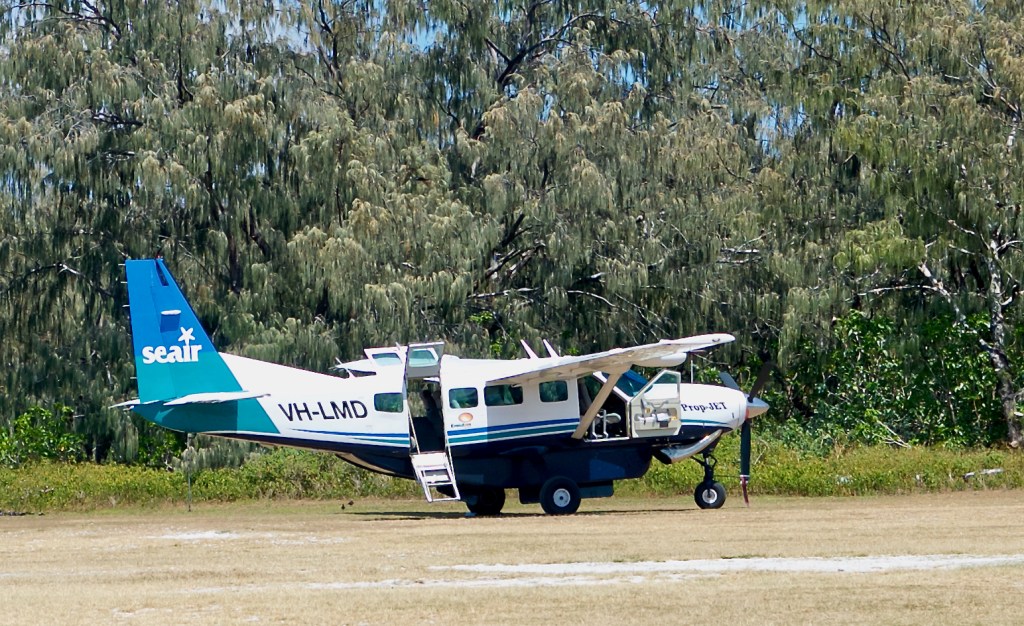
We flew out on a Beechcraft B 200 from Hervey Bay

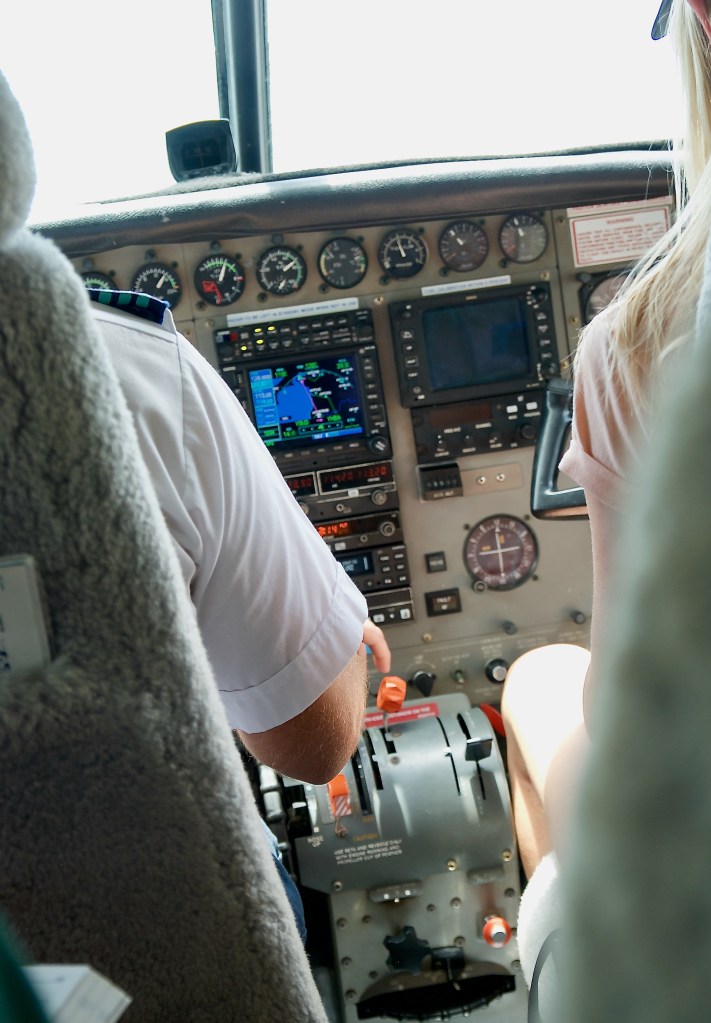
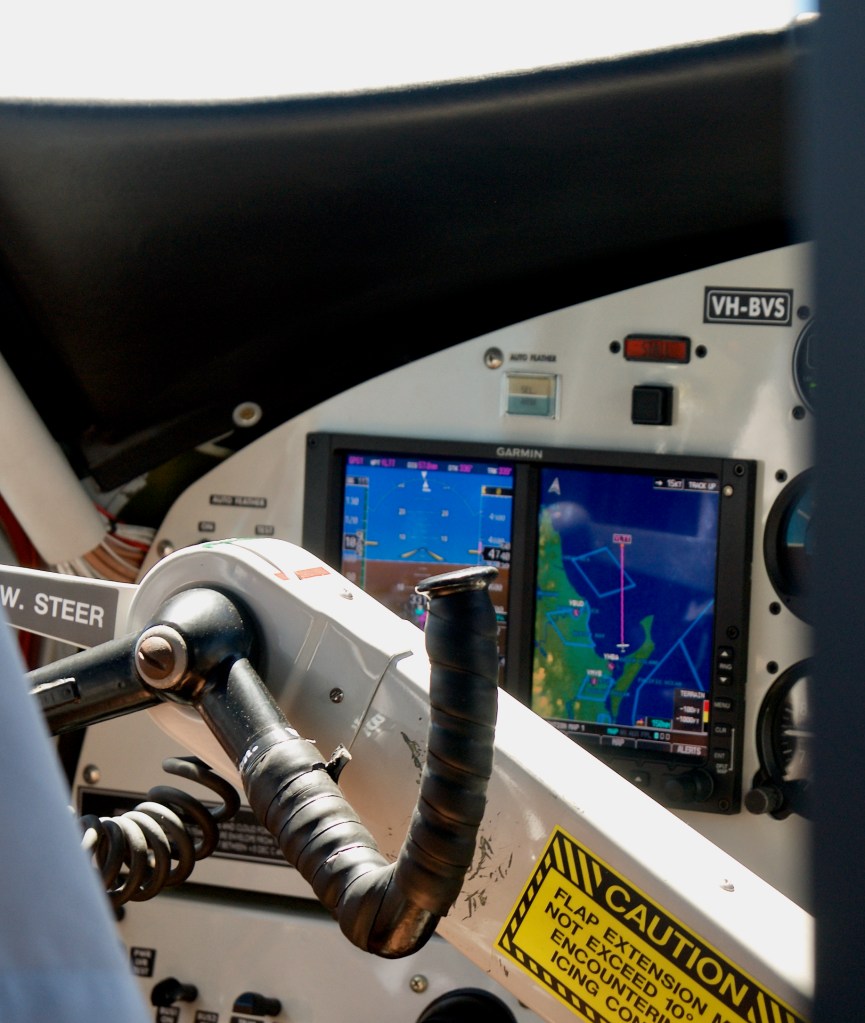
We flew out on a Beechcraft B 200 from Hervey Bay and returned on a Cesna 210 Centurion.  As an experienced aviator herself, Beebear helped to oversee the control thingygums. If you zoom in on the photo below you can see the navigating thingygum. It shows our position and the red line shows our flight path. 

BeeBear supervises the flying. The map diagram on the control panel show the flight path

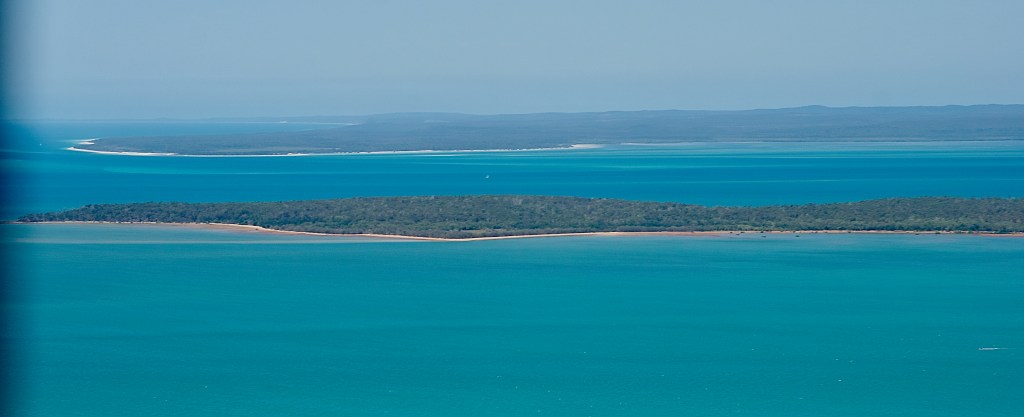
Our flight from the coastal town of  Hervey Bay to Lady Elliot Island took 80 minutes. We headed out over the sea and then northerly between the mainland and K’Gari/ Fraser Island, the big one in the distance (below). It’s the largest sand island in the world.

Looking east from our aircraft. The large island in the distance is Fraser Island

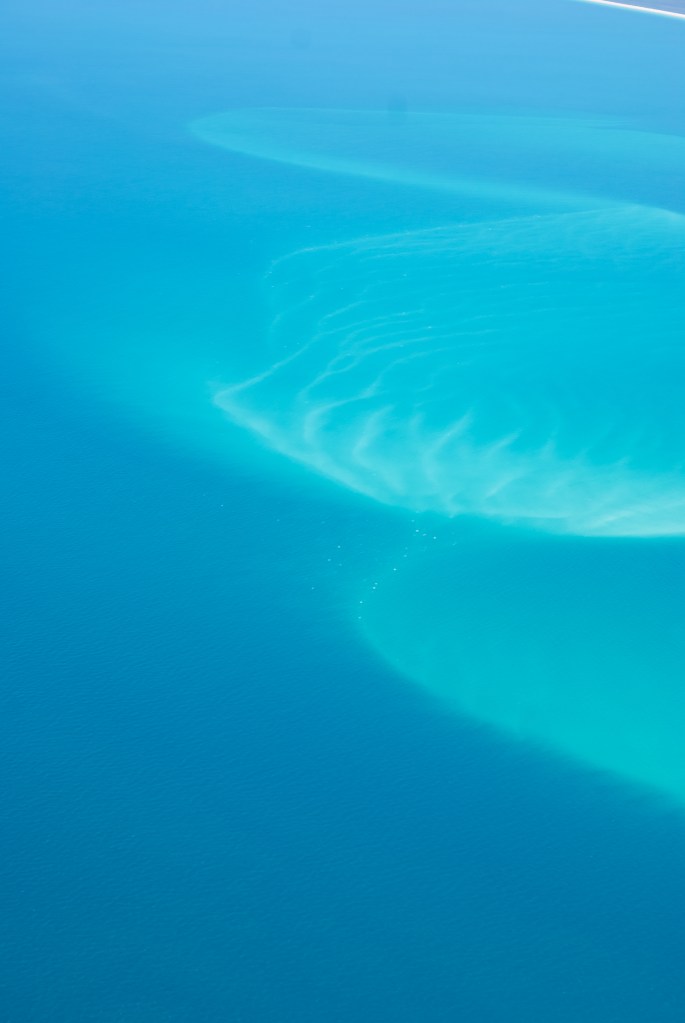
Beyond Fraser Island is The Pacific Ocean where the turtles roam for years on the currents after laying their eggs on Lady Elliot and on many other islands of The Barrier Reef. Just look at those blues! BeeBear was mesmerised by the colours of the ocean.

The astonishing blues of the coastal waters between the coast and Fraser Island

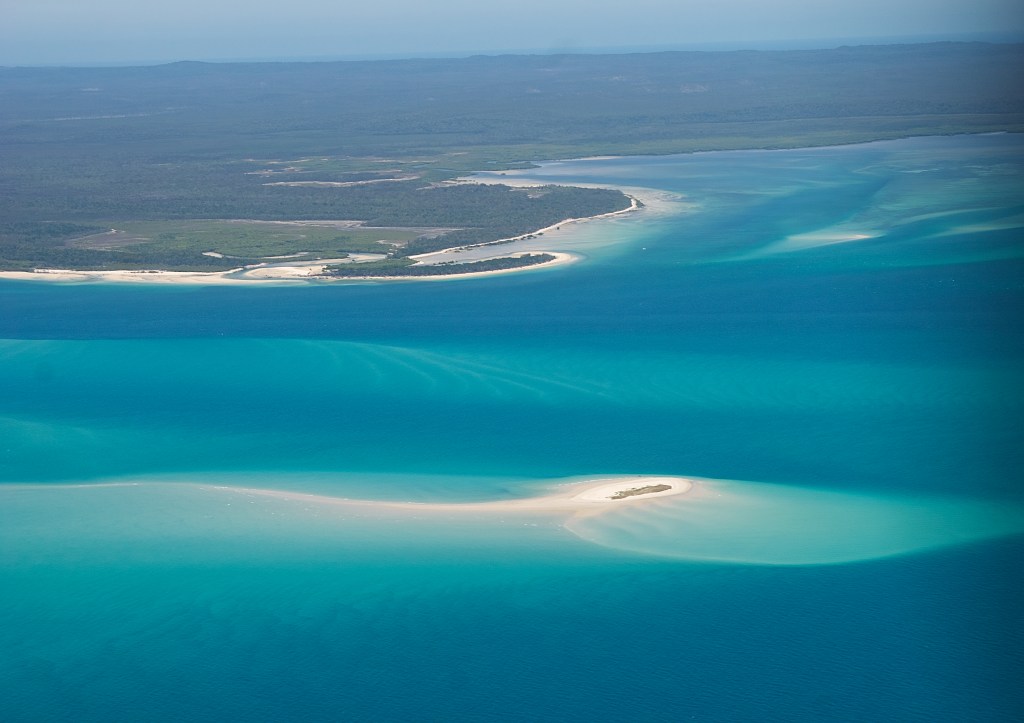
The colours and swirls and patterns of coastal seas are just too blue for words. And these pics were taken through slightly fuzzy perspex windows so in fact they looked even bluer. We flew past Fraser Island and had a good view of the little islands and sand banks too.

Looking back southward as we past by Fraser Island we also see small islands and sand banks and blue waters

See that little island in the foreground of the picture above? Imagine an island like that all for oneself.  Our BeeBear thought it just about the right size for a a small-winged bear to settle down on. She would just sit there in the shade by the sand all day simply being  stunned by the colours of the sea. Cyclones could be a bother though.

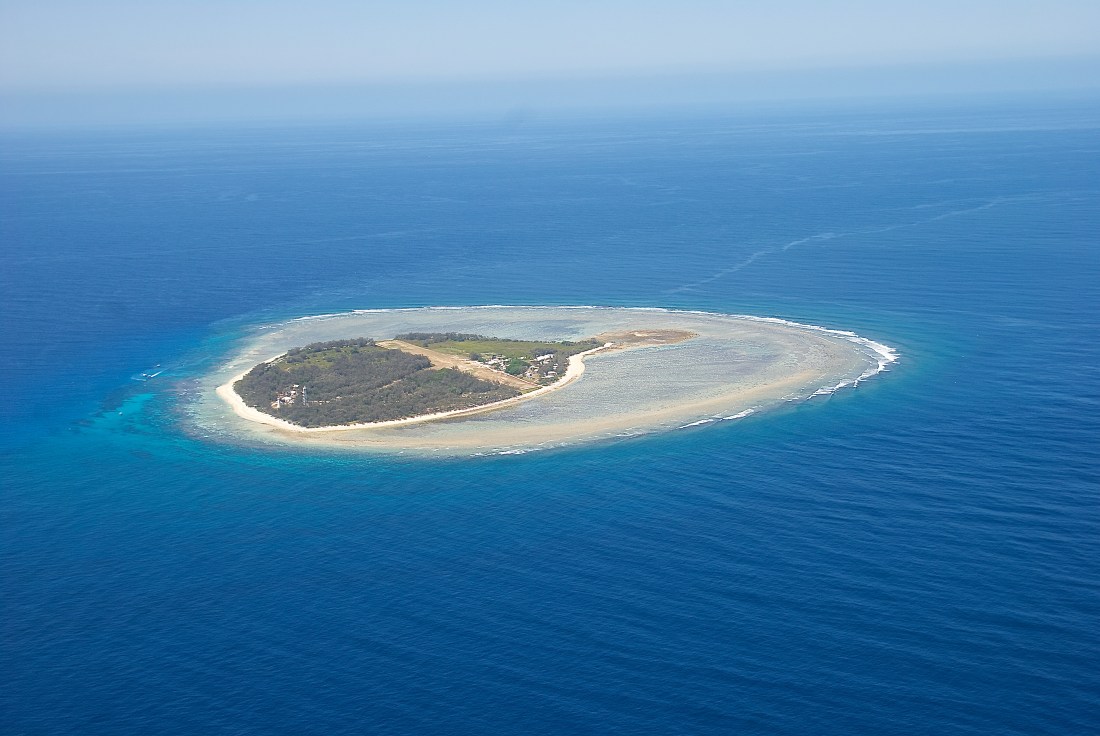
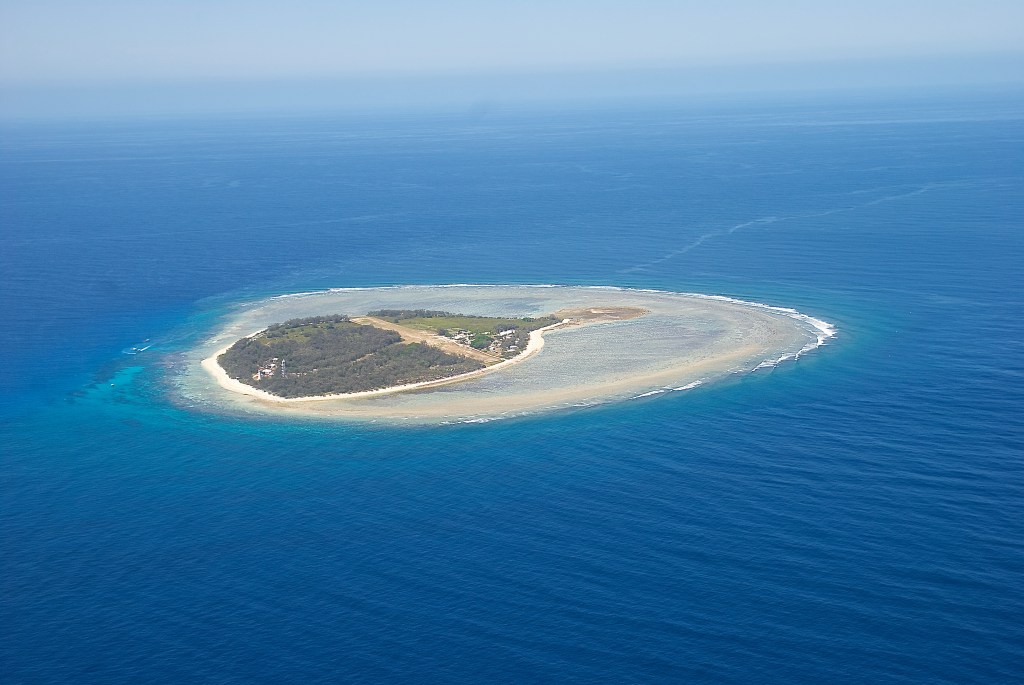
Lady Elliot Island, photo taken by us through windows of the plane. A beautiful clear day. The lagoon is clearly visible

Thar she blows! Lady Elliot Island hoves into sight (above). You can see the main coral reef  where the deep dark blue ocean is breaking to white tops (and you can compare with the picture on the brochure at the top of the post). Within the reef lies the lagoon. You can do reef walks at low tide and snorkel there at high tide. You see green turtles and reef sharks and all kinds of starfish and fish and lots of coral. The island is so small that, as you can see, the airstrip goes right across the middle, one side to the other.

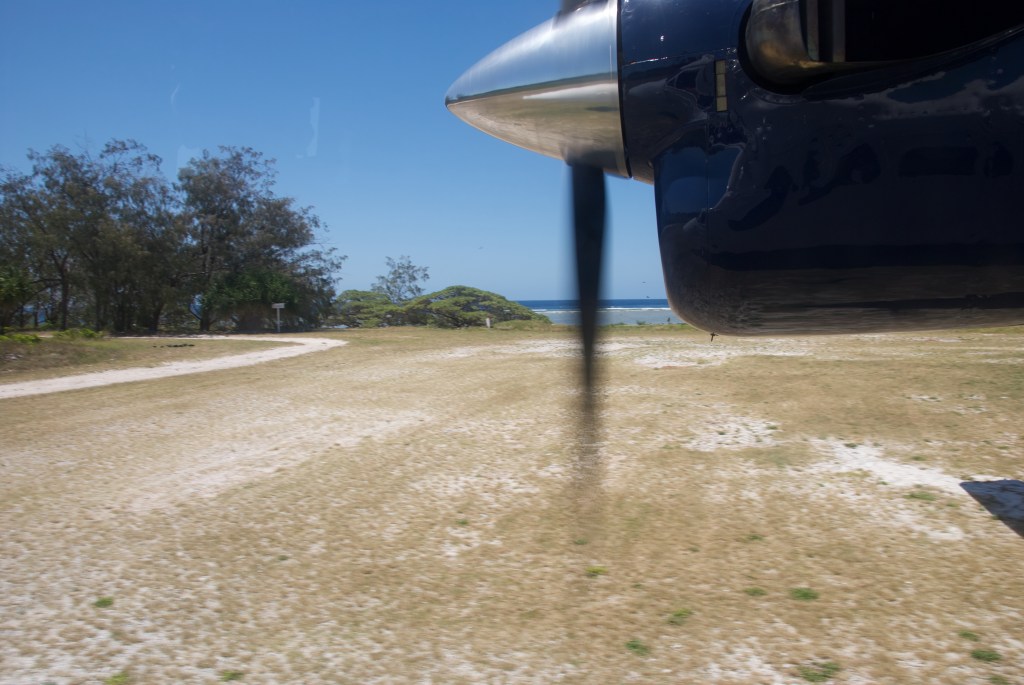
The runway runs end to end of the island. You can see it end at the waters of the lagoon

If you look through the blur of the propellor (above) you can see two bands of blue at the end of the landing strip? That’s the lagoon, and after the lagoon the dark deep blue of the Pacific Ocean.  We were to see turtles right there where the  runway strip ends. 

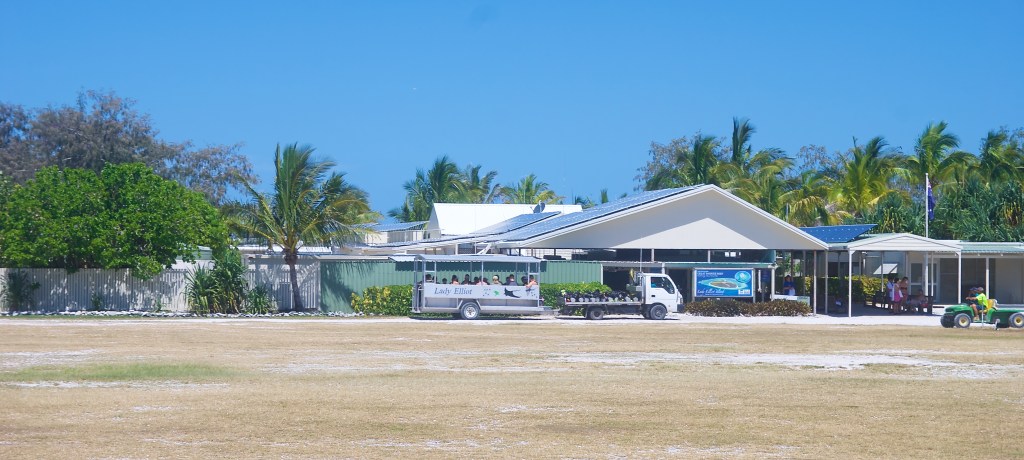
The eco resort on Lady Elliot Island, deliberately low impact and low key

And there is the Eco Resort on Lady Elliot Island. It’s deliberately low key and low impact. The staff are very involved in caring for the island. They plant trees and count the birds nests and the turtle nests and inform visitors about the wonders of the island.  

Comingin12

The island was actually a conservation disaster until some decades ago, and since then it has been restored tree by tree. More about Lady Elliot Island in the next post when we go for a walk and enjoy the Slow Life.

Beach 7

Mark is guardian and blundering typist for Mawson, one of this bright world’s few published bears. Of Mawson’s first book, ‘It’s A Bright World To Feel Lost In’, a reviewer said, ‘Reading this book is like receiving a great big hug of reassurance and a huge hot chocolate with fluffy marshmallows.’

The Drago Tree, by Isobel Blackthorn: excellent trip fiction available in Spanish and English

After the slow motion collapse of her marriage Anne seeks refuge on the jagged island of Lanzarote, one of the Canary Islands off Africa.

Wounded, introspective, prickly – like the Drago tree of the title – Anne broods about her past, trying through writing in her notebook to exorcize the ghosts of her husband and troubled sister.

She meets the novelist Richard . He lives on the island seasonally, perched in his house as though at an outpost of progress, surrounded by artefacts made by the local potter Domingo. His plan to pluck bits of the islanders’ story from Domingo to use in his next book becomes, in Isobel Blackthorn’s hands, a parallel for robber cultures that plunder from others .

With Domingo and Richard, Anne explores Lanzarote, learning the unhappy story of its fragile population, the target of conquerors and pirates, and now of tourists. Anne both welcomes and distrusts Richard’s interest. He advances but exasperatingly retreats. Domingo just as infuriatingly holds his counsel. Unexpressed emotional forces heave beneath the surface, like the volcanic forces that shape the island. When they erupt it is in the form of their argument over tourism, whether it is ruin of the island or its salvation. This disagreement shifts the dynamic between the three, ultimately leading to a later plot twist.

A current running beneath the story of these three people is a meditation on the art of writing. Richard, seeing Anne’s notebook, thrust upon her his views as a professional writer. As Anne tests his critiques, expanding her notes, trying for her own voice, Blackthorn weaves them also into her novel, playing with them, taking us alongside the writing process at the same time as we are reading its results – this book. It’s a risk to skim along just inside the “fourth wall’ in this way but Blackthorn beautifully pulls it off. And when Anne confronts her ambiguous feelings about Richard, Blackthorn unexpectedly turns us further down the theme of exploitation, this time about where personal lives meet literature.

For readers who love layered levels of feeling and thought expressed in fine language, this is your novel.

Where to find itThe Drago Tree is available at Amazon; AND it is available in Spanish.