Sannah and The Pilgrim, and Pia and The Skyman, by Sue Parritt

Sue Parritt’s Sannah and The Pilgrim is the first title in her climate fiction trilogy. It is followed by Pia and the Skyman and The Skylines Alliance. I found Sue Parritt’s vision what a future world might turn out when wrecked by climate change to be scarily plausible.

The story: Australia and Aotearoa (New Zealand) are ravaged by droughts. In Australia in particular. The coastal plains have been inundated by rising sea levels. The ‘Whites,  although impoverished by today’s standards, hang on to power through apartheid. They force the ‘Browns’, mostly refugee populations from the drowned Pacific Islands, to labour on the little arable land that remains.

We see this future from the point of view of a resistance movement, the ‘Women’s Line’, as they endure dangers to help the serfs held in the underground prisons to escape to what we hope will be a better life for them in Aotearoa. This is an Underground Railroad of the future.

Sannah, “The Storyteller”, belongs to the Women’s Line. When a light skinned stranger calling himself Kaire arrives at her dome she must consider whether he is a spy. The twin mysteries of Kaire’s origins and Sannah’s purpose in “storytelling” drive along the narrative in the first novel. Kaire’s background when revealed gives us another viewpoint of the conditions on the planet.

We have escapes by desert and by sea, rescues, betrayals, brutalities and passions. Yet Parritt’s low key writing makes this stark way of life seem almost normalised, which makes it all the more disturbing; and the wreckage of not just the planet but of humanity springs out at us.

In Pia and the Skyman the story picks up from the bases in Aotearoa.

Parritt writes on her website –

“I want readers to grasp what is happening not only in contemporary Australia, but throughout the world with regard to refugees and the ongoing environmental degradation that poses increasing problems for humanity… By writing fiction that I believe could easily become fact, I hope to inspire more ‘ordinary’ people to take a stand and work for a more equitable and sustainable world.”

Sannah and the Pilgrim was Commended in the FAW Christina Stead Award, 2015. Pia and the Skyman was commended for the Christina Stead Fiction Award 2016 in the National Literary Awards of The Fellowship of Australian Writers. You can learn more about Sue Parritt and these books at her blog.

Where to find the trilogy: All the books are published by Odyssey Books and available through Waterstones, Indigo and Amazon. The third book, The Skylines Alliance, is also now available.

Another Cli-Fit series I loved and is the Chronicles of the Pale by Clare Rhoden. You can see my review here.

You are at Baffled Bear Books, the blog of Mark, guardian and blundering typist for Mawson Bear, Ponderer of Baffling Things and one of this bright world’s few published bears. Mawson is writer bear of It’s A Bright World To Feel Lost In.
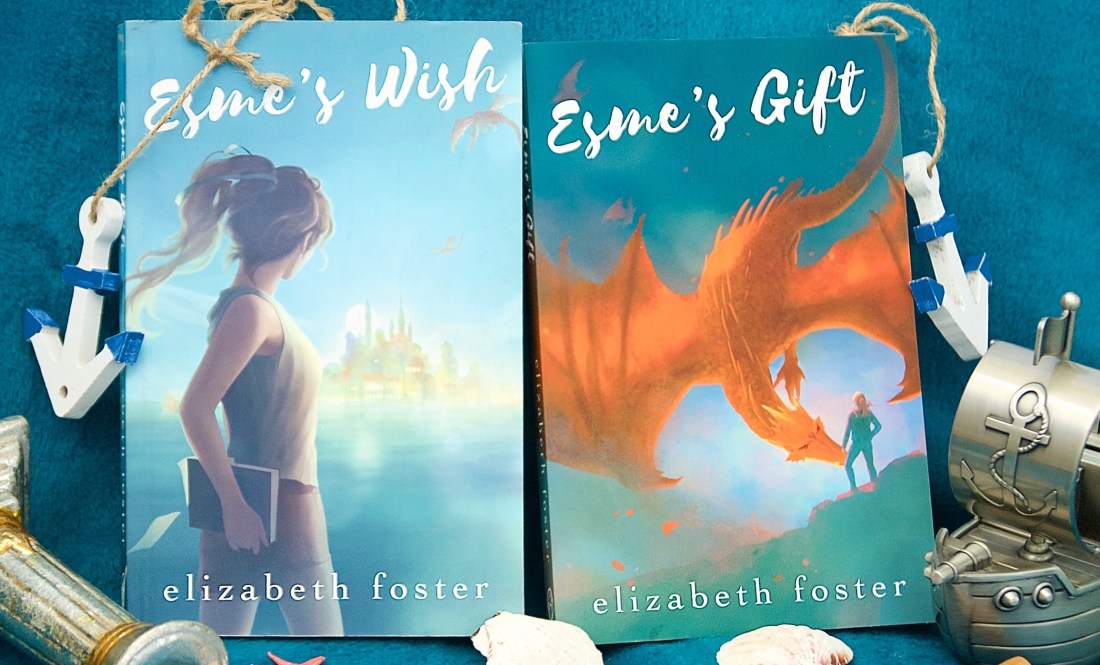
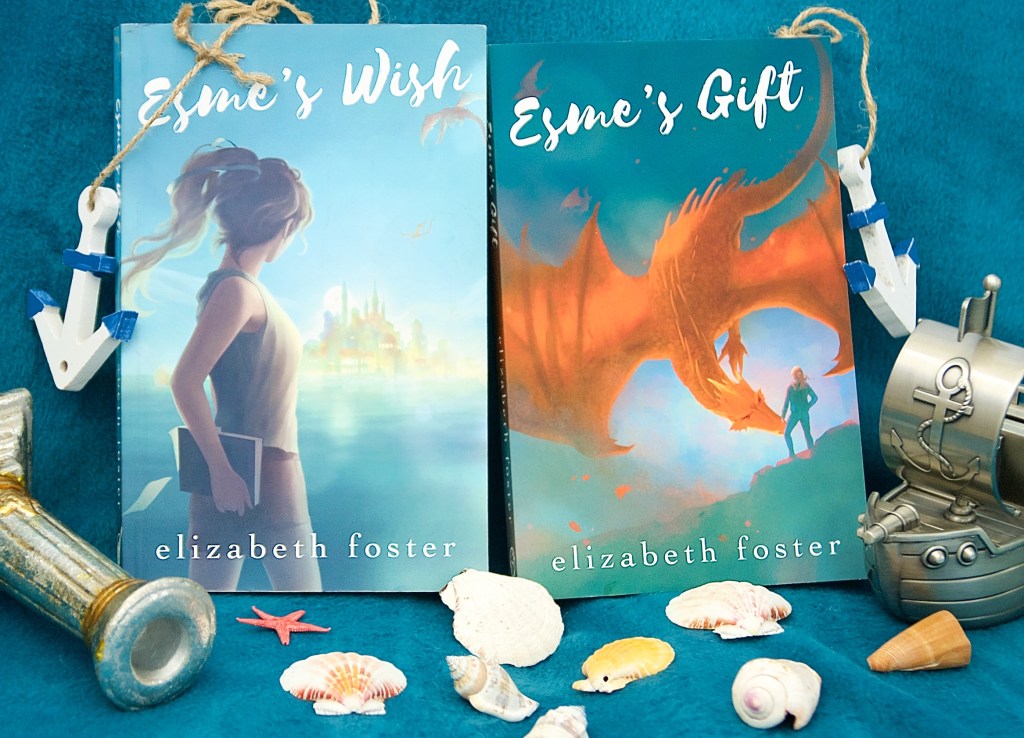
The Esme Trilogy: Esme’s Gift, by Elizabeth Foster

A parade of craft cruised the lagoon: gilt-edged ferries and gondolas in jewel-like colours – dazzling blues, crimsons, emerald greens. Sea dragons looped above the rooftops, twisting their sinuous forms … . Esme’s Gift Ch. 3.’

Mark, guardian of Mawson Bear says: Oh dear, our world is not in its finest shape right now, is it? Wouldn’t it be wonderful to be elsewhere. Fortunately, I have to hand Esme’s Gift, the sequel to Esme’s Wish and I can plunge once more into this other world and see again the towers of the city of Esperance and the siren islands of Aeolia.

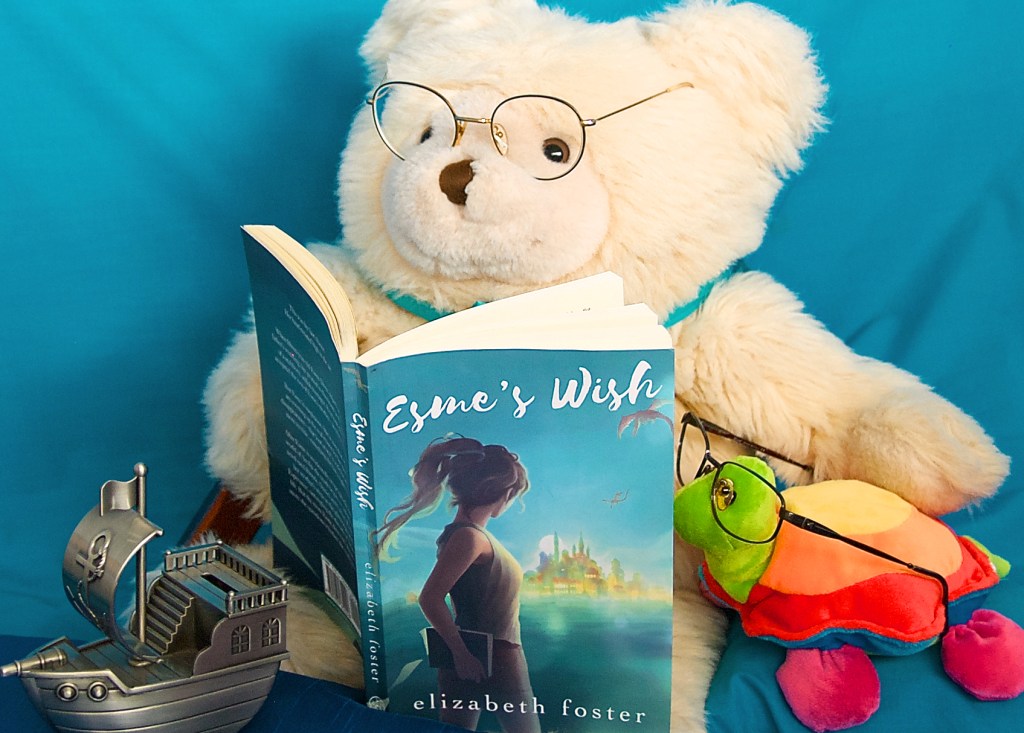
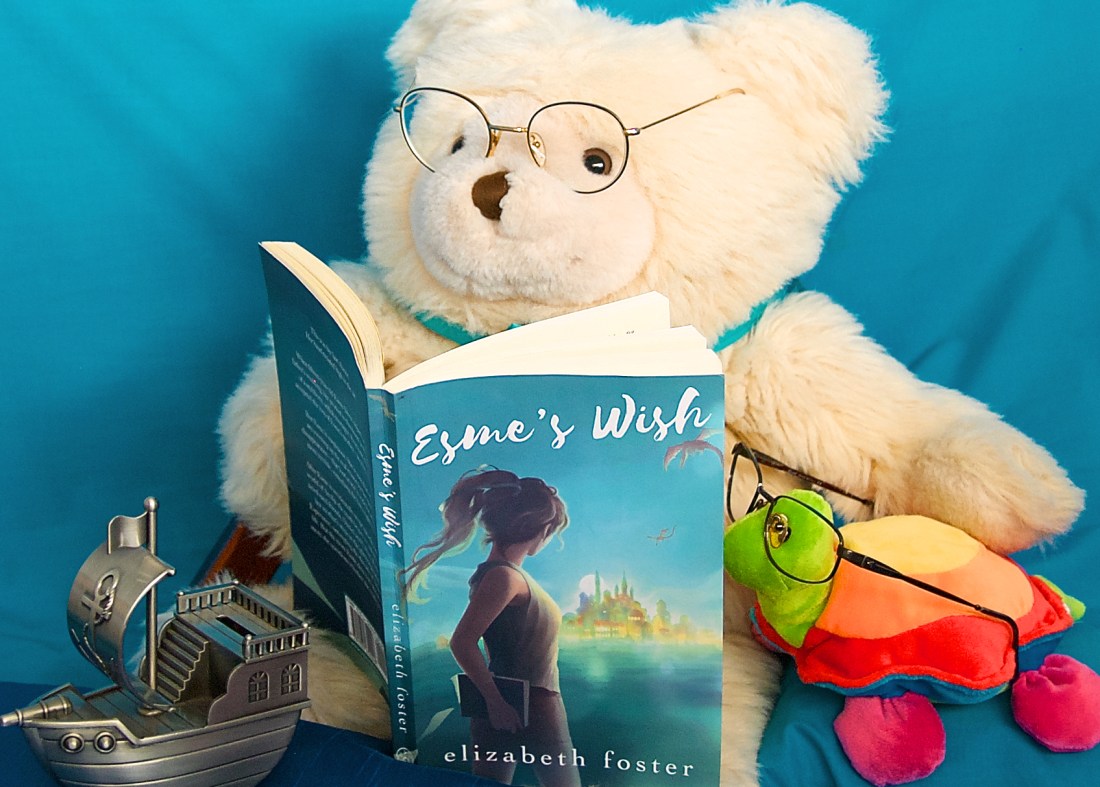
Esme’s Wish follows on after Esme returns to Aeolia. The evil Nathan Mare is at large and intent on finding the secret knowledge entrusted to her. But in the classrooms and library of Pierpont school she can find friends and allies. And what a library it is.

(Ancient gondalas) repurposed into shelves, lined the library’s walls … No longer fit to carry passengers, they now carried books to the shores of the readers’ minds. Esme’s Gift Ch. 12.’

Esme must gather the strange ingredients of the only elixir that can save her mother. To obtain these elements takes all her courage and all the combined gifts and powers of her friends. But some people are not who they seem to be, and the tension never lets up.

Esme’s Wish and Esme’s Gift are written by Elizabeth Foster with the ‘Young Adult’ audience in mind. But if you happen to be older (after all, some of us have yet to find a potion to wind back the years – and if the high risk alchemical experiments in Esperance are anything to go by, we should stay well away from any such potions or concoctions, or who knows what could happen!) .. if you are an older reader who loves beguiling fantasy worlds and tales of ghosts and of quests into caverns guarded by monsters and ghouls, and if you also don’t object to dragons .. The books of the Esme trilogy will be a treat for you.

Reading of Esperance in Aeolia, a realm of seas, islands, lagoons, oh – and dragons.

Where to find this other world: Esme’s Gift is published by Odyssey Books, a small press where ‘books are an adventure’. You can immerse yourself in this trilogy by looking at Amazon at Barnes and Noble, and more. You can see more about Esme’s search for her mother and about the author, Elizabeth Foster, at GoodReads.

Your host, Mark, is Mawson Bear’s Guardian, photographer, editor, blundering typist, chocolates fetcher and cushions re-arranger. Baffled Bear Books ABN: 4787910

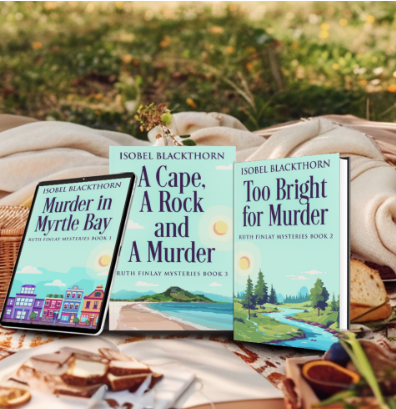
A Cape, A Rock and A Murder

Ruth Finlay Mysteries Book 3 About A Cape, A Rock and A Murder When Ruth lets her neighbour and sidekick Doris accompany her on a trip to Cape Bridgewater, an idyllic coastal location known for its pristine natural beauty, the last thing she expects to find is a body. With a feature to write and […]

A Cape, A Rock and A Murder

Isobel Blackthorn is author of the Canary Island quartet, which has received glowing reviews incuding The Drago Tree, A Matter of Latitude and Clarissa’s Warning.You can see my review on this blog of The Perfect Square, which is a meditation on art and artists. Her dark fiction includes Twerk and The Legacy of Old Gran Parks and Cabin Sessions. Her collections of stories includes, All About You, Eleven Tales of of Refuge and Hope.

When No One Is Watching: Poems by Linathi Makanda

The poetry of Linathi Makanda is both universal and about searing personal experiences. I think each reader will find something here that particularly resonates for themselves. Although each poem can be as stand alone, they are all linked and indeed this compilation cries out to be read as one poem and journey.

‘Love Rising’

The four parts begin with ‘Love Rising’ and here the poet’s thoughts may at first seem to concern the common enough subject of poems, looking for love and yearning to be wanted for oneself. The poet is young and confident. She trusts in her love and her lover.

‘.. I am liberated.
Let us join hands on arrival, let us celebrate.’

But even in early pages there are suggestion that this is not going to be about starry-eyed love somehow resolving itself. The poet is already thinking beyond her situation to that of other women.

‘My mother never talks about love
Only about the men she’s lost.’

I was also intrigued that next to a joyous poem about her lover she places memories of her grandfather, good memories, which will be a contrast to her later bitter thoughts on men.

‘Love Lost’

Now the story evolves into one well known to too many, one of hurt, betrayal and self doubt while struggling to put on a brave front. The poet offers lines about thoughts people hide tightly within and do not share even with those they trust ( … ‘My mother doesn’t know’..). The poems are not complex, the language is the easy rhythm of spoken English, yet time and again Makanda can express the universal feelings of self doubt and insecurity in a few plain words.  This question, for instance, asked by all wounded souls, will inform the rest of the book.

Why can’t you see me?

‘Internal Uprising’

In the bitter lines of ‘Internal Uprising’, we see doubt and hurt rise to anger, anger directed to oneself as much as anyone. As the narrator curls up into depression, her thoughts turn again to where she could surely seek support, her mother. But she cannot ask:

‘How do I tell my mother I attract men who do not stay?
How do I tell her I attract men like my father?’

In the midst of lines about blaming all on men, she can still see that they are not the whole crux of her turmoil.

‘Sometimes these men do not hurt us.
We hurt ourselves.’

And then she is taken down and taken very low.

It smells like it wasn’t my fault but it feels like it was.

At this point, I just stopped reading.  I felt I had seen something too private and raw for some reader or other like me to stumble over even in a published book. I picked it up again because the poet has chosen to express the dark hour known to far too many women, and so it is for knowing.

Hope Rising

 Because within this book each reader will find lines that resonate with their own memories, experiences and dark hours, I think it is important to know that the last part concerns Hope.  The narrator thrashes her way back above chasms of suicidal thoughts by caring about herself and expressing hope through art and poetry for fellow women. She is writing now:

‘ .. A letter to all the mothers who have daughters that hurt when on-one is watching.’

When No One Is Watching is an emotional journey for the reader and one well worth taking.

Linathi Thabang Makanda is a South African-based writer of poetry and prose. She strives to portray genuine emotion through her writing and photographic art. She believes in creating a home, through her crafts, for people trying to find their voices. Her website also offers work beyond her poems such as the videos Letters To The Ones We Miss. (Please be mindful of the trigger warnings.)

Where to find When No One is Watching, by Linathi Makanda.
Publisher Odyssey Books, also Bookshop Org, Amazon (in Kindle too) and Barnes and Noble .  (The images here are courtesy of the author and the publisher, Odyssey Books).

I encourage you to also consider the poetry of Loic Enkinga. How to Wake a Butterly can be found at Bookshop Org, at Amazon in Kindle and also in paperback. My review of this collection can be read here. This too is published by Ensorcellia, an imprint of Odyssey Books where you can find more fine poetry.

Mark is the guardian and blundering typist for Mawson, one of this bright world’s few published bears.

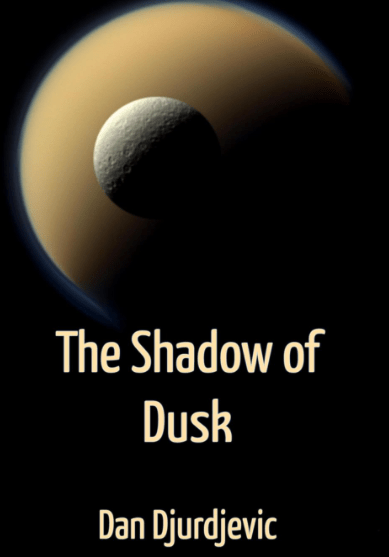
The Shadow of Dusk: Tales by Dan Djurdjevic. When you are dreaming you will awake- but as whom?

‘To sleep, perchance to dream- ay, there’s the rub.’ Hamlet (III, i, 65-68)

For when you are dreaming, you will wake. You assume. But what sort of waking will it be?

I think we have all experienced at some time that dread, dripping, crushing sense of fighting our way back up from .. something .. out from .. something. And to emerge as though breaking through an ocean surface, taking great gulps of waking reality, and to realise that the place or something you have fled from was not really there, and must have ‘only’ been a nightmare.

“He dreams of blackness: an endless blackness, darker than the crow and more inscrutable. There is a solidary light far in the distance, a dull yellow pinpoint swallowed into the void, and he stumbles towards it on his phantom legs.” The Crow. 

But what if, as you sit up taking in your surrounds, another realisation crashes in – that perhaps you have just woken from someone else’s nightmare?

The calm prose of Dan Djurdjevic’s stories in The Shadow of Dusk belies the growing consternation of his characters as their personalities and identities shift and change. Frequently their perceived realities seem distorted.

“It took a while to realise that I was now in a different place altogether: a blank, featureless room of cold white … empty save for the bleached glare. There were no shapes, no corners, no lines. No shadows”.

They reassure themselves with stock excuses: ‘it was only a dream’, ‘it’s because I’m exhausted’, ‘it’s what happens out in space’, ‘it’s the drugs I took for the pain’. But again and again these ‘explanations’ don’t hold up. The characters sometimes seem to be changing places. Their loves and romances, fears, jealousies, start to seem to belong to other selves, as if they are seeing them through distorted memories. Or they might be seeing mirror images of themselves – which of course are similar but reversed, and perhaps distorted and warped too. Such a possibility is explored in The Mirror Image of Sound. (My review here.)

Dan’s stories, to different degrees, float in half lights and shadows where things may not be what they seem. In the modern romantic drama Nights of the Moon to which The Shadow of Dusk collection serves as a kind of “sequel”, we met the same characters (or are they) who apparently have a very definite existence in the harsh geographical reality of a mining camp in Western Australia. But they are presented to us only through the memories of one person’s point of view. Are we reading what has ‘really happened’?

Perhaps somewhere in the obscurities of moon light, twilight, dusk, and shadows all of us are able to become more acutely aware of alternative lives that we could be living had we made other choices. Perhaps those alternative ‘I’s sometimes merge with and partially morph into the “I’ that we think we own.

To dream. Ah there indeed is the rub. For how can we know if we ever wake fully?

See My review of The Mirror Image Of Sound is here . And of The Girl in the Attic here.

Where to find Dan’s books: The Mirror Image of Sound, Nights of The Moon , The Shadow of Dusk , Essential Jo, The Girl In The Attic,

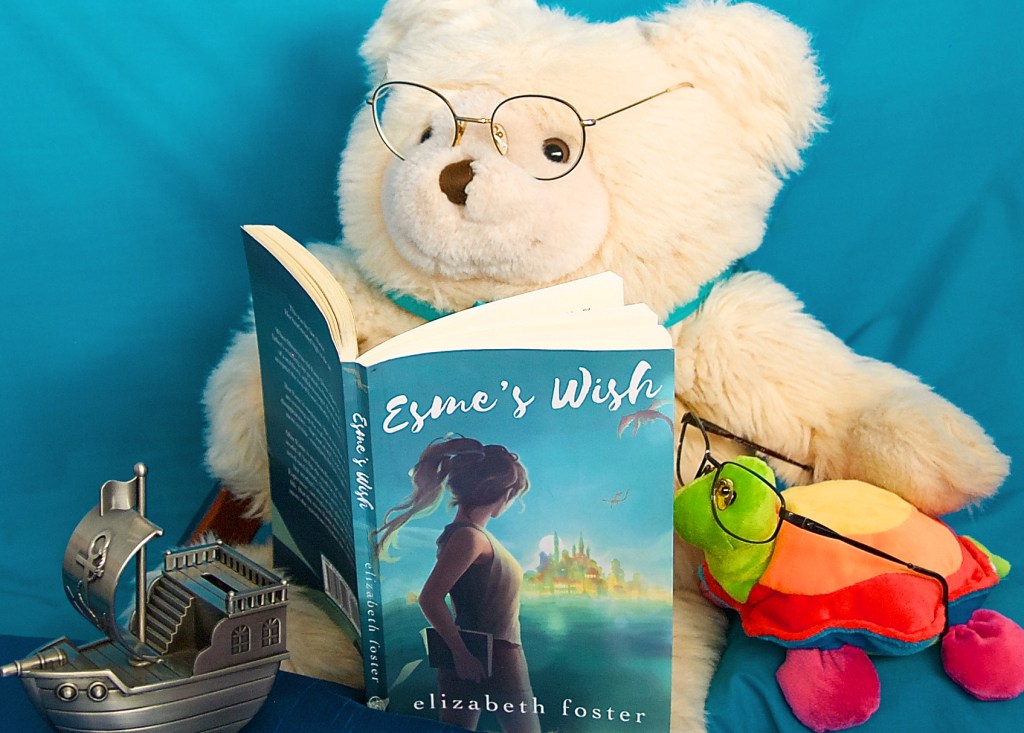
Refresh Your Soul in Aeolia, the realm of ‘Esme’s Wish’ by Elizabeth Foster

Tears pricked Esme’s eyes. Her mother had vanished, without trace, when she was eight. No one know what had really happened to her- or so they said. Esme’s Wish. Ch. 1.’

Mark, guardian of Mawson Bear says:
Another dreary Monday. My real world was not in it’s finest state. Longing to immerse myself in another realm, I picked up Esme’s Wish to read on the commuter ride to work.

Not that Aeolia is free of troubles. The city of Esperance is crumbling from earthquakes. The mystery of her lost mother just gets deeper no matter how far Esme investigates nor how many dangers she faces.

A loud cry derailed Esme’s train of thought. Her head whipped up. A rush of feathers filled her vision. The sea eagle was streaking down toward her, it’s sharp talons poised, ready to strike. Esme’s Wish Ch.3.’

Aeolia, even so, was a welcome haven for me from Year of The Covid for a week of train rides and lunch breaks. All too soon, I turned the last page. The wind-played harps and song spells faded, and the horrible upsets of Grownup Reality shoved themselves again into my mind.

Esme’s Wish and Esme’s Gift are written by Elizabeth Foster with the ‘Young Adult’ audience in mind, and as Esme and her friends are aged about 15, it is rightly finding a wide readership there. Why recommend these books to those of us older than fifteen (in my case far older)? Because of your certain appreciation of this well crafted fantasy world with its own myths, history and songs, the believable characters, the well paced plot, the fine literary language and, oh, the dragons? Didn’t Tolkein say that he longed for a world in which there were dragons? Don’t we all?

We read, in the end, to not be entirely stuck in the ordinariness or the troubles of our own lives; and I have found Young Adult books and even some children’s books (think of the Narnia Chronicles) to do this as well for me, and often better, than Adult books can do. Oh, I still appreciate the novels written with the mature, sophisticated, world weary and somewhat cynical reader in mind (ie me); but another world entirely, like Aeolia, suits me very much these days. Perhaps many of you feel the same.

The island of Esperance in Aeolia, a realm of seas, islands, lagoons, oh- and dragons.

Fortunately, I have to hand Esme’s Gift, the sequel to Esme’s Wish, and I can soon plunge down once more into other far places where I would rather be, the towers of the city of Esperance and the siren islands of Aeolia. Why not get your copies now and join me there.

Where to find this other world: Esme’s Wish is published by Odyssey Books, a small press where ‘books are an adventure’. You can immerse yourself too in the world of Aeolia by looking at Amazon here, and at Barnes and Noble.

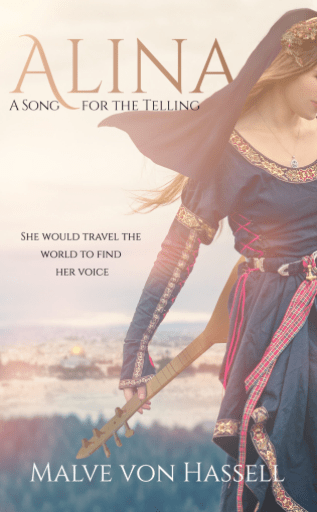
Alina: A Song For The Telling, by Malve Von Hassell: A trobairitz in the court of the Crusader Kingdom of Jerusalem

‘Something tugged at me – a dream of seeing distant lands’. Ch. 3.

‘Fourteen-year-old orphan Alina refuses to accept the oppressing life her strict aunt wants to impose upon her. When the opportunity comes along for her to escape, she and her brother embark on a journey through the Byzantine Empire all the way to Jerusalem.’ Back Cover.

In the Spring of 1173, orphans Alina and Milos set out from Provence on a perilous journey to the Holy Land. Milos has lost the inheritance of his land to his uncle. Alina faces only a bleak arranged marriage. But she does possess the highly valued gift of making music and song. And this, on reaching Jerusalem, is a gift that opens up a new world for her, perhaps even an independent future. For Alina, as a woman, this had been an impossible. But now her dream is to become a trobairitz like Beatriz de Dia, that is, a woman troubadour, making her own way in the world.

I enjoyed the children’s journey from Provence to Venice to Acre and on to Jerusalem as if I had become a tourist a thousand years ago and was seeing the sights for myself. Once in Jerusalem the pace of the story changes as Alina and Milos get drawn into the complexities of the court. The author skilfully disentangles all the plots and factions and the competing suitors for the hand of princess Sibylla – who is even younger than Alina. I galloped through the last half of this story. Suspicions mount and danger follows danger.

This book so deftly written that you would almost not realise the depth of the research it must have taken to create it. The story is set in a fascinating but little known time and Alina is a wonderful creation. I also enjoyed the portrait of Princess Sibylla, imperious and arbitrary to Alina, but really just a child struggling to face her imminent responsiblities in the little kingdom facing danger on all sides. This is highly readable historical fiction.

I have always loved stories set in medieval times. I devoured books by Henry Treece, Geoffrey Trease, Rosemary Sutcliff and Zoe Oldenburg. Most of these novels featured knights or barons – men in a male world. Few placed a woman centre stage, and these were the highborn wives of powerful men. In Malve von Hassell’s story, however, Alina is the heroine and her musical gift widen her world not just for herself but her brother too.

Malve von Hassell is a writer, researcher, and translator.  On her website you can learn more about her works including Letters from the Tooth Fairy, written in response to her son’s letters to the tooth fairy, The Falconer’s Apprentice, her first historical fiction novel for young readers and The Amber Crane, a historical fiction novel set in Germany in the 17th century,

Learn more about Trobaritz, the women singers and song makers of the Twelfth Century, on Malve’s excellent blog, Tales Through Time. The quote that precedes the tale of Alina is by Countess Beatriz de Dia, who composed the one piece from that time that survives with musical annotations, the A chantar m’er.

Where to find Alina, A Song For the Telling

Alina, A Song For The Telling can be found by looking at Malve’s website, where you can also learn about her other fascinating books. It is available via these links here, and on Kobo and on Kindle, , and as an Audiobook on Apple Books.

Your host, Mark, is Mawson Bear’s Guardian, photographer, editor, blundering typist, chocolates fetcher and cushions re-arranger. Mawson’s own Blog is Mawson, A Writer-Bear for Our Befuddled Times.
Baffled Bear Books ABN: 4787910119.

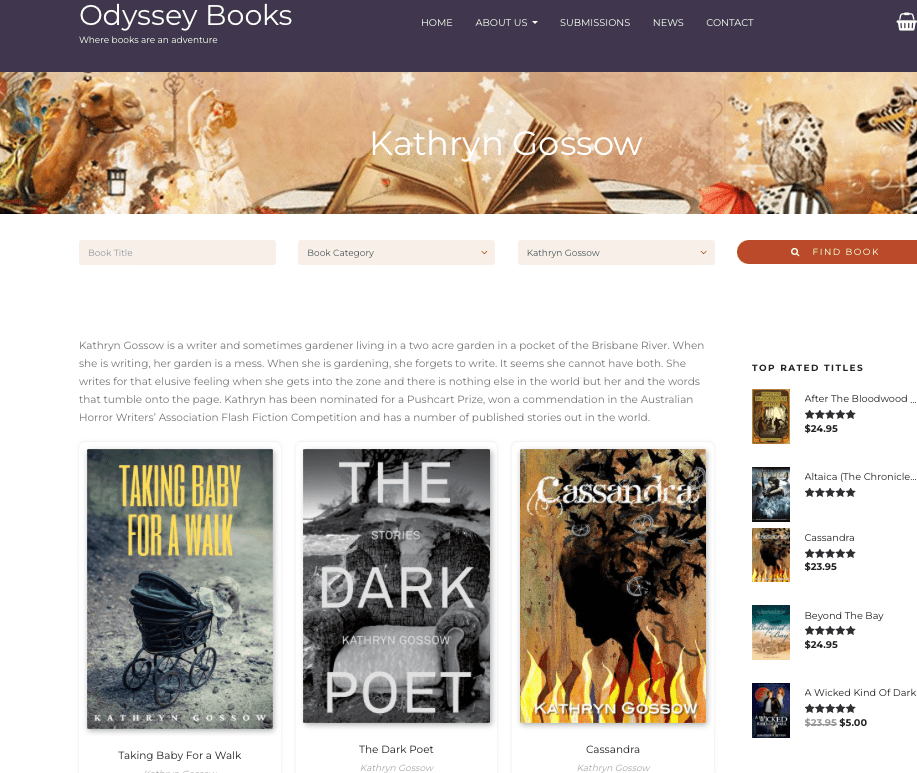
The Dark Poet, by Kathryn Gossow

The book’s dedication: For all the girls who loved a boy they shouldn’t have, and all the broken boys that heal’.

A homeless man gets breakfast. A woman plucks limes in her garden. A student and his girlfriend run into an old school acquaintance. Ordinary days and lives. But these eight interlinked stories soon slide us toward brooding hearts, deceit, addiction, and the shadows of domestic violence. These vulnerable people, hungry for connection, veer toward Paul, the Dark Poet.

‘He is a dark planet and around him circles floundering stars .. People caught in his orbit, lovers as debris caught in his gravitational pull’. P.17.

Paul is that dangerous creature, the charismatic man. The sort of man who can break a woman ‘into a million pieces if he smiled with just the wrong smile followed by just the right sneer’. P. 38.

Kathryn Gossow’s skill is to create this character, who we soon grasp is Bad News, and who yet grimly fascinates. As a reader I got caught in his orbit too.

I particularly admire good short stories, and this collection, moreover, left me thinking about people I have known. I think that it will have that effect on most readers. What will you think about?

For instance, who, really, are the people around us? Could the woman next door be a seer? Could that homeless man pluck a story from our hearts? Will that luminous elven girl one day become a guilt wracked women in the aisles?

The Dark Poet is published by Odyssey Books and available at Amazon here.

Kathryn Gossow is the author of Cassandra, whose central character, a seer, features in one of the stories in The Dark Poet. Cassandra and more of Kathryn Gossow’s titles can be found at Odyssey Books.

Mark is guardian and blundering typist for Mawson, one of this bright world’s few published bears.

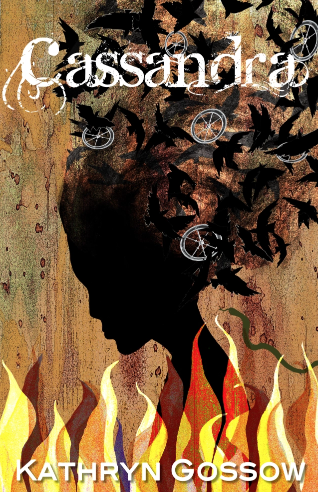
Cassandra, by Kathryn Gossow: Shortlisted for Best Fantasy Novel 2017 in Aurealis Awards

Shortlisted for the Best Fantasy Novel 2017 in the Australian Aurealis Awards.

She dreams of plane crashes, earthquakes, tsunamis, bloody coups. She dreams of the stallion sweeping down the hill … . P. 197

Foreboding. Everything in the early chapters of Cassandra author Kathryn Gossow instills a sense of ‘foreboding’. Possibilities thicken of dark changes to come. Would they concern Paulo, or Athena, or a secret in this family? Or would they thunder down on Cassie herself like the ominous horse in her nightmares?

Cassandra: A princess of Troy and priestess of Apollo. She was cursed to utter true prophecies but to never be believed. (Wiki)

What if you could foresee people’s futures, for instance, that one kid on the school bus will die of bowel cancer, another will briefly shine on the stage but never become famous? A wonderful ability, yes? But what if you fill with dread and cannot make out why. Then Something happens. If you had warned people, and if they had believed you, could you have diverted that accident or mistake from happening? In the old legend, of course, Cassie’s namesake Cassandra felt cursed.

The Snake: Some versions of the legend have Cassandra falling asleep in a temple, where the snakes licked her ears so that she could hear the future. (Wiki.)

Cassie seems like an ordinary girl who gets bitten by a snake on a farm in Queensland. Her little brother predicts a drought, she grows to be a grumpy teenager troubled by visions, she scowls at her mother in the ordinary teenage way, she worries about her great-aunt and her Poppy .. Wait a minute. Bitten by a snake? Visions? Her brother foretells a drought? Wasn’t there a legend …?

The Brother: Some versions of the legend give Cassandra a brother, Helenus. Like her, he was always correct in his predictions. Unlike her, he was believed. (Wiki.)

She tries to make one true friend, Athena, who introduces her to the Tarot. (‘Her thoughts swirl with colour and the patterns and the meanings of the cards’. P. 77). She clumsily attempts to fit in with the cool kids, she experiments with alcohol and dope, her visions worsen, she is keen on a boy named Paulo .. Wait, wait. Athena? ‘Paulo’ .. or ‘Apollo’? Didn’t Apollo’s priestesses take hallucinogens to enhance their visions?

Apollo: Many versions of the myth relate that Cassandra incurred the god Apollo’s wrath by refusing him sex, after promising herself to him in exchange for the power of prophecy. (Wiki.)

Cassandra can be read is a ‘coming of age’ novel in that it concerns teenage insecurities and self-doubts, the cruel cut and thrust of cliques and friendships, and the tensions within families. But I think you will also soon be reading it, as I did, mindful of the big questions about fate and destiny, and mulling over the extent to which each of one’s decisions cuts away previous possibilities and opens up new ones.

Kathryn Gossow is also the author of The Dark Poet. An older Cassie, the central character of Cassandra features in the stories in The Dark Poet.

(The images of the book in this post are courtesy of Odyssey Books and the author.)

Mark, your reviewer here at Baffled Bear Books, is guardian and blundering typist for Mawson, one of this bright world’s few published bears.

‘Eyes of a Hunting Cat’: Jane Austen’s short novel, Lady Susan

 Lady Susan, a short novel in letter form, remains unknown to many Austen fans even though a movie version, Love and Friendship, was made recently.

The Tedettes Jane Austen Bookclub with their discoveries about Jane Austen

The novel is packed with exquisitely written barbs and eyebrow-raising cynicisms, the best delivered by Lady Susan herself as she confides her schemes to her ally, Mrs Johnson. Here is Lady Susan speaking of the wickedly expensive schooling of her 16 year old daughter, Frederica.

Not one lover to her list

“To be mistress of French, Italian, German, Music, Singing, Drawing etc. will gain a woman some applause but will not add one lover to her list.”

Austen is thought to have written Lady Susan before Northanger Abbey, but exactly when is not known.  The Austen-philes quoted below guess at 1803, 1805 and 1808, which puts Austen in her mid to late twenties. She wrote the first version of Pride and Prejudice, of course, when younger still.

A Lion In The Path

“Lady Susan … (is) a lion in the path of those persons who would call Jane Austen charming, soothing, refreshing etc.  G. H Lewes, when he recommended Charlotte Bronte to “follow the counsel which shines out of Miss Austen’s mild eyes” was unaware of Lady Susan, where Miss Austen’s eyes are those of a hunting cat. … In controlled grimness it looks forward to a masterpiece never written.”

Sylvia Townsend Warner, novelist, wrote the assessment above in a 1951 essay published by The British Council.  (The essay, sadly, is probably no longer available, even if you do have one shilling and sixpence net*).

Before Becky Sharp there was Lady Susan

But David Cecil, author of  A Portrait of Jane Austen , is among many Austen-philes determined to keep Miss Jane’s eyes as mild as possible.

“Lady Susan Vernon is a sort of blue-blooded Becky Sharp, an unscrupulous adventuress, far more sensational in her evil doing than any character in Jane Austen’s later books.”

The Tedettes Jane Austen Book Club knit and read
The Tedettes Jane Austen Bookclub (and Knitters). Their main bother is to find the bonnets.

Cecil thinks of the novel as a youthful experiment, even a mistake.

“It is lively and readable … All the same, Lady Susan is not a success. Jane Austen had no acquaintance with smart society and has to describe it from hearsay: with the result that her picture lacks the intimate reality with with she portrays the country gentry … We may suppose she realised this for she made no effort to have the book published in her lifetime … She was gradually learning her art.”

The Perils of Gout

Mawson’s Guardian thinks that if a reader’s frisson of guilty delight is a desirable part of entertainment then young Austen had thoroughly learnt her art.  Even the brutal lines in Lady Susan  that make Cecil wince are delivered superbly. Here is Lady Susan commiserating with Mrs Johnson about her husband’s gout.

“My dear Alicia, of what mistake were you guilty in marrying a man of his age!  just old enough to be formal, ungovernable, and to have the gout – too old to be agreeable, and too young to die”.

Mr Johnson (Stephen Fry in the movie) has forbidden Alicia from seeing Lady Susan on pain of her being despatched to his properties in America if she persists, for he believes Lady Susan to be a Bad Influence.  If you’ve never seen Fry play a ruthless role, watch on as he delivers the line, “I hear the Atlantic crossing is very cold this time of year”.

Subtle, Terrifying

The Teddettes Jane Austen Book Club with their editions of Jane Austen novels
The Tedettes with their prized Folio editions of Jane Austen’s work

 Richard Church, in the Foreword to the Folio edition of Austen’s shorter works, is perplexed that Austen even penned such a work as Lady Susan.

“This is a masterpiece, powerful, subtle and terrifying. It is as cruel as Les Liaisons Dangerous by de Lachol. This Lady Susan may well be compared to  ..  Madame de Merteuil for coldness of soul, amoral cruely and icy lust. What was this feature of Jane Austens’s personality? so primitive, unladylike and deadly? Here was no chronicler of the drawing room and the country house tea party.”

 Bright Eyes

“In her person she was very attractive. Her figure was rather tall and slender, her step light and firm, and her whole appearance one of health and animation. In complexion she was a clear brunette with a rich colour, she had full round cheeks  with a mouth and nose rather small but well-formed, bright hazel eyes and brown hair forming natural curls around her face.”

What kind of eyes did Jane Austen really have?   Here is a word-portrait penned by her nephew. (Jane and Cassandra loved the role of Aunts.)

Hmm, so hazel eyes, greenish eyes, and bright. The green of a hunting cat’s eyes, perhaps?

Take your own look at Lady Susan who herself certainly seems to deserve that description. And then enjoy Kate Beckinsale’s excellent portrayal in the inexplicably renamed, but otherwise guiltily-delightful film, Love and Friendship.

Where to find Lady Susan, in various editions: On Amazon and at Booktopia.