Sannah and The Pilgrim, and Pia and The Skyman, by Sue Parritt

Sue Parritt’s Sannah and The Pilgrim is the first title in her climate fiction trilogy. It is followed by Pia and the Skyman and The Skylines Alliance. I found Sue Parritt’s vision what a future world might turn out when wrecked by climate change to be scarily plausible.

The story: Australia and Aotearoa (New Zealand) are ravaged by droughts. In Australia in particular. The coastal plains have been inundated by rising sea levels. The ‘Whites,  although impoverished by today’s standards, hang on to power through apartheid. They force the ‘Browns’, mostly refugee populations from the drowned Pacific Islands, to labour on the little arable land that remains.

We see this future from the point of view of a resistance movement, the ‘Women’s Line’, as they endure dangers to help the serfs held in the underground prisons to escape to what we hope will be a better life for them in Aotearoa. This is an Underground Railroad of the future.

Sannah, “The Storyteller”, belongs to the Women’s Line. When a light skinned stranger calling himself Kaire arrives at her dome she must consider whether he is a spy. The twin mysteries of Kaire’s origins and Sannah’s purpose in “storytelling” drive along the narrative in the first novel. Kaire’s background when revealed gives us another viewpoint of the conditions on the planet.

We have escapes by desert and by sea, rescues, betrayals, brutalities and passions. Yet Parritt’s low key writing makes this stark way of life seem almost normalised, which makes it all the more disturbing; and the wreckage of not just the planet but of humanity springs out at us.

In Pia and the Skyman the story picks up from the bases in Aotearoa.

Parritt writes on her website –

“I want readers to grasp what is happening not only in contemporary Australia, but throughout the world with regard to refugees and the ongoing environmental degradation that poses increasing problems for humanity… By writing fiction that I believe could easily become fact, I hope to inspire more ‘ordinary’ people to take a stand and work for a more equitable and sustainable world.”

Sannah and the Pilgrim was Commended in the FAW Christina Stead Award, 2015. Pia and the Skyman was commended for the Christina Stead Fiction Award 2016 in the National Literary Awards of The Fellowship of Australian Writers. You can learn more about Sue Parritt and these books at her blog.

Where to find the trilogy: All the books are published by Odyssey Books and available through Waterstones, Indigo and Amazon. The third book, The Skylines Alliance, is also now available.

Another Cli-Fit series I loved and is the Chronicles of the Pale by Clare Rhoden. You can see my review here.

You are at Baffled Bear Books, the blog of Mark, guardian and blundering typist for Mawson Bear, Ponderer of Baffling Things and one of this bright world’s few published bears. Mawson is writer bear of It’s A Bright World To Feel Lost In.
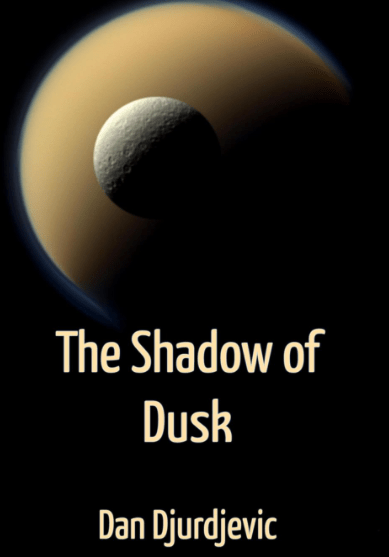
The Shadow of Dusk: Tales by Dan Djurdjevic. When you are dreaming you will awake- but as whom?

‘To sleep, perchance to dream- ay, there’s the rub.’ Hamlet (III, i, 65-68)

For when you are dreaming, you will wake. You assume. But what sort of waking will it be?

I think we have all experienced at some time that dread, dripping, crushing sense of fighting our way back up from .. something .. out from .. something. And to emerge as though breaking through an ocean surface, taking great gulps of waking reality, and to realise that the place or something you have fled from was not really there, and must have ‘only’ been a nightmare.

“He dreams of blackness: an endless blackness, darker than the crow and more inscrutable. There is a solidary light far in the distance, a dull yellow pinpoint swallowed into the void, and he stumbles towards it on his phantom legs.” The Crow. 

But what if, as you sit up taking in your surrounds, another realisation crashes in – that perhaps you have just woken from someone else’s nightmare?

The calm prose of Dan Djurdjevic’s stories in The Shadow of Dusk belies the growing consternation of his characters as their personalities and identities shift and change. Frequently their perceived realities seem distorted.

“It took a while to realise that I was now in a different place altogether: a blank, featureless room of cold white … empty save for the bleached glare. There were no shapes, no corners, no lines. No shadows”.

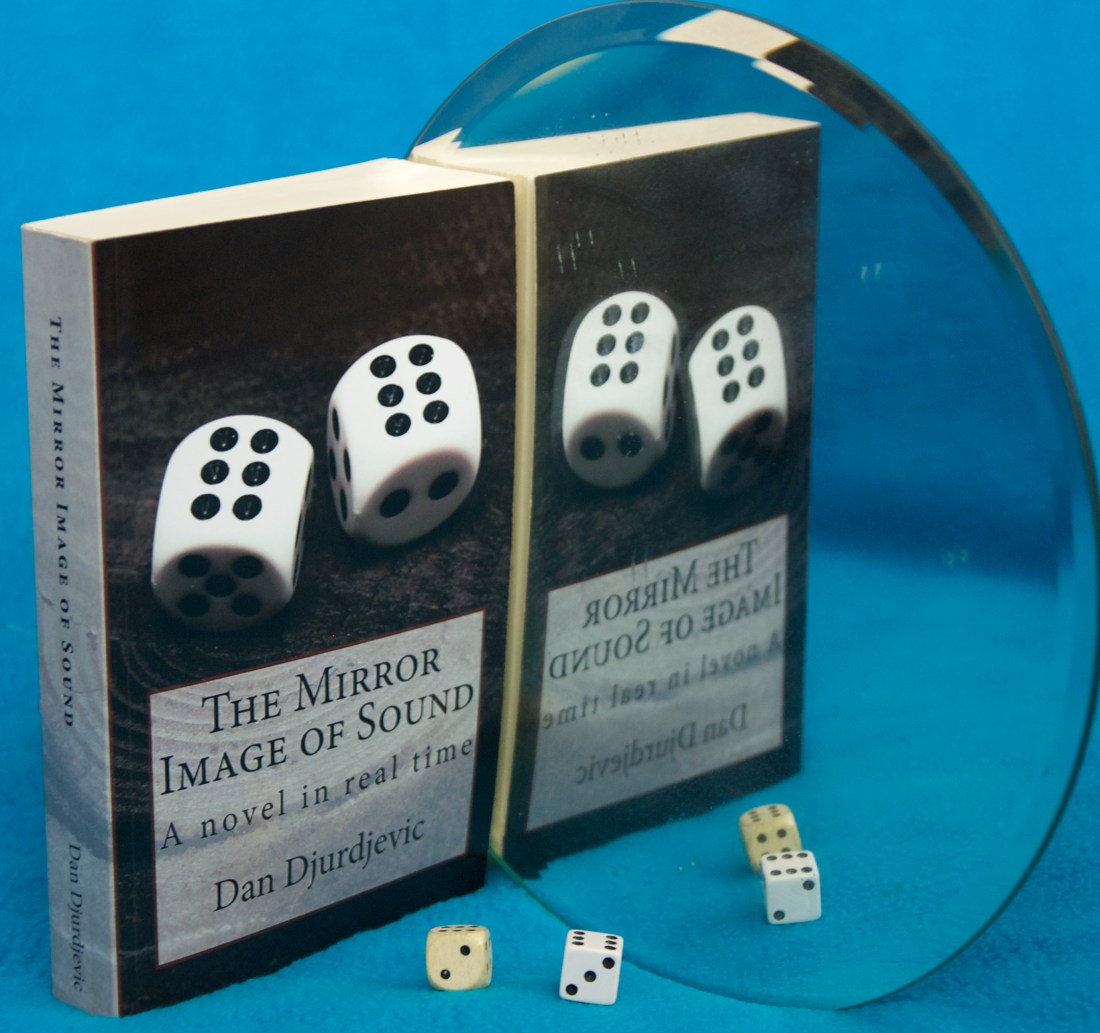
They reassure themselves with stock excuses: ‘it was only a dream’, ‘it’s because I’m exhausted’, ‘it’s what happens out in space’, ‘it’s the drugs I took for the pain’. But again and again these ‘explanations’ don’t hold up. The characters sometimes seem to be changing places. Their loves and romances, fears, jealousies, start to seem to belong to other selves, as if they are seeing them through distorted memories. Or they might be seeing mirror images of themselves – which of course are similar but reversed, and perhaps distorted and warped too. Such a possibility is explored in The Mirror Image of Sound. (My review here.)

Dan’s stories, to different degrees, float in half lights and shadows where things may not be what they seem. In the modern romantic drama Nights of the Moon to which The Shadow of Dusk collection serves as a kind of “sequel”, we met the same characters (or are they) who apparently have a very definite existence in the harsh geographical reality of a mining camp in Western Australia. But they are presented to us only through the memories of one person’s point of view. Are we reading what has ‘really happened’?

Perhaps somewhere in the obscurities of moon light, twilight, dusk, and shadows all of us are able to become more acutely aware of alternative lives that we could be living had we made other choices. Perhaps those alternative ‘I’s sometimes merge with and partially morph into the “I’ that we think we own.

To dream. Ah there indeed is the rub. For how can we know if we ever wake fully?

See My review of The Mirror Image Of Sound is here . And of The Girl in the Attic here.

Where to find Dan’s books: The Mirror Image of Sound, Nights of The Moon , The Shadow of Dusk , Essential Jo, The Girl In The Attic,

Alina: A Song For The Telling, by Malve Von Hassell: A trobairitz in the court of the Crusader Kingdom of Jerusalem

‘Something tugged at me – a dream of seeing distant lands’. Ch. 3.

‘Fourteen-year-old orphan Alina refuses to accept the oppressing life her strict aunt wants to impose upon her. When the opportunity comes along for her to escape, she and her brother embark on a journey through the Byzantine Empire all the way to Jerusalem.’ Back Cover.

In the Spring of 1173, orphans Alina and Milos set out from Provence on a perilous journey to the Holy Land. Milos has lost the inheritance of his land to his uncle. Alina faces only a bleak arranged marriage. But she does possess the highly valued gift of making music and song. And this, on reaching Jerusalem, is a gift that opens up a new world for her, perhaps even an independent future. For Alina, as a woman, this had been an impossible. But now her dream is to become a trobairitz like Beatriz de Dia, that is, a woman troubadour, making her own way in the world.

I enjoyed the children’s journey from Provence to Venice to Acre and on to Jerusalem as if I had become a tourist a thousand years ago and was seeing the sights for myself. Once in Jerusalem the pace of the story changes as Alina and Milos get drawn into the complexities of the court. The author skilfully disentangles all the plots and factions and the competing suitors for the hand of princess Sibylla – who is even younger than Alina. I galloped through the last half of this story. Suspicions mount and danger follows danger.

This book so deftly written that you would almost not realise the depth of the research it must have taken to create it. The story is set in a fascinating but little known time and Alina is a wonderful creation. I also enjoyed the portrait of Princess Sibylla, imperious and arbitrary to Alina, but really just a child struggling to face her imminent responsiblities in the little kingdom facing danger on all sides. This is highly readable historical fiction.

I have always loved stories set in medieval times. I devoured books by Henry Treece, Geoffrey Trease, Rosemary Sutcliff and Zoe Oldenburg. Most of these novels featured knights or barons – men in a male world. Few placed a woman centre stage, and these were the highborn wives of powerful men. In Malve von Hassell’s story, however, Alina is the heroine and her musical gift widen her world not just for herself but her brother too.

Malve von Hassell is a writer, researcher, and translator.  On her website you can learn more about her works including Letters from the Tooth Fairy, written in response to her son’s letters to the tooth fairy, The Falconer’s Apprentice, her first historical fiction novel for young readers and The Amber Crane, a historical fiction novel set in Germany in the 17th century,

Learn more about Trobaritz, the women singers and song makers of the Twelfth Century, on Malve’s excellent blog, Tales Through Time. The quote that precedes the tale of Alina is by Countess Beatriz de Dia, who composed the one piece from that time that survives with musical annotations, the A chantar m’er.

Where to find Alina, A Song For the Telling

Alina, A Song For The Telling can be found by looking at Malve’s website, where you can also learn about her other fascinating books. It is available via these links here, and on Kobo and on Kindle, , and as an Audiobook on Apple Books.

Your host, Mark, is Mawson Bear’s Guardian, photographer, editor, blundering typist, chocolates fetcher and cushions re-arranger. Mawson’s own Blog is Mawson, A Writer-Bear for Our Befuddled Times.
Baffled Bear Books ABN: 4787910119.

Chronicles of The Pale by Clare Rhoden: Survival in a post-cataclysm world

‘How does anything live out there?’ Tad murmured.

Imagine a landscape more forbidding than Central Australia, the Sahara, the Atacana desert. A landscape still shifting with the after shocks of a cataclysmic event that, 197 years before The Pale begins, has destroyed most species. Clare Rhoden quickly establishes this ghastly world in our minds. At the same time she moves the narrative along with fascinating characters to care about.


What happens: Serviceman Tad patrols ‘the Pale’, the last place left that bears any resemblance to a city. Within the walls exist – you can hardly say ‘live’ – a hierarchical society of citizens who, like Tad, are partly liveware (tissue) and partly hardware. The Pale has wholly adopted technology and rationality as its survival mechanism. Subservience by the citizens to the poli-cosmos is the order of the day. (I think it no accident that the author’s use of ‘policosmos’ without a hyphen somehow gives it an overtone of ‘police state’.) Even so, there are unsettling signs in at least two Servicemen, Tad and his protégé Hector, of the Pre-catalcym human trait deemed most dangerous: empathy. The story of how this ‘weakness’ affects the Pale could have made a good novel in itself, I think, but Clare Rhoden interweaves it with so much more.

Outside the Pale, somehow life clings on. Here subsist the humans (fully liveware) of the Settlement. In their zeal to live up to Pre-cataclysmic ideals they have turned to biology. Strict breeding protocols result in a caste system. Beyond the Settlement roam Tribes. Some tribespeople have close bonds with the packs of Canini, wolf-like creatures. I defy any reader to not be fascinated by the Canini. Their codes and imperatives also serve as a contrast with the humans. All living things fear the Ferals, hybrids of biology and machine, a nightmare offspring of the former technological world. These scour the plains hunting biofuel i.e. flesh.

My thoughts: I particularly liked the depiction of how the mentality, society and even biology of humans could evolve to accomodate the need to survive and also to try to eliminate the weaknesses and disasters of Pre-Cataclysm humanity. In some dystopian stories all we really see, I think, is the last angry male humans mindlessly fighting each other to the last club and bullet. Here, to my relief, and I’m sure yours too, we have leaders, mostly female, relying on mutual respect, discussion, and the cross seeding of ideas between groups. This intelligent and thought provoking series looks at how the best attributes of we humans, empathy, hope, kindness, can have the power to lift us above struggle and misery.

Clare Rhoden’s website gives us more information about the Chronicles of the Pale ( The Pale, Broad Plain Darkening and The Ruined Land ) and  her other work.

Where to find The Chronicles of the Pale : From publisher Odyssey Books ,
From Amazon in Kindle and softcover.
Or, ask your friendly local bookstore to order the series in for you, My tip: order them all at once because you’re going to want to keep on reading.

Clare Rhoden also wrote The Stars in the Night and How to Survive Your Magical Family. Click on those links for my reviews.

The Mirror Image of Sound, by Dan Djurdevic, 10 year anniversary edition

The Mirror Image of Sound, A Novel Written in Real Time gives us several levels to absorb in one book: the portrait of a failed marriage, martial arts action, workplace and domestic bullying, a philosophy and possible science of alternate worlds, or parellel lives, if you like; and there is even a romance.

It would become a classic of it’s kind but only for the fact that it is the one novel of its kind I believe to exist, particularly as it was written in real time – of which more later. I feel fortunate to have read it.

Black comedy of the darkest hues

We are at first spiralled down into a black comedy of a disintegrating personality. Because much of the daily detail is horribly familiar to the experiences you and I have also endured and yearned to escape, we can’t help following Dan, the hapless hero, through his ghastly days with the boss from hell, the friend from purgatory and the wife from nightmares.

Only Dan’s Uncle Frank seems to care about him. But when Frank suddenly dies, Dan finds himself being manipulated from beyond the grave. Exhausted by the demands on him, Dan wrestles with mounting debt, the scorn of his relatives, a mystery basement filled by sound equipment with peculiar instructions, and the curious case of Bugsy, the droopy-eyed cat, who simply vanishes.

If only Dan, and you, and I, could just vanish and start again

If only Dan could vanish too – to a whole new life: new house, new friends, new job, new love affair. Have you not toyed with such a dream?

But if you do create a new life, even a new self, you might also unleash new and drastic consequences of your actions. After all, do you know the extreme possibilities of your own personality? Really, do you? I HAD to read on.

This science-fiction tale warps within inner space, the infinite space of Self. As you barrel through it, you will not only learn Dan’s chosen path but also be whisked across useful tips on how to create your own band, how to make Balkan moussaka, and how to totally destroy a front lawn. There is also a heartfelt homage to the music of The Hunters and Collectors. (You may recall Throw Your Loving Arms Around Me, from this band.)

Real Time Writing

We’ve seen a few movies try to portray say two hours of action within the two hour running time. But this novel began with a much greater challenge. It  was uniquely written and presented, at first, in real time, that is each day of writing became a day in the life of the character.

As the author completed, for instance on a Monday, what the hero ficitionally endured on that Monday, he uploaded that chapter/day to a blog the same night. This must have fascinated the readers for some 8000 followed it in those (real) weeks).

But the author states that he often finished the chapter/day with no idea how he was going to extricate his characters the next day. And there was no going back. He couldn’t think, oh that angle is not working, I’ll go back and change what’s happened so far. No, he pressed on with what he had.  Dan talks about this fascinating approach in an appendix to the book. (Personally I would wonder, children, whether to try this at home. The pressure on the author strikes me as enormous.)

Dan Djurdjevic’s other tales include, Nights of The Moon The Shadow of Dusk and, not shown here, and A Hazy Shade of Twilight.  

Amazon links: The Mirror Image of Sound , The Girl In The Attic, suitable for young adults (See my review here), Nights of The Moon, and The Shadow of Dusk.

Nights of the Moon by Dan Djurdevic

Information about the author for those interested in martial arts

Dan is the author of the award winning blog “The Way of Least Resistance” as well as Essential Jo and “Applied Karate”.

He is the current chief instructor of the Academy of Traditional Fighting Arts based at the Bayswater Martial Arts and Yoga Centre in Western Australia. There he teaches Okinawan karate, Chen Pan Ling style taiji (t’ai chi) and other gong fu (kung fu) as well as various traditional weapons systems.

The Mirror Image of Sound, by Dan Djurdevic

The Mirror Image of Sound, A Novel Written in Real Time gives us several levels to absorb in one book: the portrait of a failed marriage, martial arts action, workplace and domestic bullying, a philosophy and possible science of alternate worlds, or parellel lives, if you like; and there is even a romance.

The Mirror Image of Sound by Dan Djurdjevic

It would become a classic of it’s kind but only for the fact that it is the one novel of its kind I believe to exist, particularly as it was written in real time – of which more later. I feel fortunate to have read it.

Black comedy of the darkest hues

We are at first spiralled down into a black comedy of a disintegrating personality. Because much of the daily detail is horribly familiar to the experiences you and I have also endured and yearned to escape, we can’t help following Dan, the hapless hero, through his ghastly days with the boss from hell, the friend from purgatory and the wife from nightmares.

Only Dan’s Uncle Frank seems to care about him. But when Frank suddenly dies, Dan finds himself being manipulated from beyond the grave. Exhausted by the demands on him, Dan wrestles with mounting debt, the scorn of his relatives, a mystery basement filled by sound equipment with peculiar instructions, and the curious case of Bugsy, the droopy-eyed cat, who simply vanishes.

If only Dan, and you, and I, could just vanish and start again

If only Dan could vanish too – to a whole new life: new house, new friends, new job, new love affair. Have you not toyed with such a dream?

But if you do create a new life, even a new self, you might also unleash new and drastic consequences of your actions. After all, do you know the extreme possibilities of your own personality? Really, do you? I HAD to read on.

This science-fiction tale warps within inner space, the infinite space of Self. As you barrel through it, you will not only learn Dan’s chosen path but also be whisked across useful tips on how to create your own band, how to make Balkan moussaka, and how to totally destroy a front lawn. There is also a heartfelt homage to the music of The Hunters and Collectors. (You may recall Throw Your Loving Arms Around Me, from this band.)

Real Time Writing

We’ve seen a few movies try to portray say two hours of action within the two hour running time. But this novel began with a much greater challenge. It  was uniquely written and presented, at first, in real time, that is each day of writing became a day in the life of the character.

As the author completed, for instance on a Monday, what the hero ficitionally endured on that Monday, he uploaded that chapter/day to a blog the same night. This must have fascinated the readers for some 8000 followed it in those (real) weeks).

But the author states that he often finished the chapter/day with no idea how he was going to extricate his characters the next day. And there was no going back. He couldn’t think, oh that angle is not working, I’ll go back and change what’s happened so far. No, he pressed on with what he had.  Dan talks about this fascinating approach in an appendix to the book. (Personally I would wonder, children, whether to try this at home. The pressure on the author strikes me as enormous.)

The supplementary website provides more material to enhance your experience of The Mirror Image of Sound, including sound tracks and even videos of the martial arts moves described (see notes below).

Dan Djurdjevic’s other tales include, Nights of The Moon The Shadow of Dusk and, not shown here, A Hazy Shade of Twilight. You can find all of them at Abebooks.com.

Amazon links: The Mirror Image of Sound (Currently FREE to read in Kindle Unlimited). Essential Jo, The Girl In The Attic, suitable for young adults (See my review here), Nights of The Moon, and The Shadow of Dusk. 

Nights of the Moon by Dan Djurdevic

Information about the author for those interested in martial arts

Dan is the author of the award winning blog “The Way of Least Resistance” as well as Essential Jo and “Applied Karate”.

He is the current chief instructor of the Academy of Traditional Fighting Arts based at the Bayswater Martial Arts and Yoga Centre in Western Australia. There he teaches Okinawan karate, Chen Pan Ling style taiji (t’ai chi) and other gong fu (kung fu) as well as various traditional weapons systems.

Project Hail Mary, by Andy Weir

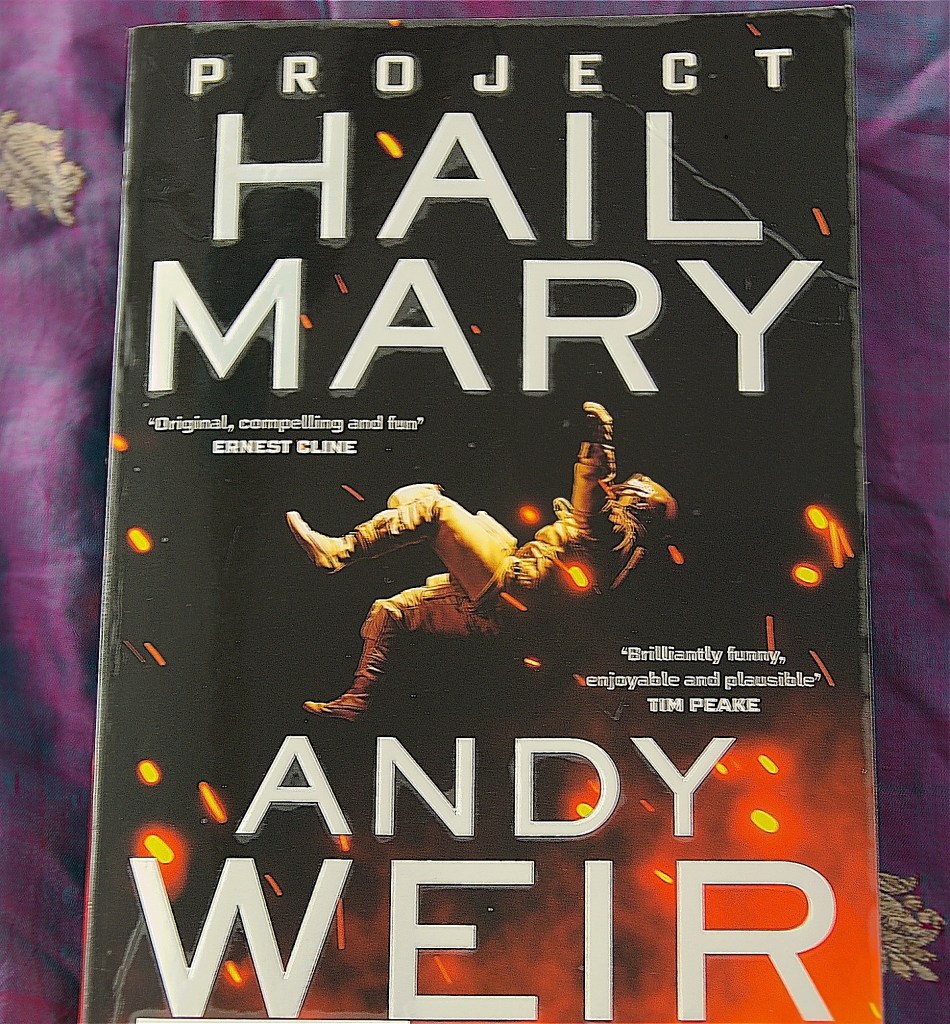
‘What’ is two plus two?’ With this thorny question, which our hero cannot answer, begins the epic space quest that will end all quests – especially if our hero (who doesn’t know who he is) gets it wrong.

I got so caught up in this book that I missed my train stop twice. For me, this was a strange achievement for a novel more packed with science than a textbook. But what exciting science it is. Both the story and the science move faster than a detective thriller. Our hero must detect through rapid experiments and improvisations, not made any easier by being in the wrong gravity, how to survive. Next, there is the question of fulfilling his mission, if only he could remember what it was.

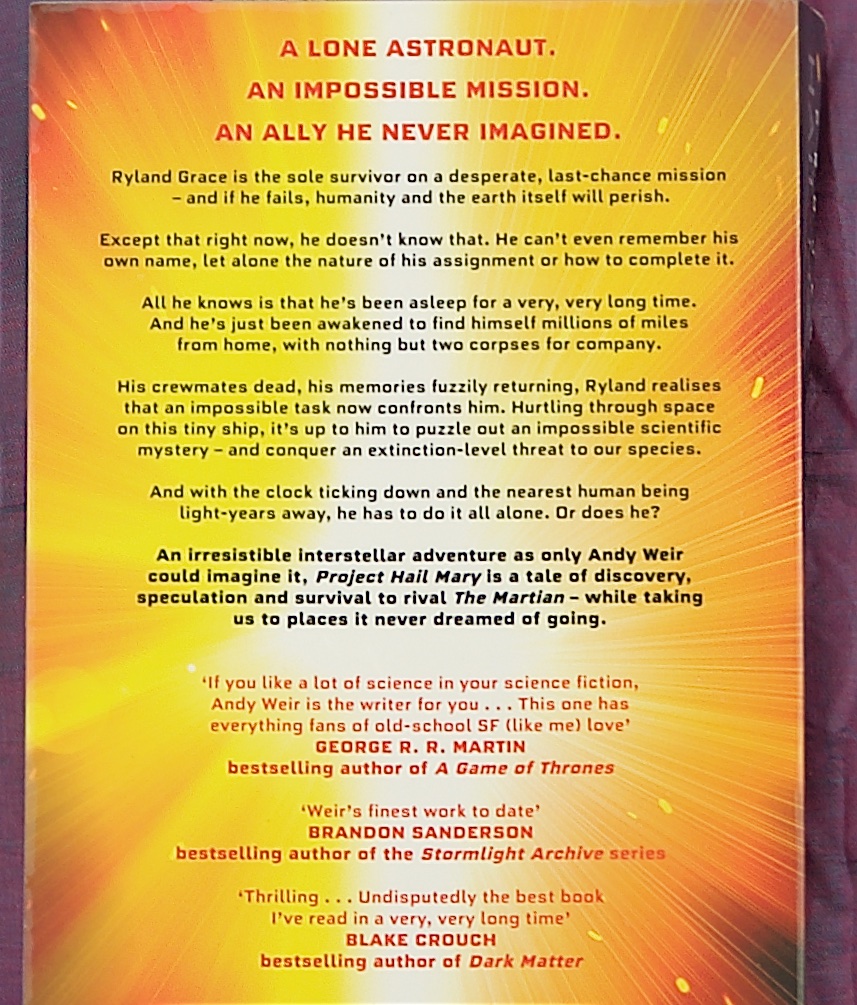
I don’t want to add more to my above comments and to what the blurb (above) says for fear of accidentally spoiling the story. But I will note that one fascinating thing about it is the reverse-take on climate change. In this story, the earth is going to cool down fast, too fast. I am going to quote a bit. I’m sure the author won’t mind -perhaps its even part of the reason he wrote the novel, for all I know. That and a love of science.

‘Nineteen years. That’s my estimate for when half the people now alive will be dead. .. The math of famine is easy. Take all the calories the world creates with farming and agriculture per day and divide by about 1500. The human population cannot be greater than the number .. The major crops are sensitive to temperature changes. Dr Leclerc, Ch. 14.

Dr Leclerc goes on in grim detail about how the messed up climate will mess up food production. The mission boss, Ms Statt, adds how once agriculture is disrupted, hungry populations go to war against one another for the remainder, causing further disruption to food production and thus intensifying the famines. So there it is: whether our climate cools down too fast, as in this fictional scenario, or warms up two or three degrees, as in our actual terrifying reality, bad things happen.

This is not just Science Fiction; it is SCIENCE fiction. By the way, it turns out that high school science teachers rock. Just as well. It’s looking like only young scientists can save us.

I will leave you will a list of Very Important Scientific Equipment: String. Tape measure. Stop watch. Pen. Something to write on (or use your arm or a wall. Optional extras include sticky tape and popsicle sticks. Never get stuck in space without these essential items! Do you want to know why? Well, now you have to read the book, don’t you!

You might also enjoy my revisit, after 50 years! to The Foundation Series by Issac Asimov.

Where to find the Project Hail Mary by Andy Weir – who also wrote The Martian– which got turned into a movie with Matt Damon. Find it at BookDepository (free shipping) and Book Shop Org (supporting local bookshops) or at Waterstones. Or visit the sci-fi section of your revered local bookshop. There is talk of turning Project Hail Mary into a movie too. But there is no way it could be as much fun as this book. Read it before the movie spoils it for you.

You are at Mark’s blog called Baffled Bear Books. Mark is a dark coffee tragic and bibliophile as well as the Guardian and blundering typist for Mawson Bear, Ponderer of Baffling Things and one of this bright world’s few published bears.

Asimov’s Foundation: revisited

Long ago, in the dawn of galactic history, way back in the 1970s, on the crust of a planet orbiting an insignificant star on the fringe of the star charts, a small bipedal creature hunched over well thumbed copies of secret lore printed on cheap paper and marvelled at the immensity of space and time.

From one end of the galaxy to another there was a crumbling Empire; and only Hari Seldon’s successors could save its billions of people from 30,000 years of barbarism. Maybe other kids like me felt like misfits as we fumbled at games and got relegated out of teams to merely keep scores on sports days. But we were involved in the sweep of galactic history. We also knew the Laws of Robotics by heart. We read Asimov.

I spent the earnings of my paper rounds (remember those?) on Asimov’s books. When I had enough cash (remember cash?) I made my pilgrimage to the sacred local bookshop. I’d approach the cash register already reading the first page and cycle home to read late into the night, straining my eyes at the tiny print and firing up ganglion after ganglion in my brain. Weeks would have to then pass before I could afford the next title, so what did I do? I read the titles I already had over and over again.

Asimov’s Foundation series appealed to me because they they were NOT space operas in which brawny jocks blew up green aliens and rescued females clad in scraps of cloth and leather. There are certainly wars in the story but they take place on the fringes. All the action is comprised of talk: talk and thought; people using their brains to solve vast problems of strategy, politics and the sweep of history. (‘I am .. not a clef-chinned, barrel-chested hero of a subetheric trimension thriller’. General Bel Rios to Brodig. Foundation and Empire.). To a teenager who was regularly pummelled by cricket balls because he never worked out how to catch them, this was great reading.

Eons passed. Propelled by my interest in Table Top Wargames, I read much history, and realised that Asimov’s ‘pyscho-history’ was well based on the events on good old brutal Earth. The decay of his Galactic Empire is loosely modelled on the fall of Rome. General Bel Riose, who retakes parts of the old Empire but falls foul of a suspicious Emperor is obviously inspired by Flavius Belisarius who angered Emperor Justinian of Byztantium by being too successful. The “Traders” and their Association recalled to my mind the early aggressive European traders such as the Portuguese and, later, the powerful East India Company. There are many points of inspiration that I eventually spotted -and I imagine fellow Asimovians did too.

More eons passed – let’s call them ‘human decades’. There I was the other day browsing in the sacred local library, repository of the wisdom of the ages (and an astonishing number of Harry Potter books) when Lo! I chanced upon all three Foundation titles.

“Read us, Mark”, they called in that quieter-than-thought but unmissable voice that books transmit when they spot their likely readers (You all read a lot; you know the voice I mean.) “You’ve only read us a dozen times before. Take us home. You don’t even need to do a paper run in the rain any more. Borrow us. We’re free from your local library.” Readers, your Correspondent borrowed them.

What an intriguing return journey this is. It’s like returning to the town where you grew up but being now able to see it differently. Look, there on the second page are the ‘calculator pads’ that Asimov imagined in the 1940’s*. I thought it would be wonderful to have something like that – and now I do. I call it a ‘smart phone’. And there is the reference to the planetary power source that I did not understand at all in the 1970s but now know to mean thermal power. And look, there is the basis of all sci-fi travel, beloved by novelists and movie makers, without which their stories would be impossible even as improbable fiction – the notion of ‘Hyper Jumps’.

With the magic of hindsight, I can see too how Asimov was still stuck in the 1940s and 1950s despite the far reach of his imagination. For one thing, the characters read newspapers. Another oddity, is that although Asimov crafted his Robot novels on the idea of a ‘positronic brain’, there is little computerisation in the Foundation series – although, to be fair, he was imagining a decaying civilisation in which nothing new got invented. And there is the omission worthy of note even to a teenage boy in the 1970s: there are few women; and such who do appear, like Batya in Foundation and Empire, are introduced with cringeworthy emphasis on their looks. Tobacco smoking remains prominent and the men light up cigars at any excuse. Smoking inside space ships! The thought chokes me up.

*These stories by Isaac Asimov were first published in magazine form by Street & Street Publications and the first paperback editions in 1952 by Gnome Press. The 2016 edition by HarperVoyager is the one which I photographed above (with my calculator-pad-smart-phone.)

Where to find the Foundation series: At BookDepository (free shipping) and Book Shop Org (supporting local bookshops). Or visit the sci fi section of your revered local bookshop, repository of the wisdom of the ages and of books that will call to you from the shelves, “Take us home, take us home.”

You are at Mark’s blog called Baffled Bear Books. Mark is a dark coffee tragic and bibliophile as well as the Guardian and blundering typist for Mawson Bear, Ponderer of Baffling Things and one of this bright world’s few published bears.

Asena Blessed, Book 2 of The Chronicles of Altaica, by Tracy M. Joyce

The Chronicles of Altaica make for a great read, the kind that you keep reading as you stumble off the bus and still read right up until you arrive (sigh) at the door of the day job. Adventure and danger, hard rides and mountain crossings, spies and plots and murders, primal magic and goddesses, war and strategy, skirmishes and battles and desperate duels. Here is a whole world of rivalries, peoples, cultures and absorbing characters.

First, catch up by looking at my review of the first part of The Chronicles of Altaica in which villagers fled an invading army, got swept out to sea and then were rescued by people in another country that they knew nothing of.

My difficulty now is to urge you to read this sequel, Asena Blessed, without blurting out ‘spoilers’. The Cover tells us this: ‘Isaura has emerged from the spirit realm forever altered .. Caught between two ancient powers, Isaura must try to make her own path. .. Aid arrives from an unexpected source – one who knows no rules and respects no one.’ I will highlight some aspects of the world building and the characters that I particularly liked.

Animal guardians have become a feature in fantasy tales since their appearance in Phillip Pullman’s books. We readers may have grown used to these linked animals existing mainly for the sake of the humans, like enhanced pets. Tracy Joyce turns that idea on its head by considering the wild nature of the linked animal. What if the linked animal has it’s its own intentions? What if it could be too powerful and difficult to control? Some scenes in Asena Blessed took me by surprise because the guardian acted on its own account, and the result was not remotely cutesy

Complicated heroes. Throughout the first book the reader identifies with the dilemmas of the central character, Isaura. In Asena Blessed, however, she is swept unwillingly into the spirit realm and emerges more conflicted than ever. Her resulting actions are not necessarily noble at all times. I often blinked at the turn of events. ‘Did she really do that?’

Matriarchs and Female Warriors. To say this book includes ‘strong female characters’ is an understatement. Among the Altaicans, all adults train for fighting and the tattooed and hardened women ride with the men.Key movers in this story include the female keepers of lore known as ‘Kenati’, the matriarch of the wolf-like Asena clan , the Lady Malak, who strives to undermine the power of the tyrant Ratilal, and an intervening female spirit who may or may not be a goddess but who in any case seems to be playing her own game.

Plausible Warfare: We have all endured movies and novels in which the fighting scenes are over the top: every warrior somehow knows all the modern martial arts. Bows fire multiple arrows at a time, arrows and sword blades cut like lasers through the heaviest body armour, and so on until it all gets silly. Not so here. The tactics, weapons, armour, siegecraft and melees are based on the authors research of warfare in our own non-Altaica world. The fighting here is brutal, the wounds nasty, and soldiers do appalling things to civilians. This is a fantasy world but it is no fairy tale.

The Chronicles of  Altaica: are published by Odyssey Books. The beautiful covers, full of meaning about the stories within, are designed by Karri Klawitter. You can obtain signed copies at Tracy Joyce’s website and also read about the forthcoming third book in the series. You can also read FREE COPIES of ‘Rada’, a story set in the Zaragarian Empire 16 years before the Chronicles begin.

Where to find Asena Blessed: Book Depository, Amazon and Barnes & Noble.
And if you would like your dollars to go to other than the giant companies, consider these retailers:
Bookshop.org, Booktopia, AbeBooks, Chapters Indigo.

(Images on this post are courtesy of publisher Odyssey Books and permission of the author.)

Your host, Mark, is Mawson Bear’s Guardian, photographer, editor, blundering typist, chocolates fetcher and cushions re-arranger. Baffled Bear Books ABN: 4787910119.

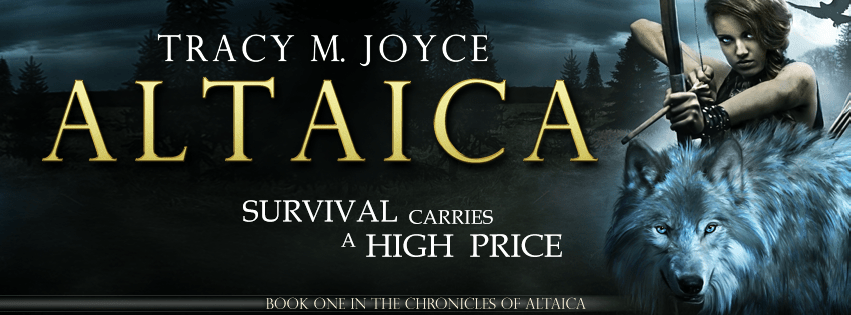
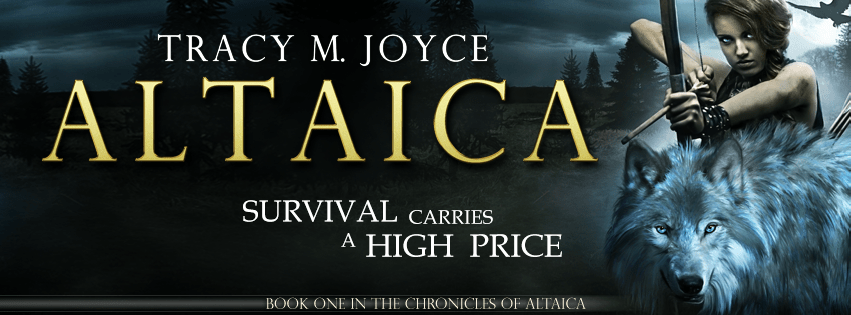
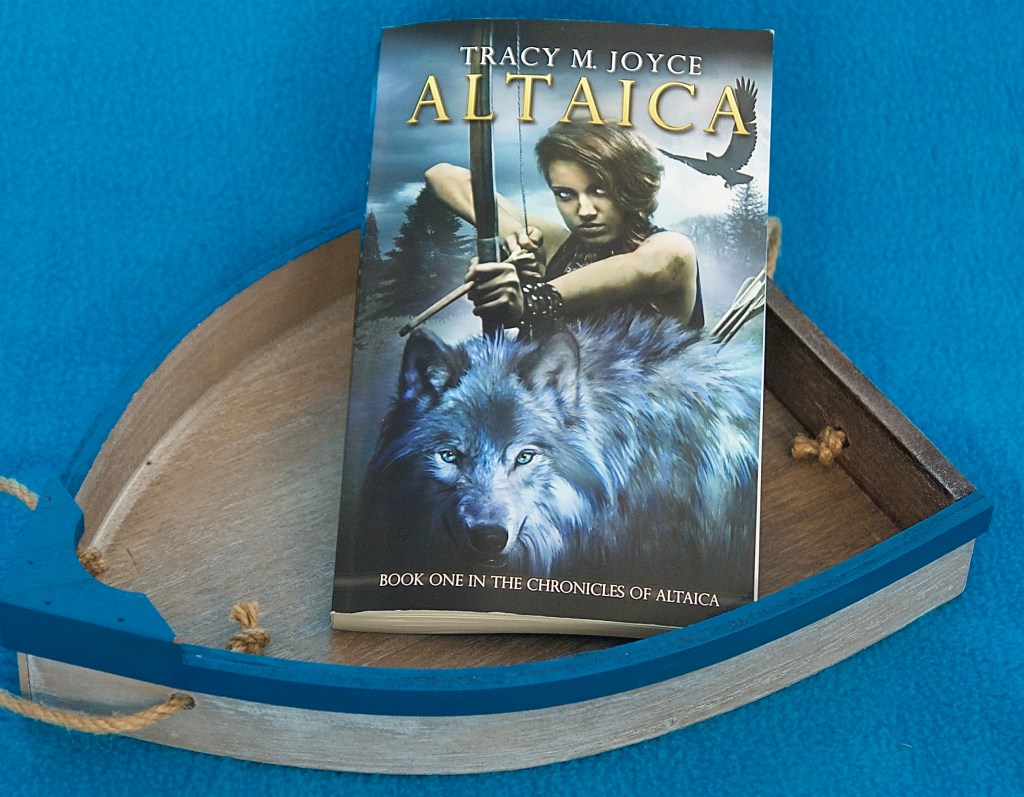
Altaica, Book 1 in the Chronicles of Altaica, by Tracy M. Joyce

I made a classic blunder with this first book of the Chronicles of Altaica by having  ‘just a quick look’ during my lunch break. By the time I looked up I had escaped rampaging armies, got embroiled in village jealousies and tensions, fought off invading scouts, got swept out to sea on a raft .. And was late to get back to work!

It was months before I obtained the sequel, Asena Blessed. Before touching it, I read the first book again. I enjoyed it even more this time, absorbing more of the interplay of the characters, the skill of the world building, and quite simply the story.

‘Her stories are gritty, a little dark and morality is like quicksand.  You won’t find any unicorns or fairies here.’ (Tracymjoyce.com.)

As the refugees on the raft drift at the mercy of ocean currents they become suspicious of one another, and particularly of healer Isaura, even though her skills with a bow had saved their lives. Ah, but in their codes of behaviour women ought not to fight at all, let alone kill.

‘Two things your race is known for -magic and murder. Hill clan witch!’ …. No one would look at Isaura, no one would speak to her.

The action now shifts to the peoples of Altaica, ‘a land rich in tradition; ruled by three powerful clans. with a history marked by warfare; where magic as we know it does not exist. Instead what is here, in abundance, is a more primal power. (Back cover.)’ Umniga, a wise woman, discovers the strangers and has her reasons for wanting to rescue them, altruism not being the first. Umniga and her acolyte Asha persuade the ruling clan chiefs to help.’

‘By the gods, how long have they been on this boat? How much longer can they last?’ Umniga the Kenati of Bear Clan.

 Now begins a canny play of brutal politics between the clans. The refugees have not arrived at a peaceful land! Ambushes, plots, murder, hard rides, sieges .. the pace doesn’t let up. A great read about people responding to the shock of having to make a new life among strangers. Plenty of battles too.

As I ready to plunge into Asena Blessed, I am full of questions, in particular, what are the ‘Asena’ and why do they have their own quarrel with a seeming goddess; and will Isaura’s raw and unpracticed powers do more harm than good? Now I open the next book and, yes, I am straight into a world of raw magic and unexpected twists once again. Review soon.

The Chronicles of  Altaica: are published by Odyssey Books. The beautiful covers which are full of meaning about the stories within are designed by Karri Klawitter. You can obtain signed copies at Tracy Joyce’s website and also read about the forthcoming third book in the series.

Where to find Altaica:  Book Depository, Amazon and Barnes & Noble.
And if you would like your dollars to go to other than the giant companies, please consider these retailers:
Bookshop.org, Booktopia, AbeBooks, Chapters Indigo , Desertcart.

(Images on this post are courtesy of publisher Odyssey Books and permission of the author.)

Your host, Mark, is Mawson Bear’s Guardian, photographer, editor, blundering typist, chocolates fetcher and cushions re-arranger. Baffled Bear Books ABN: 4787910119.