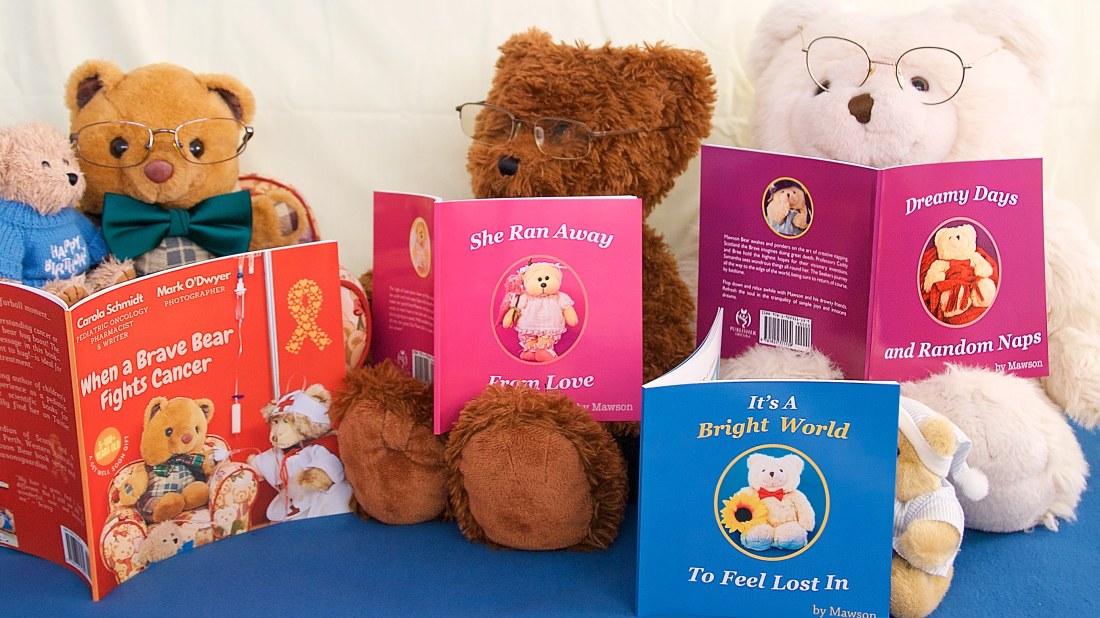
Mawson’s Guardian Says: Fortunately, we happen to know about books that are entirely suitable for your bears. They are suitable too for everyone you know who loves them. Oh yes, our Mawson the Writer-bear’s little books are just the thing to get your paws on
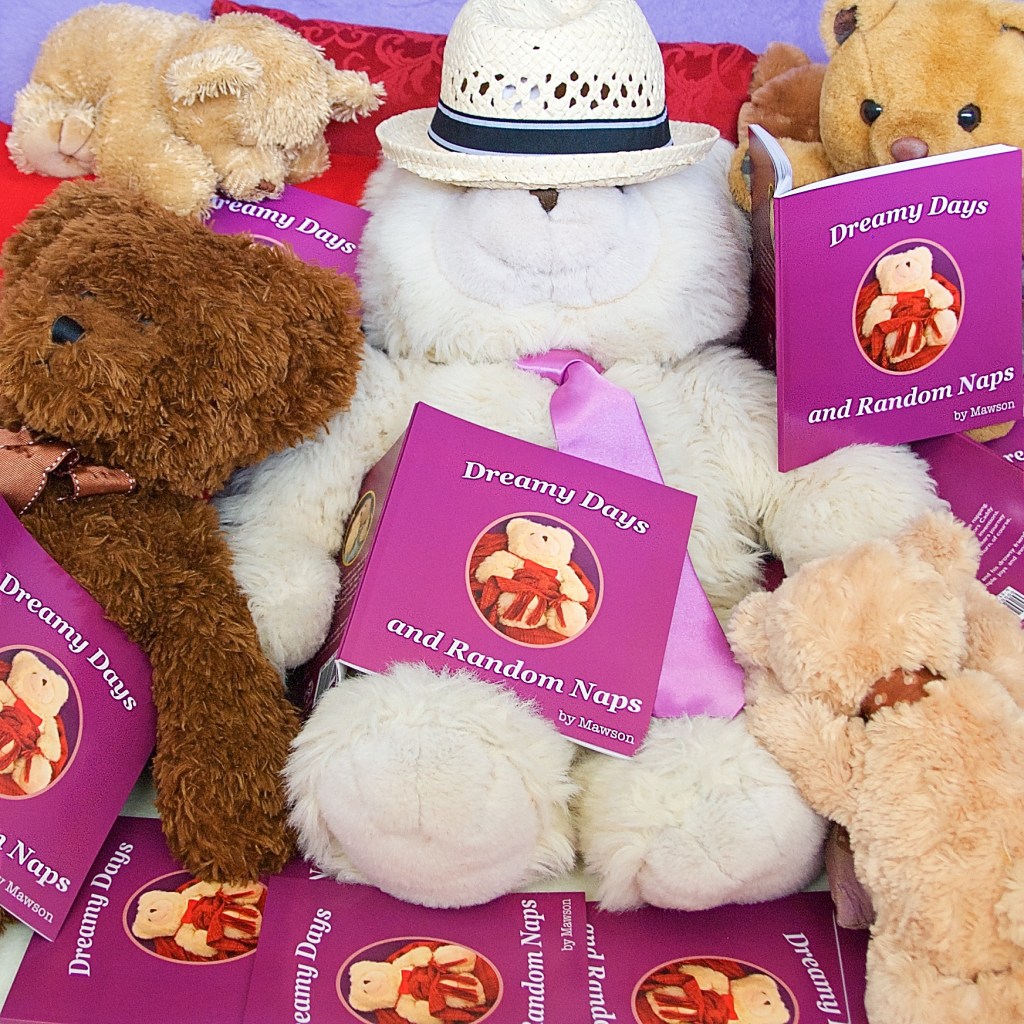
As everyone knows, bears read books. They’re not just sitting idly on your bookshelves -they are reading. But when they aren’t looking you can take out the books and read them yourself!
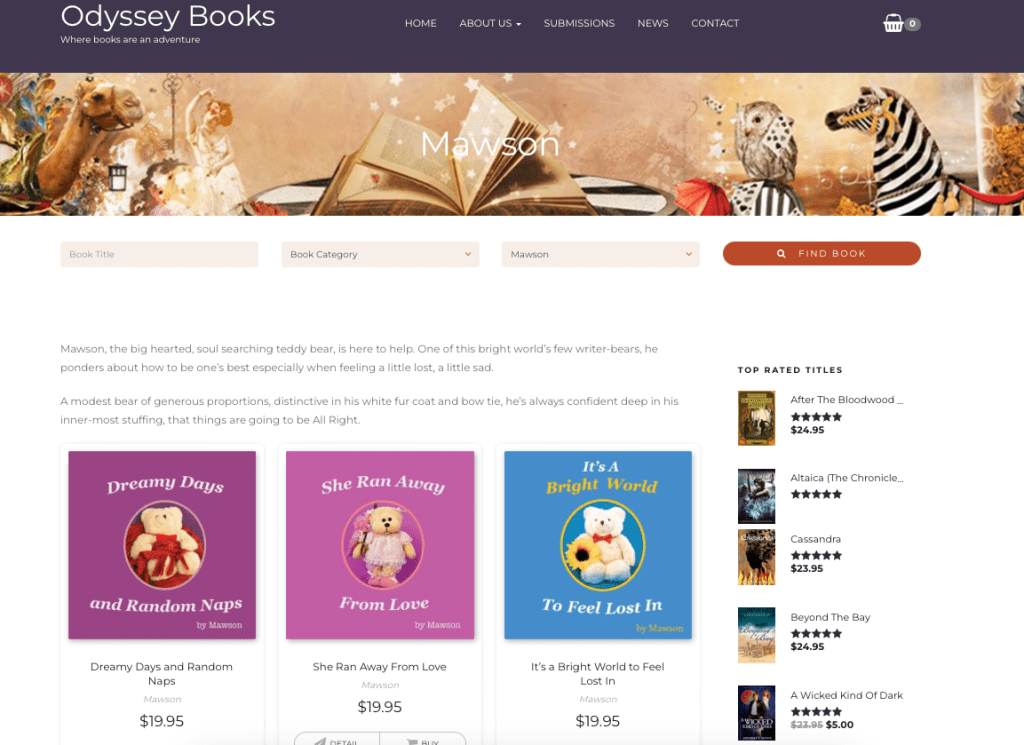
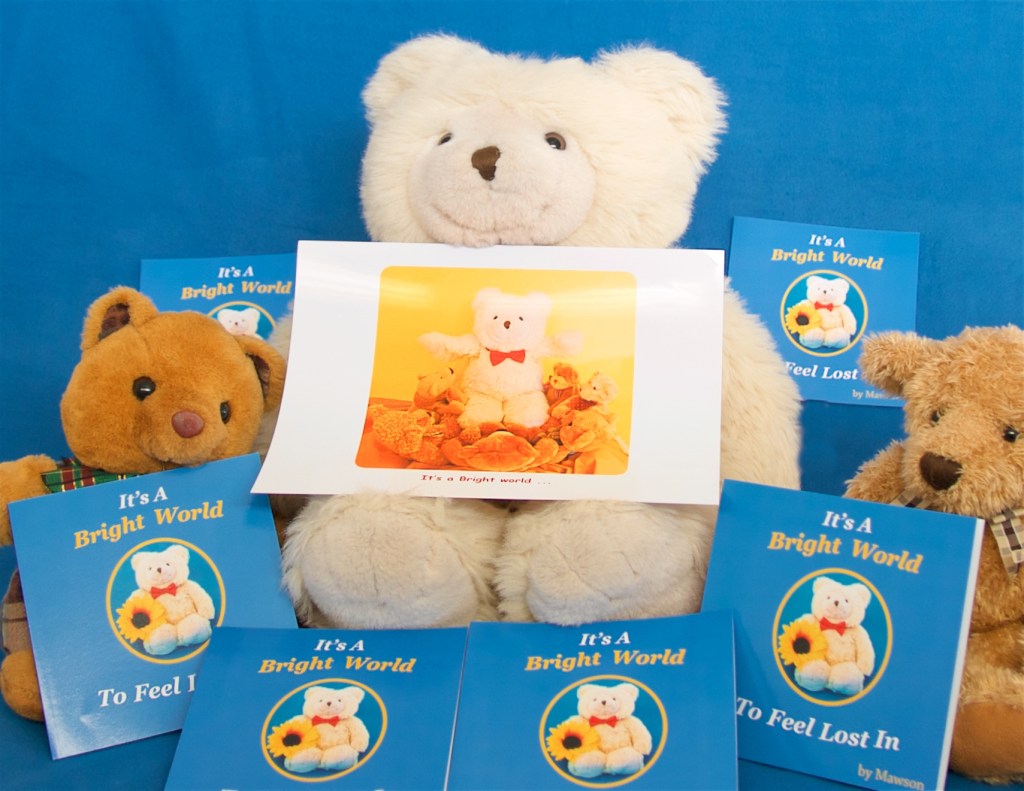
Our publisher is Odyssey Books. Just type in www.odysseybooks.com.au and there they will be. They will look like this:
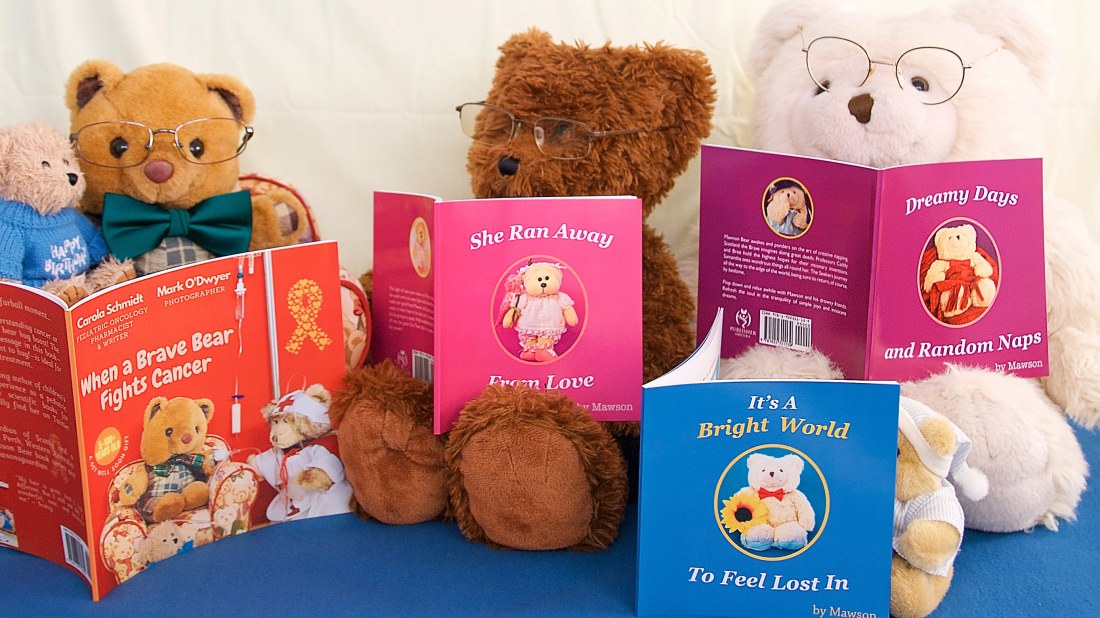
What Mawson’s books look like on Odyssey Books Website
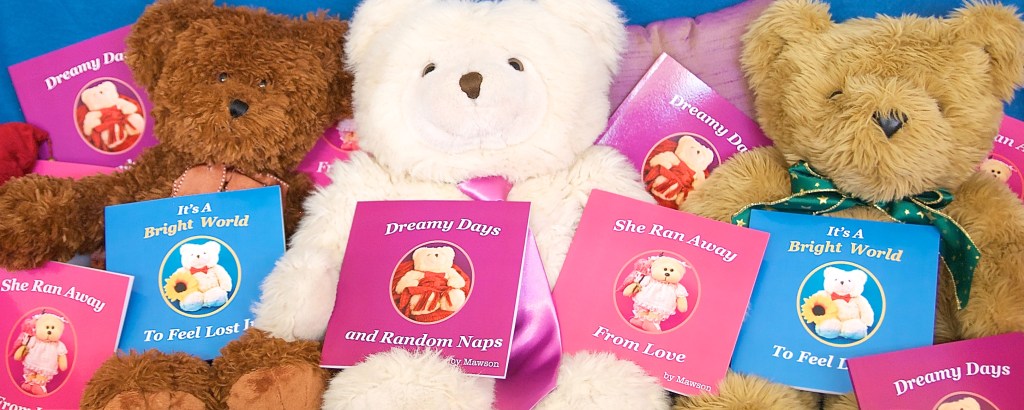
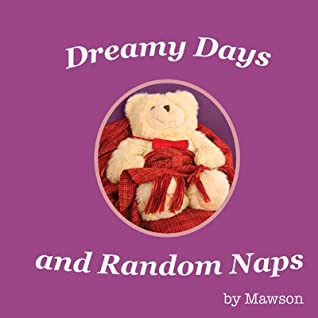
Plonk Down Your Paw: Just click on this blue stuff right here to find them. Collect them all for your bears, for your plushie loving friends, or … Just for yourself. Carry them about and dip into on dreary days.
KINDLE TOO: Mawson’s books, It’s A Bright World To Feel Lost In and She Ran Away From Love , are FREE on Kindle Unlimited on most Amazon regions. Or buy the Kindles for only around $US 3. All the books are in soft cover copies that you can keep and turn to whenever you feel a bit too baffled, a bit too ruffled, and just want a cosy world to sink into.
Happy Christmas reading for you and all your bears and friends.
PLEASE FOLLOW USAt Baffled Bear Books . Simply plonk your paw on the FOLLOW buttons on this very page. You can also follow on Amazon and on GoodReads. We are also on Instagram, and Tiktok, and Spotify and Mastodon (link is @mawsonbear@mastodon.au. )
Lady Susan, a short novel in letter form, remains unknown to many Austen fans even though a movie version, Love and Friendship, was made recently.
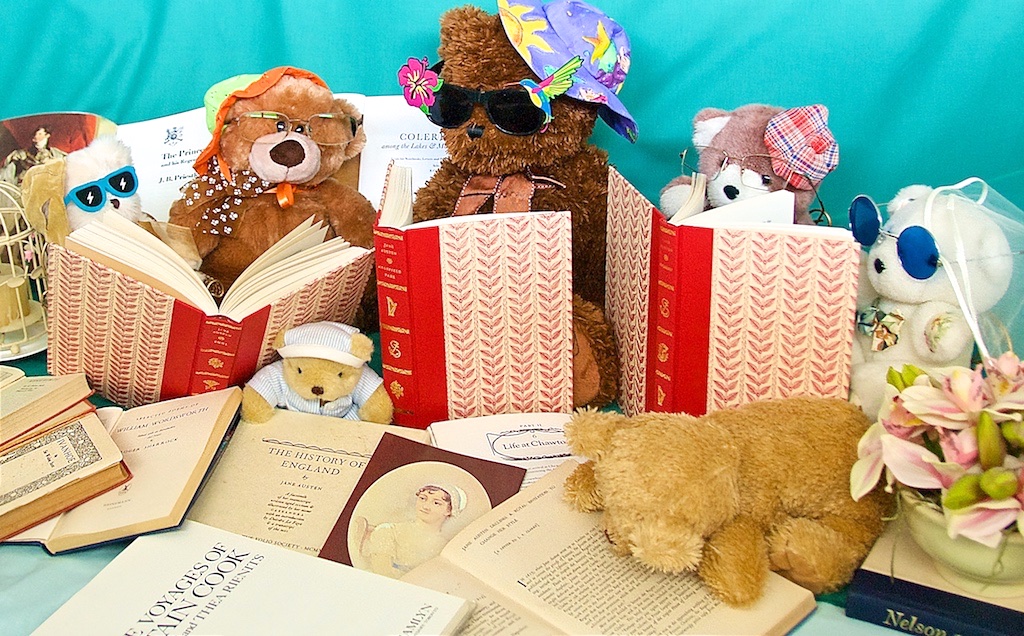
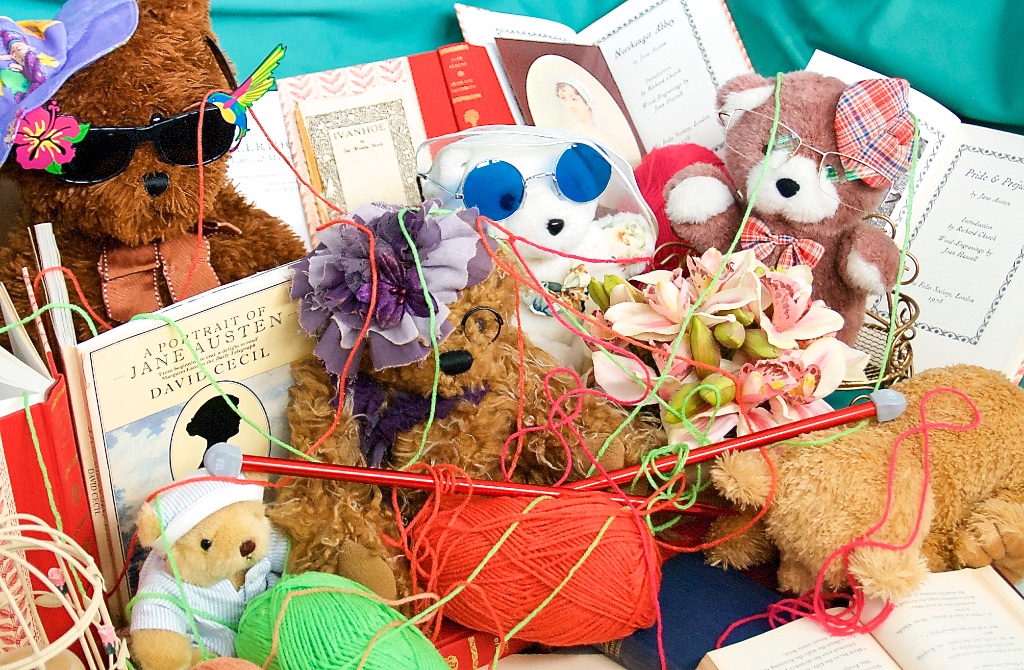
The Tedettes Jane Austen Bookclub with their discoveries about Jane Austen
The novel is packed with exquisitely written barbs and eyebrow-raising cynicisms, the best delivered by Lady Susan herself as she confides her schemes to her ally, Mrs Johnson. Here is Lady Susan speaking of the wickedly expensive schooling of her 16 year old daughter, Frederica.
Not one lover to her list
“To be mistress of French, Italian, German, Music, Singing, Drawing etc. will gain a woman some applause but will not add one lover to her list.”
Austen is thought to have writtenLady Susan before Northanger Abbey, but exactly when is not known. The Austen-philes quoted below guess at 1803, 1805 and 1808, which puts Austen in her mid to late twenties. She wrote the first version of Pride and Prejudice, of course, when younger still.
A Lion In The Path
“Lady Susan … (is) a lion in the path of those persons who would call Jane Austen charming, soothing, refreshing etc. G. H Lewes, when he recommended Charlotte Bronte to “follow the counsel which shines out of Miss Austen’s mild eyes” was unaware of Lady Susan, where Miss Austen’s eyes are those of a hunting cat. … In controlled grimness it looks forward to a masterpiece never written.”
Sylvia Townsend Warner, novelist, wrote the assessment above in a 1951 essay published by The British Council. (The essay, sadly, is probably no longer available, even if you do have one shilling and sixpence net*).
Before Becky Sharp there was Lady Susan
But David Cecil, author of A Portrait of Jane Austen , is among many Austen-philes determined to keep Miss Jane’s eyes as mild as possible.
“Lady Susan Vernon is a sort of blue-blooded Becky Sharp, an unscrupulous adventuress, far more sensational in her evil doing than any character in Jane Austen’s later books.”
The Tedettes Jane Austen Bookclub (and Knitters). Their main bother is to find the bonnets.
Cecil thinks of the novel as a youthful experiment, even a mistake.
“It is lively and readable … All the same, Lady Susan is not a success. Jane Austen had no acquaintance with smart society and has to describe it from hearsay: with the result that her picture lacks the intimate reality with with she portrays the country gentry … We may suppose she realised this for she made no effort to have the book published in her lifetime … She was gradually learning her art.”
The Perils of Gout
Mawson’s Guardian thinks that if a reader’s frisson of guilty delight is a desirable part of entertainment then young Austen had thoroughly learnt her art. Even the brutal lines in Lady Susanthat make Cecil wince are delivered superbly. Here is Lady Susan commiserating with Mrs Johnson about her husband’s gout.
“My dear Alicia, of what mistake were you guilty in marrying a man of his age! just old enough to be formal, ungovernable, and to have the gout – too old to be agreeable, and too young to die”.
Mr Johnson (Stephen Fry in the movie) has forbidden Alicia from seeing Lady Susan on pain of her being despatched to his properties in America if she persists, for he believes Lady Susan to be a Bad Influence. If you’ve never seen Fry play a ruthless role, watch on as he delivers the line, “I hear the Atlantic crossing is very cold this time of year”.
Subtle, Terrifying
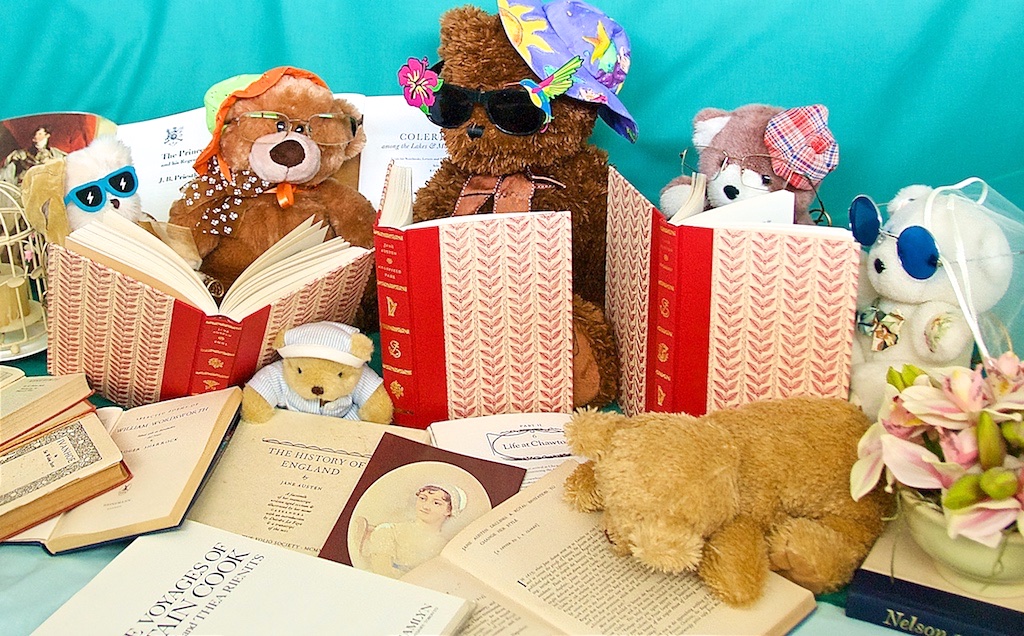
The Tedettes with their prized Folio editions of Jane Austen’s work
Richard Church, in the Foreword to the Folio edition of Austen’s shorter works, is perplexed that Austen even penned such a work as Lady Susan.
“This is a masterpiece, powerful, subtle and terrifying. It is as cruel as Les Liaisons Dangerous by de Lachol. This Lady Susan may well be compared to .. Madame de Merteuil for coldness of soul, amoral cruely and icy lust. What was this feature of Jane Austens’s personality? so primitive, unladylike and deadly? Here was no chronicler of the drawing room and the country house tea party.”
Bright Eyes
“In her person she was very attractive. Her figure was rather tall and slender, her step light and firm, and her whole appearance one of health and animation. In complexion she was a clear brunette with a rich colour, she had full round cheeks with a mouth and nose rather small but well-formed, bright hazel eyes and brown hair forming natural curls around her face.”
What kind of eyes did Jane Austen really have? Here is a word-portrait penned by her nephew. (Jane and Cassandra loved the role of Aunts.)
Hmm, so hazel eyes, greenish eyes, and bright. The green of a hunting cat’s eyes, perhaps?
Take your own look atLady Susanwho herself certainly seems to deserve that description. And then enjoy Kate Beckinsale’s excellent portrayal in the inexplicably renamed, but otherwise guiltily-delightful film,Love and Friendship.
Where to find Lady Susan, in various editions: On Amazon and at Booktopia.
PLEASE FOLLOW USAt Baffled Bear Books . Simply plonk your paw on the FOLLOW buttons on this very page. You can also follow on Amazon and on GoodReads. We are also on Instagram, and Tiktok, and Spotify and Mastodon (link is @mawsonbear@mastodon.au. )
Do you sometimes feel a bit muddled about, well, Things ?
Sometimes rather ruffled when Things just go and, well, Happen ?
Sometimes feel confused one moment and completely baffled the next?
It’s not easy being Grownup. All this business of having to be sophisticated and industrious all day long! It just wears you down. But when you arrive in Mawson’s cosy world, the frazzled reader can flop down among the cushions and relax.
Here you can find the answers to just about nothing at all. You can forget you ever had questions anyway.
Mawson and his friends are befuddled about most things most of the time – just like so many of us. And that’s all right.
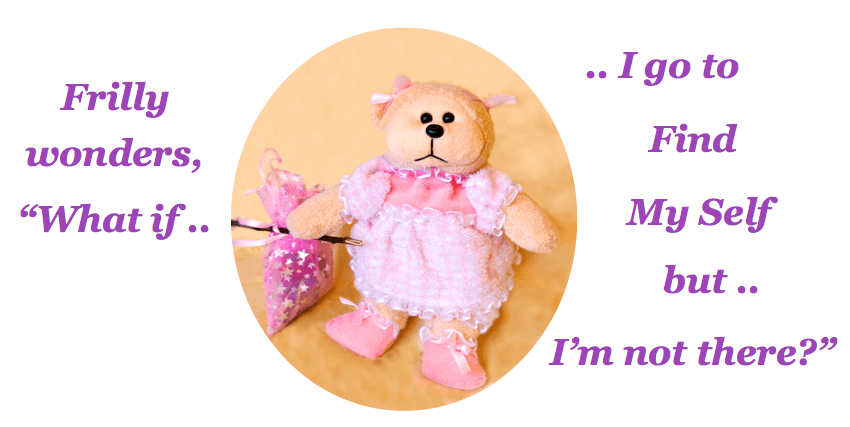
She Ran Away From Love,is all about his friend Frilly feeling hopelessly baffled by Big Questions.
‘A magical little grand tour into the meaning of happiness.‘ Sharri Williams Author of The Maybelline Story.
‘A book about optimism, searching for new adventures, and making the most of life and love.’ Review on Goodreads by Debbie Young, author of the Sophie Sayer Mysteries.
‘Mawson is a precious teddy who should be a staple read on every little one’s bookshelf. He certainly has a home on ours. I know he certainly inspired my own inner child.’ Lyndie, Bookaholic reviews.
By 1942, thousands of Australian soldiers were captured in the fall of Singapore and most of the remaining Australian soldiers were fighting in North Africa. The total occupation of New Guinea had been halted, but only just, by the Battle of The Kokoda Track. The towns of the northern coast were being bombed* and the invasion of Australian shores looked imminent. Britain declined to help. They were fully stretched fighting Germany and Italy. The Australian Prime Minister, John Curtin, turned to President Roosevelt of the USA for help.
General Douglas (‘I will return’) MacArthur retreated from the Phillipines and set up headquarters in Brisbane. Thousands of American army and navy personal were despatched to the ‘sunburnt country’, a land most of them knew little about.
The booklet shown below was No. 23 in a series rushed off the presses to inform Americans about their new allies, in this case Australia. The foreword says the booklet ’emphasises the importance of Australia’s position not only for the Southwest Pacific, but also in the grand strategy of the United Nations.’
There are all kinds of things in here that both Australians and Americans will find of interest, I think, even though much has changed. The author reminds his American readers that the Australian colonies came into existence because of the American Declaration of Independence. The loss of the American colonies, where the British often dumped their convicts, motivated the British to attempt to plant a new colony in the unexplored land mass on the far side of the globe. Of the 1400 members of the First Fleet, half were convicts**. Eventually 160,000 convicts were shipped to the new colony, first to Sydney and Hobart town, and later to South Australia and Perth. Many of them were only petty criminals or ‘political agitators’ who the Brits wanted to get rid of, especially ‘Fenians’ from Ireland. Nowadays some 40% of Australians can trace their heritage back to Ireland including your correspondent, an O’Dwyer by name.
Another connection with the USA that Americans in 1942, and now, may not have known about was the gold rushes. Many hopeful men headed from Australia to California in 1849 including, apparently, my own great-great grandfather. When gold was found in Victoria in the 1850’s, disappointed miners, including thousands of Americans, then flooded to the Great Southern Land. The largest rebellion against arbitrary authority in Australia was by angry gold miners (‘diggers’) at the ‘Euraka Stockade’. Among them were some Americans.
A third big connection, which was strangely omitted by Timperley in his booklet, is that in 1918 Americans fought with Australians on the Western Front at Chuignes, Mont St Quentin, Perrone and Hargicourt under the overall command of Australian general Monash.***
The booklet’s author, Timperley, blandly sets down the racist and patronising views of 1942, and at these you just want to weep. Concerning the Australian Aborigines we read (gulp), ‘ ‘Authorities have set aside native reserve where these remnants of a dying race may end their days in peace.’ Yes, it’s all true. The ‘natives’ were supposed to quietly go away and die. These were also the ghastly days of the White Australia immigration policy, the excuse of which was to keep out feared hordes of ‘coloured labourers’ from anywhere in Asia.
On the other hand, pre-1942 Australia had got a lot right. As the author notes, the Labor Party stimulated political reforms such as votes for women in 1902, free and compulsory education, pensions for invalids and veterans, and ‘a great body of social legislation which has made Australia one of the most liberal of world democracies’. Prime Ministers had by then included a former miner, an itinerant labourer, a storekeeper, a school teacher, and the great war time leader John Curtin who left school at age 13. Timperley contrasts this with the unlikelihood of such things happening in the USA.
Timperly could not know then of course that the alliance being forged between Australia as the USA even as he wrote would continue after the war in the Pacific. It remains bi-partisan Australian national policy to this day.
My thanks go to Lisa C. who stumbled on this treasure in a ‘pre-loved bookshop’ and generously sent it on to me.
*The movie ‘Australia’ depicts the first day of the months-long bombing of Darwin.
**Many an Australian now trawls the genealogical websites hoping to discover that their forebears were convicts, especially one from the First Fleet.
***Monash had 208,000 men under his command, including 50,000 Americans.
Mark is guardian and blundering typist for Mawson, one of this bright world’s few published bears.
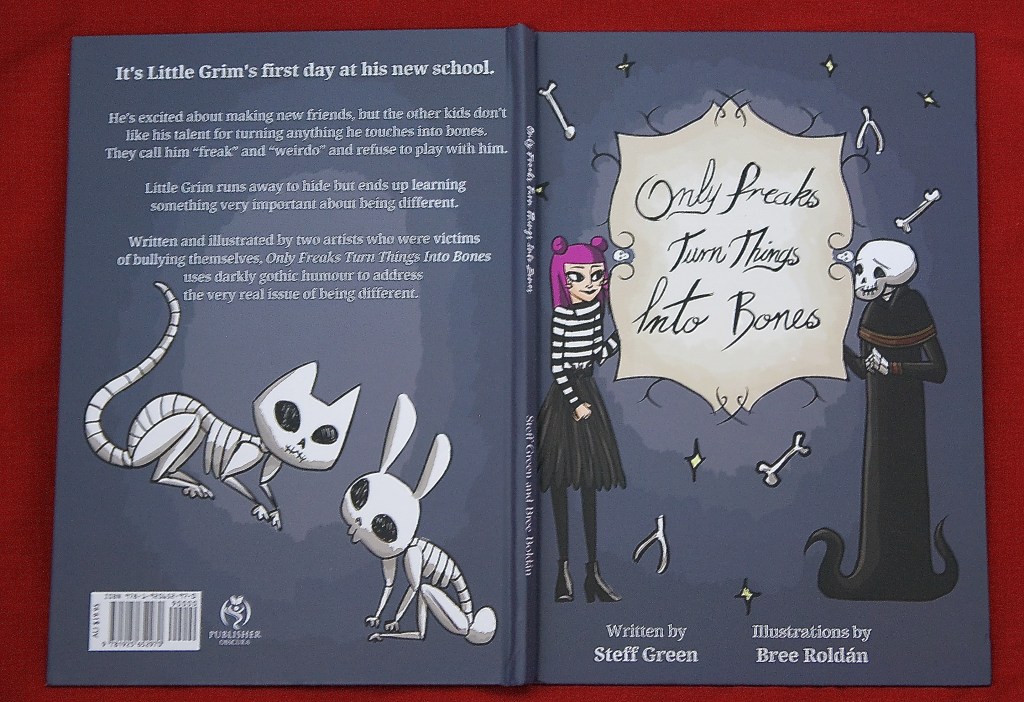
From the book’s cover: It’s little Grim’s first day at his new school. But the other kids .. call him ‘freak’ and refuse to play with him.
A parent drops his kid off at school. Ok, he’s the Grim Reaper, but what of that detail? Just another parent doing a drop off, really, whatever that parent’s job might be. His son, Little Grim, like every new kid, worries if anyone will like him.
‘Little Grim gripped his lunchbox tight. He tried to steady his shaking knees.’
To his distress, he is seen as ‘different’ from the start. And he does something normal, so normal that most of us have done it at some time: he runs away.
But what if other people, lots of people in fact, are seen as ‘different’ too?
Beautifully presented in hardcover and with full page glorious coloured illustrations, this story lucidly tells how ..
.. Bullying is never ok. And you are not alone.
At Sticksnstones you can see a website by young people for young people about dealing with bullying. And here is KidsHelpLine for the same purpose.
Where to find it this book: From Odyssey Books , and Amazon and also Waterstones, Barnes and Noble and Chapters Indigo. Or, ask your friendly local bookstore to order it in for you, and for any friend who might appreciate this little gothic tale.
PLEASE FOLLOW USAt Baffled Bear Books . Simply plonk your paw on the FOLLOW buttons on this very page. You can also follow on Amazon and on GoodReads. We are also on Instagram, and Tiktok, and Spotify and Mastodon (link is @mawsonbear@mastodon.au. )
Mark is guardian and blundering typist for Mawson, one of this bright world’s few published bears.
For a gripping account of the service of the nurses in France, and for a carefully researched and engrossing picture of how awful was ‘The War To End All Wars’, I highly recommend Nursing Fox.
Jim Ditchfield’s novel is a homage to the women who served as nurses on the Western Front. He says, ‘Although they performed a crucial role, the nurses of the Australian Army Nursing Service are rarely mentioned in accounts of that conflict’. I feel well read about that war but until now I did not know about the conditions these nurses had to endure. The Casualty Clearing Stations (CCS) had to be close to the trenches to give the wounded the best chance of survival. That meant the doctors, nurses and patients got regularly shelled and bombed.
We follow the fortunes of Lucy Paignton-Fox who has been raised on a cattle station in the Northern Territory. She has studied for what was in 1914 for women an extraordinary chance to train as a doctor. But when Australia follows Britain into the war in Europe, Lucy volunteers to be an army nurse.
The nurses work until exhausted and then keep on working. The wounded stream in from ‘stunts’ (battles) the names of which are now engraved on war memorials: The Somme, Fromelles, Pozieres, Ypres, Messines, the Menin Road, Passchendaele. Each name represents astonishing numbers of mangled humans.
‘There were only 41 men still fighting fit, four walking wounded, one who needed a stretcher. Just 41. The company had been 250 strong when the stunt started’. P.120 John Mitchell reviews his shattered company.
We are also introduced to John Mitchell of the AIF (Australian Imperial Force) and to Adam Haywood (Royal Flying Corps), Through their eyes we see the fighting on the ground and in the air. We are taken through the frentic disorganisation of things as basic as getting fed, getting the hospital tents set up, and moving about on the shattered ‘roads’ (planks laid over mud). As readers we get to know as little of the ruthless decisions being made by the base-wallahs (staff officers) as do the troops and nurses. But we see the results in the plethora of grim details. As well as the human toll, the author reminds us of the transport horses and mules killed by artillery or worked to exhaustion. There is no blaze of glory anywhere, just the endurance of the unbearable by men and women at a time when the best anyone could hope for was a ‘ticket to blighty’ (a wound so bad they’ll be sent to England.)
Another excellent novel involving the field hospitals and nurses on the Western Front is The Bishops Girlby Rebecca Burns. You can see my review here.
Personal Note: One battle name in particular gave me an irrational start: The Menin Road. As a child in New Zealand I lived on a quiet suburban street called Menin Road. The streets all around bore names which I later learnt to be battles of that terrible war. It’s curious to think that as I played games on the neat lawns, I had no idea across the other side of the world so many thousands had died by the original Menin Road that their number will never be known.
PLEASE FOLLOW USAt Baffled Bear Books . Simply plonk your paw on the FOLLOW buttons on this very page. You can also follow on Amazon and on GoodReads. We are also on Instagram, and Tiktok, and Spotify and Mastodon (link is @mawsonbear@mastodon.au. )
Mark is guardian and blundering typist for Mawson, one of this bright world’s few published bears.
I read three books concerning Crete this month. First, Swallows Dance by Wendy Orr, set in the Bronze Age. Then I read in tandem both a novel and a history on what happened from 1941 to 1945 to the Cretan population, and to others caught up in the invasion and occupation, including soldiers and resistance fighters of Crete, Greece, Italy, Germany, Britain, Australia and New Zealand (ANZACS).
An innocuous title, thought I, as I selected The Girl Under the Olive Tree, by Leah Flemming for a holiday read. Well, it starts quietly enough with young Penelope George in Scotland mainly concerned to avoid being married off by her status conscious mother. But in her search to find her own identity in life, she takes up nursing training, then accepts a chance to join her sister in Athens.
An idyllic time follows for Penelope but as Italian and then German forces invade Greece, she is caught up in a malestrom of war. As she turns 21 she makes hard choices, the courage and cost of which not one male in the story seems to appreciate.
Through this fictional story of her endurance and trials, and those of her friend, Yolanda, and of her love for the infuriating Bruce Jardin, we are taken through the horrors endured by this island. But what, thought I, as I read on, totally engrossed, of this olive tree? All becomes clear eventually.
The Girl Under the Olive Tree, by Leah Flemming, published by Simon and Schuster 2013, was inspired in part by Johanna Stavridi, a nurse honoured by the Hellenic Red Cross for her courage and work.
Anzac Fury: The Bloody Battle of Crete 1941, by Peter Thompson, published by William Heinemann 2010, concerns, as you’d expect from the title, the fighting itself during the invasion, particularly that of the ANZACS*. But so we can make sense of it all, Thompson takes in the wider scenario beginning with the fighting in North Africa and the whole Mediterrean.
He describes ordinary fighting men and the astonishing things they did (through use of surviving diaries and letters), and he goes into the personalities and motivations of the commanders and politicians, whose decisions cost so many so much.
*Note for non-Australasian readers: The term ANZAC was coined in 1915 to denote the Australian and New Zealand Army Corps that fought in the disaster known as Gallipoli, a campaign conceived by Mr Winston Churchill. Turkish, French and British troops died there too in huge numbers, yet the event has a special place in the histories of Australia and New Zealand. Both were small countries that had only been self governing for 13 or 14 years. They suffered losses that shook their national psyches. The day the troops landed, 25 April, is a day of Remembrance.
When, 26 years later, the troops of these nations were shipped to the hopeless cause of defending Greece, again due to the decisions of Mr Churchill, they were highly conscious that illfated Gallipoli was not far away.
Mark is guardian and blundering typist for Mawson, one of this bright world’s few published bears.
This book is not only for cat lovers, but for all everyone who has lost a pet and wondered wondered about how they are, over there, across The Rainbow Bridge. In the third and last of his diaries, Ollie reports from beyond the Bridge.
Ollie Cat himself as he arrives over The Bridge
Ollie, the bouncy young cat, is back. But no longer does he recount his exploits within the Lazypaws Guest House For Discerning Felines, as he did in his previous two diaries (Click here to see my reviews) . For Ollie has taken himself unsupervised on a walk across the road (Oh, No!) … And now finds himself in what he thinks is a dream. “Iridescent beautiful colours seemed to be everywhere, shimmering in the early morning haze’. (Chapter 1). To his further surprise, Ollie is greeted by former departed cats of the Lazy Paws Guest House, wise old Garfield, Ricky, Timmy and Billy.
They explain that he is at The Rainbow Bridge. But Ollie wants to go back to Mum at home. They say that he cannot cross the Bridge back the other way. Ollie thinks this is a stupid rule. Time and again, he attempts to cross back over the Bridge. The other cats, and his new friend Michael Mouse, and even The Great Cat In The Sky, patiently help Ollie bear up through his shock, confusion, and longing..
This is a story, as the author says, of grief as seen in reverse. Just as Mum takes time to come to terms with Ollie’s sudden road accident death, so does Ollie parallel her bereavement. Eventually, looking back through a special portal, he sees Mum ‘get her purr back’ as she is comforted by other cats. Finally he feels ready to let go his responsibility for looking after her.
l recommend this book to all looking for comfort after losing a loved fur-friend. ‘Purr filled blessings” be upon you.
Conversations from the Bridge: More adventures of Ollie the Cat, by Pauline Dewberry is available in Kindle from Amazon. Take a look too at Ollie’s other diaries.
The author: Pauline Dewbery helped Ollie to record his adventures. The Daily Mews is Pauline Dewberry’s popular website for cat lovers. With cat humour and jokes, caption contests, guest articles about cat care and cat antics, it is your ‘purrfect way to start the day.’ It provides, among other things, a space to respectfully reflect on feelings of grief for our passed pets, for instance, in the tributes called “Napping on A Sunbeam”.
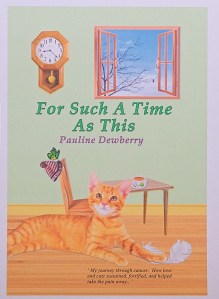
Pauline also wrote For Such A Time As This: My journey through cancer. How love and my cats sustained, fortified me, and helped take the pain away. This is listed at Amazon UK and Amazon USA and on Amazon Australia. and more. It’s about $3 on Kindle and in some regions its FREE to read with Kindle unlimited.
You are at Mark’s blog called Baffled Bear Books. Mark is a dark coffee tragic, bibliophile and Guardian of Mawson Bear, a Ponderer of Baffling Things and one of this bright world’s few published bears.
Are you fascinated by that most mysterious thing, the act, the mystery, the alchemy at the moment of creativity?
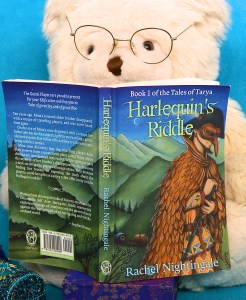
While The Tales of Tarya trilogy is presented as a fantasy for Young Adults, I think it’s an engrossing read for anyone aged 109 or under who is fascinated by that most mysterious thing, the mystery at the heart of creating things.
What happens to artists, writers, composers, as they disappear into “where the magic happens”? Do they go to another place entirely? Do they go to Tarya? The Tales will especially appeal, I think, to anyone who has stepped on a stage and entered that terrifying in-between moment being being oneself and playing the role.
‘Thunder rolled heavily as Mina neared her house, her steps weighed down by the endless years ahead, fulfilling everyone’s needs but her own.’
Mina’s quiet days consist of helping her family, particularly Uncle Tonio who had some sort of breakdown years before. She had enlivened her hours by telling stories but her father forced her to stop – he feared them for some reason.
Players arrive in her backcountry town of Andon in Litonya. The disturbing Harlequin invites Mina to join the troupe. She accepts in the hope of learning what happened to her brother who had disappeared years before. Her father now reveals that her story telling is a special gift: she can call visions into being with her words.
As the troupe rolls through Litonya in their wagons Mina tests her story telling powers and discovers a mysterious other world called Tarya. But her new friends evade her questions, even Dario to whom she feels attracted . They pass through villages afraid of the Players and some people in them seem to be empty of soul, like Uncle Tonio. She grows more and more uneasy.
Rachel Nightingale looks at the paradox of power. When you can affect the lives of others you could do great good but also unwittingly cause harm. And always there are those who take power for themselves and abuse it anyway.
‘Darkness can come from what seems to help others’.
The descriptions of the other-world of Tarya itself are lyrical, dreamy, haunting. I couldn’t get enough of it. I will never think about creativity again without Tarya in mind.
I recommend also the website for Rachael Nightingale, novelist, playwright, performer and thespian, where she speaks of the power of story and fantasy in our lives. Readers can learn more there about the Commedia dell’Arte.
The Tales of Tarya is available at: Amazon, Waterstones, Barnes and Noble, and Chapters Indigo, among others. For Columbine’s Tale see Amazon and BookDepository.
You are at Mark’s blog called Baffled Bear Books. Mark is a bibliophile, dark coffee tragic, and the guardian and blundering typist for Mawson Bear, one of this bright world’s few published bears.
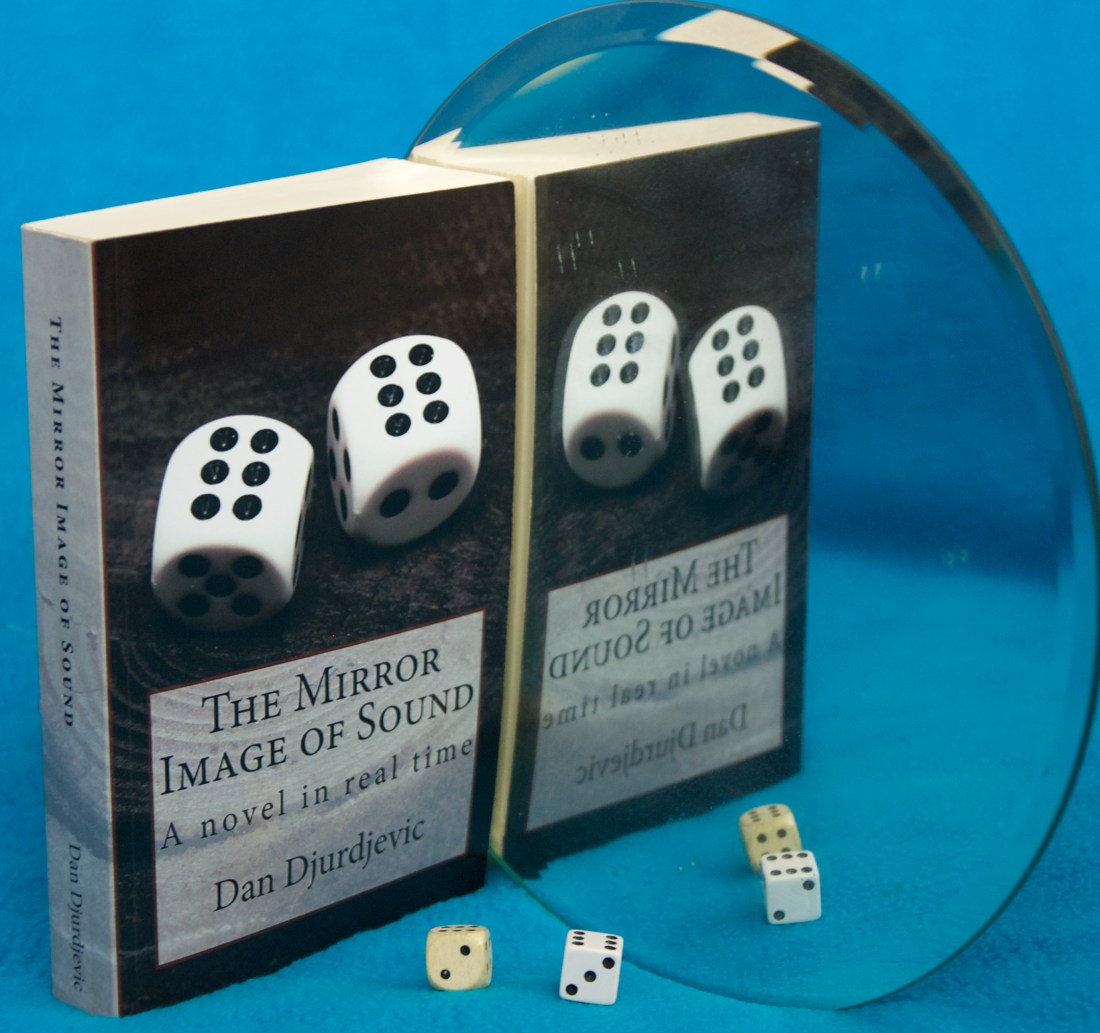
The Mirror Image of Sound, A Novel Written in Real Time gives us several levels to absorb in one book: the portrait of a failed marriage, martial arts action, workplace and domestic bullying, a philosophy and possible science of alternate worlds, or parellel lives, if you like; and there is even a romance.
It would become a classic of it’s kind but only for the fact that it is the one novel of its kind I believe to exist, particularly as it was written in real time – of which more later. I feel fortunate to have read it.
Black comedy of the darkest hues
We are at first spiralled down into a black comedy of a disintegrating personality. Because much of the daily detail is horribly familiar to the experiences you and I have also endured and yearned to escape, we can’t help following Dan, the hapless hero, through his ghastly days with the boss from hell, the friend from purgatory and the wife from nightmares.
Only Dan’s Uncle Frank seems to care about him. But when Frank suddenly dies, Dan finds himself being manipulated from beyond the grave. Exhausted by the demands on him, Dan wrestles with mounting debt, the scorn of his relatives, a mystery basement filled by sound equipment with peculiar instructions, and the curious case of Bugsy, the droopy-eyed cat, who simply vanishes.
If only Dan, and you, and I, could just vanish and start again
If only Dan could vanish too – to a whole new life: new house, new friends, new job, new love affair. Have you not toyed with such a dream?
But if you do create a new life, even a new self, you might also unleash new and drastic consequences of your actions. After all, do you know the extreme possibilities of your own personality? Really, do you? I HAD to read on.
This science-fiction tale warps within inner space, the infinite space of Self. As you barrel through it, you will not only learn Dan’s chosen path but also be whisked across useful tips on how to create your own band, how to make Balkan moussaka, and how to totally destroy a front lawn. There is also a heartfelt homage to the music of The Hunters and Collectors. (You may recall Throw Your Loving Arms Around Me, from this band.)
Real Time Writing
We’ve seen a few movies try to portray say two hours of action within the two hour running time. But this novel began with a much greater challenge. It was uniquely written and presented, at first, in real time, that is each day of writing became a day in the life of the character.
As the author completed, for instance on a Monday, what the hero ficitionally endured on that Monday, he uploaded that chapter/day to a blog the same night. This must have fascinated the readers for some 8000 followed it in those (real) weeks).
But the author states that he often finished the chapter/day with no idea how he was going to extricate his characters the next day. And there was no going back. He couldn’t think, oh that angle is not working, I’ll go back and change what’s happened so far. No, he pressed on with what he had. Dan talks about this fascinating approach in an appendix to the book. (Personally I would wonder, children, whether to try this at home. The pressure on the author strikes me as enormous.)
He is the current chief instructor of the Academy of Traditional Fighting Arts based at the Bayswater Martial Arts and Yoga Centre in Western Australia. There he teaches Okinawan karate, Chen Pan Ling style taiji (t’ai chi) and other gong fu (kung fu) as well as various traditional weapons systems.
PLEASE FOLLOW USAt Baffled Bear Books . Simply plonk your paw on the FOLLOW buttons on this very page. You can also follow on Amazon and on GoodReads. We are also on Instagram, and Tiktok, and Spotify and Mastodon (link is @mawsonbear@mastodon.au. )








 Baffled Bear Books