Some of the best philosophers are bears

Here is some of the text of an interview by Rachel Nightingale, author of The Tales of Tarya, of Mark, Mawson Bear’s Guardian.

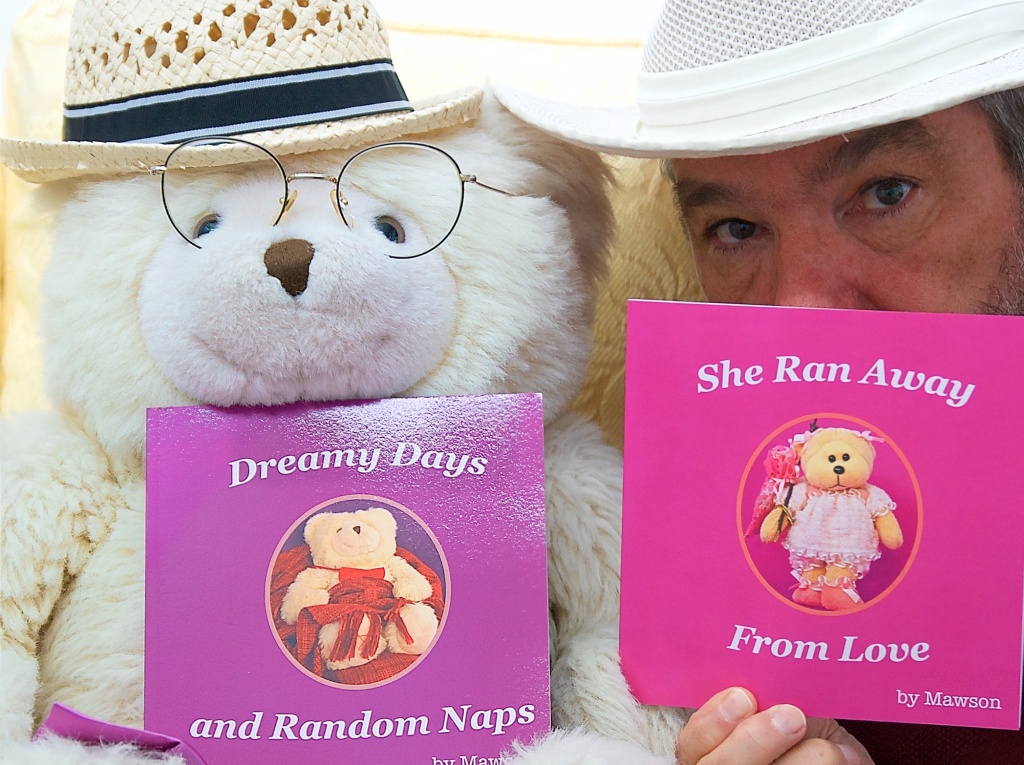
Mawson is the proud author of It’s a bright world to feel lost in, published by Publisher Obscura. This is a beautiful philosophical book in the vein of The blue day book by Bradley Trevor Grieve. It is the perfect sort of book to buy as a stocking stuffer or Kris Kringle for someone who likes to muse about life, and who hasn’t lost their sense of whimsy. Mawson ‘s second book is She Ran Away From Love.’

Which writer or writers opened your eyes to the magic of storytelling and why?

‘When young I devoured books by many authors but when it comes to the magic they brought me, I will list those by C.S Lewis (Narnia), Issac Asimov (Sci Fi), and Rosemary Sutcliffe (historical fiction).’

Like most readers, what I sought was to be transported from this world.  With these writers I could be in Norman England winning back a castle during a school break, in the woods of Narnia on a rainy Sunday, or fleeing rogue robots during a long car ride.

What is your greatest magical power as a writer?

‘Shyly he says, ‘I listen to the bears’.

Poets, actors, composers, painters, ‘artistic people’, all speak reluctantly about the heart of creativity. They proffer vague expressions like ‘feeling inspired’, ‘being guided’, ‘trusting the muse’, ‘entering into the role’. What does this mean? I think it’s about listening for ‘something’. Now, this ‘something’ cannot not be analysed or modelled on a flow chart. It’s very shy, and it needs to trust you to respect it. I think the greatest magical power of a writer is to gently –don’t startle it –gently reach out for this ‘something’, gain it’s trust; and then to let characters and story flow on from there.

I listen to my bears. I never know when I’ll hear in a voice as quiet as can be imagined the best ponders framed in the best words; and these are ideas and words that I myself did not have in mind, really I didn’t. When I don’t listen but just grind on, my writing is not right: the voice feels wrong, the images don’t flow, and it is not satisfying’.

For the rest of the interview please visit Rachel Nightingale’s website.

While you are there be sure to read more about the books by this novelist, playright, performer and thespian. Rachel ponders much about the power of story and fantasy in our lives. At her website you can learn more about the Commedia dell’Arte, an inspiration for The Tales of Tarya.

My review of The Harlequins Riddle, the first of those tales, is right here. Columbine’s Tale, Book two of the series, and Book Three, Pierrots’ Song are also out now, published by  Odyssey Books.

The Tales of Tarya is now available at Amazon as a complete Kindle Set!

Goodies at Mawson Bear’s RedBubble Shop

Mawson Bear and friends appear on goodies at the RedBubble Shop. You can see carry bags, mugs, water bottles, T-shirts, Stationary and more with pics taken by Mawson’s Guardian.

When you are at Mawson Bear’s Shop at RedBubble, it will look like the screen shot below. You can then take a look for your favourite sort of things: Teddy bears, flowers, teddy bears, beaches, teddybears, landscapes, and of course Mawson’s friends. Some things don’t cost much, the postcards for instance. Or get a carry bag featuring a handsome bear. No one else will have one quite the same.

Be sure to click FOLLOW while you are there. We add more bears (and other things) whenever the bears sit still enough for a handsome photo.

Mawson, you may remember, is one of the only published writer-bears in this bright world. His picture books are suitable for grandchildren up to grandparents.

Our publisher is Odyssey Books. Look also at Bookshop Org (supporting local bookshops), at Amazon everywhere, at Barnes and Noble, at Dymocks, at Booktopia, at Walmart, at AbeBooks, Mighty Ape (New Zealand), Google Books, at Booklubben and more. 

Often A Bounder: The Tedette’s Jane Austen Book Club reads about Georgette Heyer’s Heroes

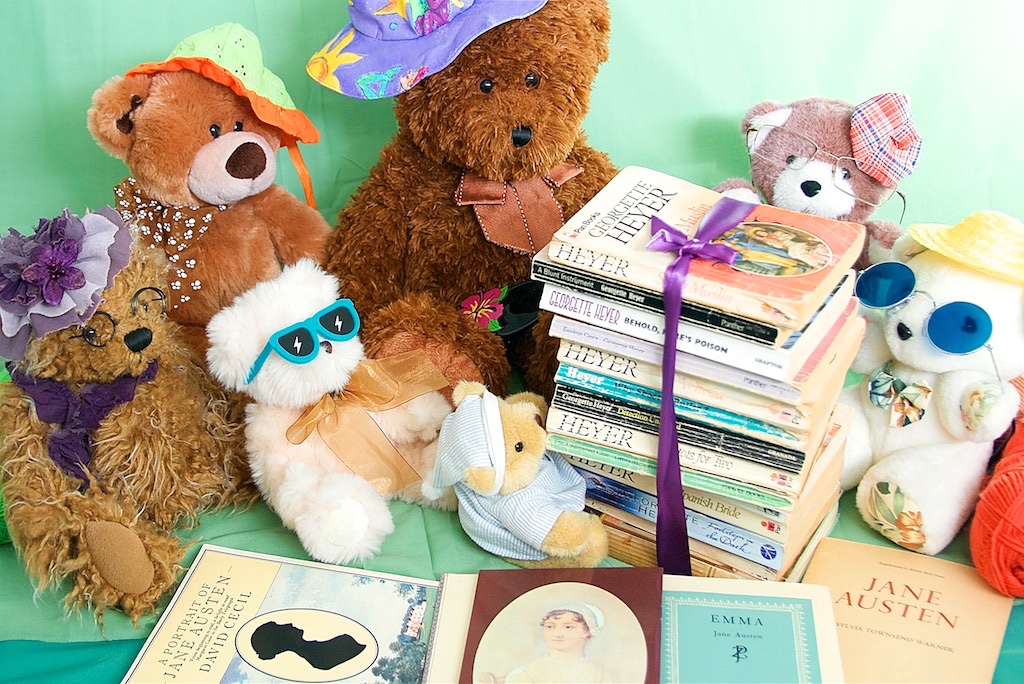
Thrilled by Jane Austen’s novels, our Tedettes Jane Austen Book Club looked about for more books on the Regency. Their house (like every house, surely) turned out to be a treasure trove of novels by Georgette Heyer.  They also got their paws on Jane Aiken Hodges biography,  The Private World of Georgette Heyer  (Chivers 1984 edition). Read about their discovery here.

The Tedettes get their paws on a trove of Georgette Heyer Novels

Heroes

Georgette Heyer created her heroes very deliberately.  In correspondence with her publishers she gleefully refers to them in a private shorthand by Type, explaining for instance that a particular character is the “The Heyer Mark I” and another is “The Heyer Mark II” and so on.  She’d skilfully build up such a Type, and the readers’ conceptions of such a man,  and then two or three novels later, turn around the readers’ assumption by changing the decisions and actions of the Hero.

Mr Rochester: the prototype.

Jane Aiken Hodge found unpublished articles by Heyer, one of which will fascinate her readers (see Ch. 5 of the bio) as it concerns Mr Rochester, from Charlotte Bronte’s Jane Eyre. This is Heyer’s own view of Mr Rochester:

“It is a accepted fact that women form the bulk of the novel reading public and what woman with romantic leanings wants to read novels which have as their heroes the sort of men she meets every day of her mundane life. (Mr Rochester) is rude, overbearing, and often a bounder, but these blemishes, however repulsive they may be in real life, can be made in the hands of a skilled novelist extremely attractive to many women.”

How ‘Fluffy’ was the Romance, really?

Hodge makes the case that underneath the entertaining friction and tension of her heroes and heroines lies an abiding principle: the protagonists are maturing through the pages into a rich and full relationship .

 Heyer’s idea of romance never ends with “happily married”.  Many of her characters get married off early in the book.  It is the story of their growing mutual respect and understanding afterwards that interests the writer,  and this must be the feature that kept – and still keeps – millions of readers coming back for more.

Antonia Byatt, in an article in Nova, stated,

” (Heyer) is playing romantic games with the novel of manners. In her world of romanticised anti romanticism … men and women really talk to each other … and plan to spend the rest of their lives together developing the relationships”.

In the Tedettes next post they will look at Georgette Heyer’s writing style.

The Private World of Georgette Heyer and more about Georgette Heyer are at Amazon, and BookDepository. Thanks for joining the Teddettes as they explore the Regency world of Georgette Heyer. Next they consider points about Heyer’s methods and style.

You are at Mark’s blog called Baffled Bear Books. Mark is a dark coffee tragic and bibliophile as well as the Guardian and blundering typist for Mawson Bear, Ponderer of Baffling Things and one of this bright world’s few published bears.

Books by Mawson, one of this bright world’s few published Writer-Bears

Do you sometimes feel a bit muddled about, well, Things ?

Sometimes rather ruffled when Things just go and, well, Happen ?

Sometimes feel confused one moment and completely baffled the next?

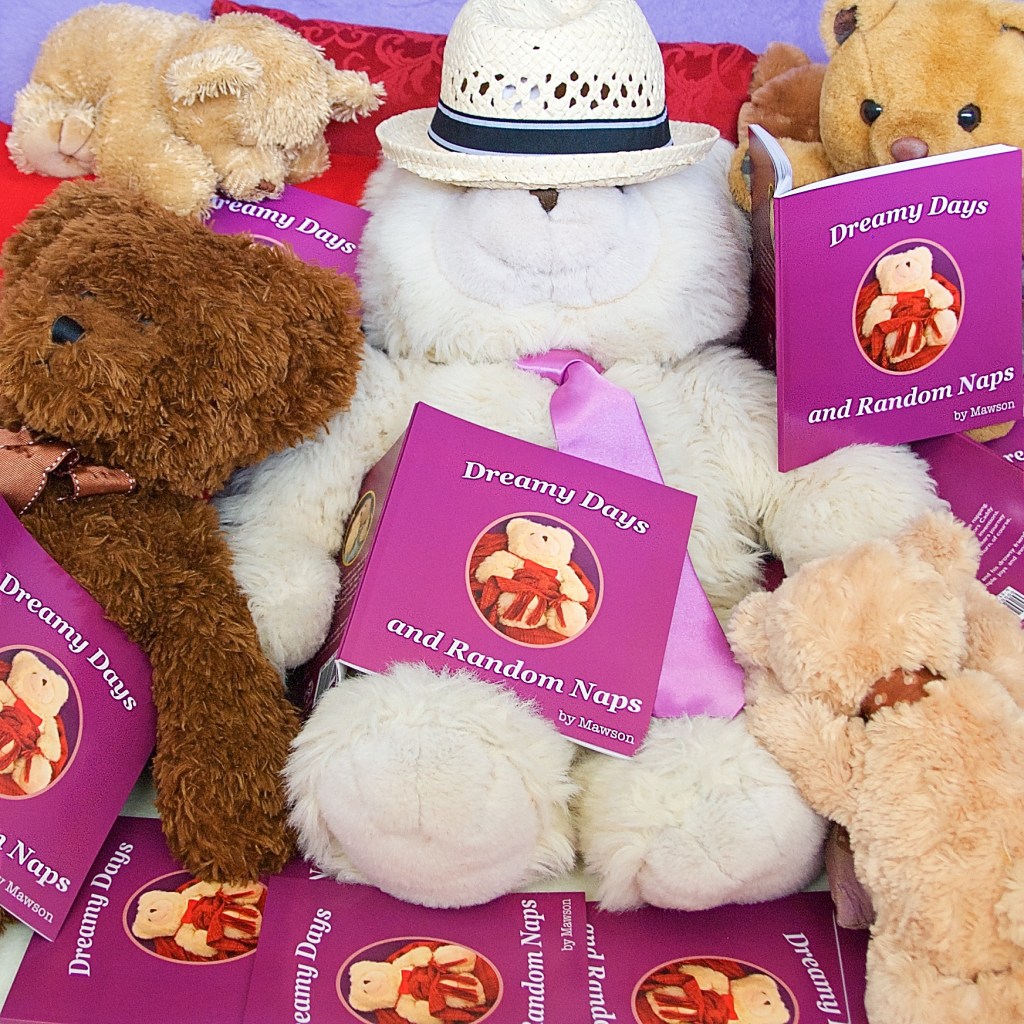
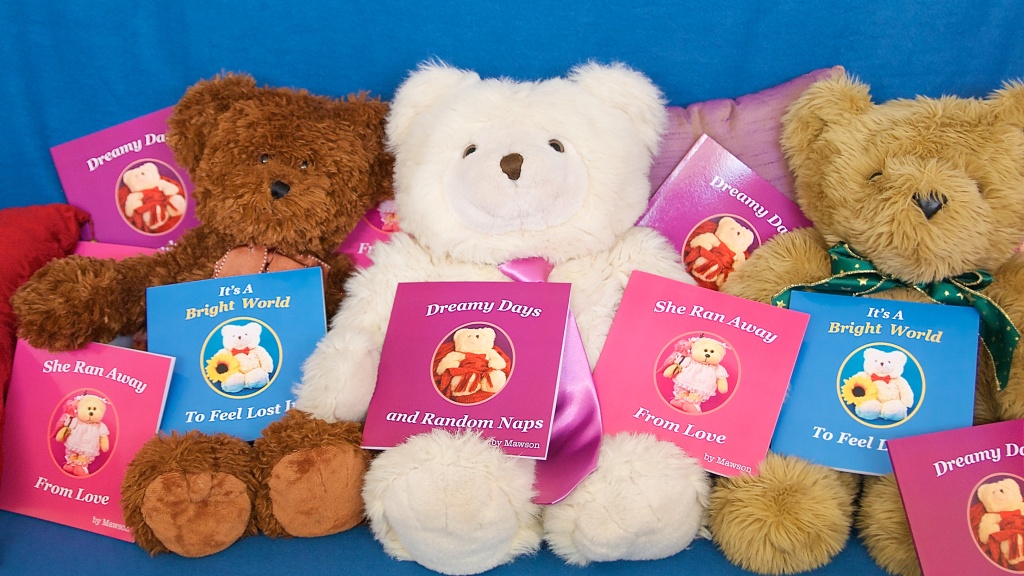
Mawson and friends look at his little books

It’s not easy being Grownup. All this business of having to be sophisticated and industrious all day long! It just wears you down. But when you arrive in Mawson’s cosy world, the frazzled reader can flop down among the cushions and relax.

Here you can find the answers to just about nothing at all. You can forget you ever had questions anyway.

Mawson writes little books that are not full of the answers to life. Or perhaps they are

Mawson and his friends are befuddled about most things most of the time – just like so many of us. And that’s all right.

She Ran Away From Love,is all about his friend Frilly feeling hopelessly baffled by Big Questions.

Frilly front cover.png

‘A brilliant children’s picture book that does well to pick you up from a bad day. Writing about love, dreams, happiness, and finding your own identity is all found within this short happy book.‘ Review on Amazon UK.

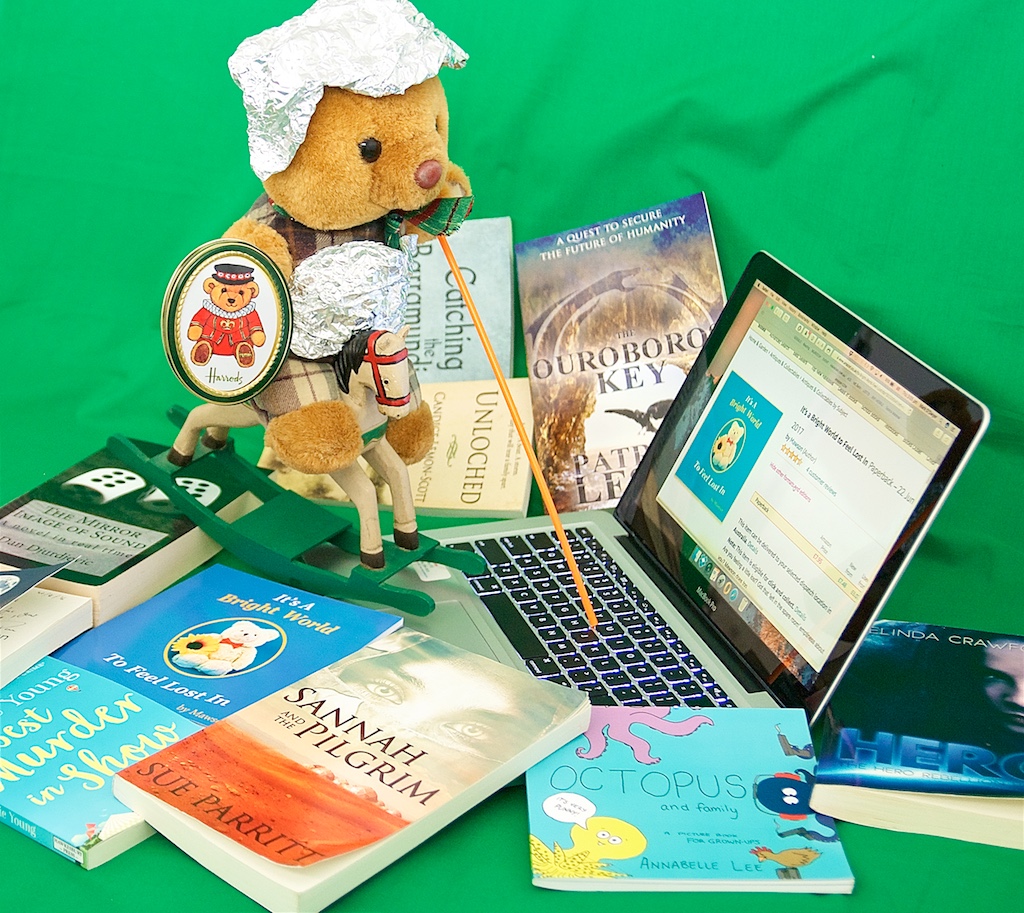
And in his first book, It’s A Bright World To Feel Lost In , Mawson attempts to put into words that mysterious feeling of Feeling Lost.

35128781

It’s A Bright World To Feel Lost In” is a book about optimism, searching for new adventures and making the most of life and love’. Review on GoodReads by Debbie Young, author of the Sophie Sayer Mysteries.

Ready comparisons can be made to the giants of literary beardom, such as Paddington and Winnie the Pooh. Joey Madia.

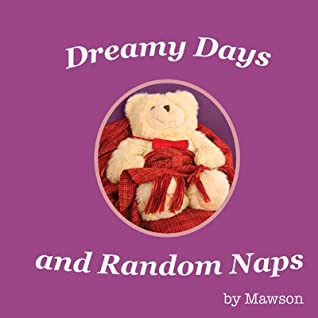
Dreamy Days and Random Naps looks at the joys of naps, sleeps, snacks, hopes and dreams.

Mawson is a precious teddy  who should be a staple read on every little one’s bookshelf. He certainly has a home on ours.  I know he certainly inspired my own inner child. Lyndie, Bookaholic reviews. 

Our publisher is Odyssey Books. Look also at Bookshop Org (supporting local bookshops), at Amazon everywhere, at Barnes and Noble, at Dymocks, at Booktopia, at Walmart, at AbeBooks, Mighty Ape (New Zealand), Google Books, at Booklubben and more. 

Mawson is all over the Bear Wide Web – except Twitter

Dear Friends. You can find Me, Mark, the Guardian, and Mawson (the furrier one) all over this bright world including, of course, right here at WordPress.

Mawson’s own Web Den on WordPress called www.mawsonbear.wordpress.com .

Our publisher is Odyssey Books, where you can find beautiful pictorial books, poetry, fantasy epics, memoirs, and great fiction.

Amazon in all regions: This link here is to Amazon dot com. Why not click FOLLOW on our Writer-Bear page at Amazon to see all our books and news.

All the books by Mawson Bear, the baffled writer-bear for our befuddled times

Mawson on Instagram: @MawsonBear

Mawson on Mastodon: @mastodon.au@mawsonbear

Mawson on Tik Tok: @modwyer34

Mawson Bear and Mark the Guardian
Mawson (the furrier one) and Mark

Mawson’s Guardian at Good Reads

OR use a Search Engine eg DuckDuckGo (to look for ‘Mawson Bear‘ and you will find four pages of links (beams proudly.)

Mawson Bear is the top hit on search engines for himself.
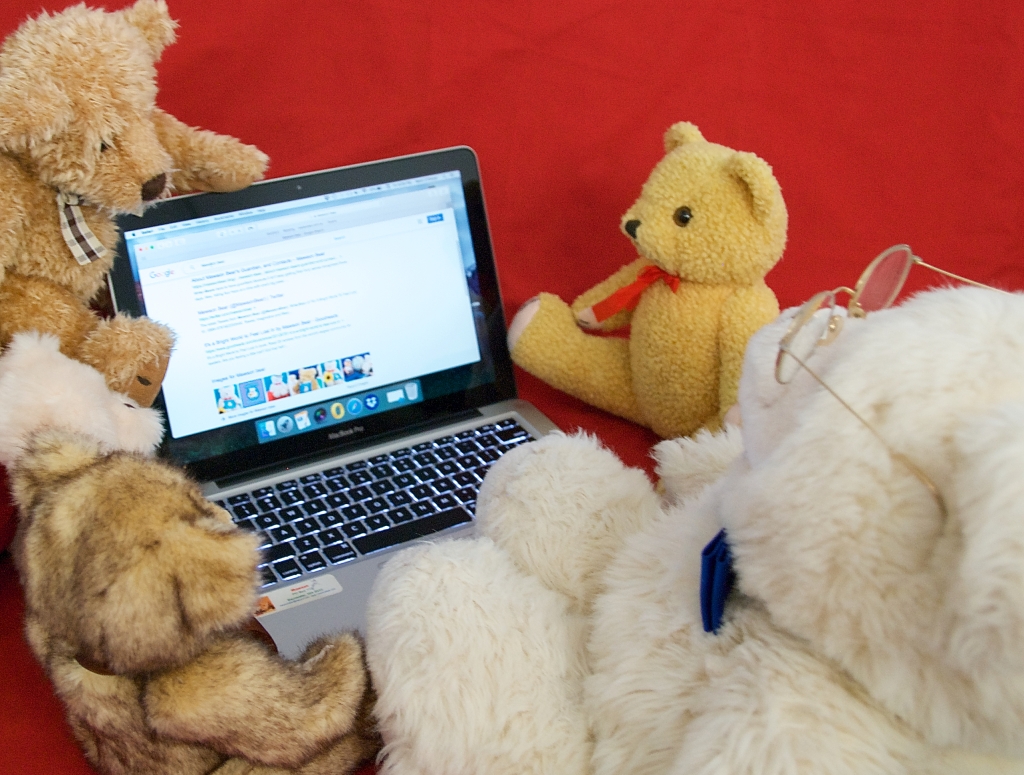
We looked for ‘Mawson Bear’,’ Mawson, and we found you!

Our publisher is Odyssey Books. Look also at Bookshop Org (supporting local bookshops), at Amazon everywhere, at Barnes and Noble, at Dymocks, at Booktopia, at Walmart, at AbeBooks, Mighty Ape (New Zealand), Google Books, at Booklubben and more. 

Your host, Mark, is Mawson Bear’s Guardian, photographer, editor, blundering typist, chocolates fetcher and cushions re-arranger. Baffled Bear Books ABN: 4787910119.

Where to find Mawson’s Guardian

Dear Friends. To rely on any one platform/service/outlet run by moguls/barons/billionaires is unwise. We have not put all our bears in one basket, oh no. You can find Me, Mark, the Guardian, and Mawson (he’s the furry one) all over this bright world including, of course, right here at WordPress.

Mawson’s own Web Den on WordPress called www.mawsonbear.wordpress.com .

Our publisher is Odyssey Books, where you can find beautiful pictorial books, poetry, fantasy epics, memoirs, and great fiction.

All the books by Mawson Bear, the baffled writer-bear for our befuddled times

Amazon in all regions: This link here is to Amazon dot com.

Mawson on Instagram: @MawsonBear

Mawson on Twitter: See @mawsonbear

Mawson Bear and Mark the Guardian
Mawson (the furrier one) and Mark

Mawson’s Guardian, Mark, on Twitter: See @Mawsonsguardian

Mawson’s Guardian at Good Reads

Mawson’s Guardian at Pinterest.

OR use a Search Engine eg DuckDuckGo (or Google if you must) to look for ‘Mawson Bear‘ and you will find four pages of links (beams proudly.)

Mawson Bear is the top hit on search engines for himself.
We looked for Mawson Bear, Mawson, and we found you!

Our publisher is Odyssey Books. Look also at Bookshop Org (supporting local bookshops), at Amazon everywhere, at Barnes and Noble, at Dymocks, at Booktopia, at Walmart, at AbeBooks, Mighty Ape (New Zealand), Google Books, at Booklubben and more. 

Your host, Mark, is Mawson Bear’s Guardian, photographer, editor, blundering typist, chocolates fetcher and cushions re-arranger. Baffled Bear Books ABN: 4787910119.

Table Top Wargaming in the 1970s

Fifty years ago when this world was very young, your correspondent’s hobby was War Gaming.

I don’t mean shootups on a screen at implausible digitalised foes. There were no screens then; we’re talking about the dark ages here, the 1970s. No, this War Gaming was played out with regiments of miniature figurines on a table covered in green paint or blaze cloth and set up with ‘terrain’ cobbled together from home made paper mache hills and railway-model trees and buildings.

A miniture figurine  regiment of Scots Guards advances. Brits to the left of them, cavalry to the right
Highlanders advance

These days there are  entire shops in shopping centres that sell excellent figurines. These are mostly figures of imaginary hordes loosely modelled on Tolkein’s orcs and various Star-Wars and other villains. But many wargamers still stick to the traditional idea of attempting to refight historic campaigns with forces more or less representing those of the (human) past.

Prussian infantry advances. Metal figurines.
Prussians advance according to plan

All War Gamers, whether they prefer Orcs or Elves, Persians or Prussians, Incas or Ghurkas, take pride in their labour of sourcing (recruiting), painting and marshalling their formations. The range of figurines available today, metal and plastic, covers every concievable era- and Middle Earth and several alternative universes. But in the aforementioned dawn of time when I were a lad, none of this was so.

My first ‘troops’ were cardboard ‘flats’; soldiers that I carefully copied from books, re-scaled, drew, and patiently cut out. My focus and patience on this activity amazed my parents because I was utterly clumsy at everything else. I was also hopeless at drawing anything else. Mum worked out where her best nail scissors had got to and retrieved them, a set-back which slowed my recruitment drive.

Maori, French Foreign Legion, Zouaves, French African Auxillaries

Then I chanced upon a packet of metal figures, some of which you see in these photos*. They represented forces from the 19th Century: British, Highlanders, Maori, Zouaves, Italians, Foreign Legion, Prussians and Austrians. Beautifully moulded and painted, they were sold in groups of five. They were expensive! I sank all my earnings from lawn mowing into this collection, recruiting soldiers five at a time until I had something of a force to manoeuvre. At that time the floor was my battleground and the furniture formed the terrain.

Household Cavalry moves out as the infantry hold the line
Household Cavalry moves out as Brits hold the line

In my teens, I discovered the plastic figures put out by ‘Airfix’. These were far cheaper and came in twenties. Box by box I recruited and handpainted my Romans, Ancient Britons, medievals, American Civil War troops and my ‘moderns’. (I am one of the few table top wargamers to have not bothered with the Napoleonic era.) Eventually, I could field mighty armies of a sort with up to 200 figures a side.

But in the early days, the only figurines I had were these few, hard-earned, difficult-to-source metal figures shown in the photos. Though I never used them after the age of 13, I have carried them about ever since from flat to flat, house to house. Today they are helping to show off to you my well preserved very first book of wargaming rules,

Wargaming requires rules, preferably a playable set with which contenders can set up their forces, clash, and come to a conclusion within two or three hours, all the while bickering away amiably. You need agreement on how to deal with movement, missile discharges, melees, morale, and casualties. Clubs of wargamers formed in the sixties especially in England. They created makeshift sets of rules, all different. This was no use to me in Australia nor to any other gamer, and there turned out to be many table top wargamers also in the USA.

Published 1969, bought by me in 1971 and still looking good. Defended here by Brits, Highlanders and Household Cavalry

Terence Wise’s 170 page heavily illustrated “Introduction to Battle Gaming” book changed this. His simple set of suggestions was indeed highly playable. With this book in hand, I was able to form a group of my own among my school mates. One of us focused on Napoleonics, one on Moderns, and two of us on other eras. Between us we enjoyed many hours of table top play along with the requisite amiable bickering.  But eventually we wanted something more challenging. I then discovered the Rules that for a long time dominated the small but growing wargaming people -those that were by published by the Wargames Research Group. I put Mr Wise’s book away. But clearly I have treasured it.  His was the publication that properly began the hobby for me, and for many others.

Troops: Prussians in grey, then clockwise,  Scots, some Brits, Italians along the top flanked by Zouaves, then Austrian Cavalr
Troops: Prussians in grey, then clockwise,  Scots, some Brits, Italians along the top flanked by Zouaves, then Austrian Cavalry

Where to Find Introduction to Battle Gaming by Terence Wise, published 1969 by Model and Alliled Publications Ltd, Argus Press Ltd: When I searched the Net to see where you might find this books, I was surprised to discover that other wargamers of the 1970’s vintage must still be about because several copies of this revered tome still exist, mainly through  Abebooks.com. There is also an updated version, apparently.

*I have forgotten the brand name of these soldiers and could perhaps make a miniature fortune on EBay if only I could remember it.

**Because the range even of the plastic figures was then limited, I would alter figures to resemble other troops eg by adding tiny spears and shields to certain Medievals to create Persians. I am amazed now that I ever did anything so finicky. All gamers then did such things. We researched our eras, and we were all possibly a bit barmy. They were good days. Good days.

AbeBooks. Thousands of booksellers - millions of books.

You are at Baffled Bear Books. Here writes Mark, guardian of Mawson Bear. Mawson is a Ponderer of Baffling Things and one of this bright world’s few published bears.  He is the writer bear of It’s A Bright World To Feel Lost In . Mawson has many qualitites but he is not a drop bear.

Asimov’s Foundation: revisited

Long ago, in the dawn of galactic history, way back in the 1970s, on the crust of a planet orbiting an insignificant star on the fringe of the star charts, a small bipedal creature hunched over well thumbed copies of secret lore printed on cheap paper and marvelled at the immensity of space and time.

From one end of the galaxy to another there was a crumbling Empire; and only Hari Seldon’s successors could save its billions of people from 30,000 years of barbarism. Maybe other kids like me felt like misfits as we fumbled at games and got relegated out of teams to merely keep scores on sports days. But we were involved in the sweep of galactic history. We also knew the Laws of Robotics by heart. We read Asimov.

I spent the earnings of my paper rounds (remember those?) on Asimov’s books. When I had enough cash (remember cash?) I made my pilgrimage to the sacred local bookshop. I’d approach the cash register already reading the first page and cycle home to read late into the night, straining my eyes at the tiny print and firing up ganglion after ganglion in my brain. Weeks would have to then pass before I could afford the next title, so what did I do? I read the titles I already had over and over again.

Asimov’s Foundation series appealed to me because they they were NOT space operas in which brawny jocks blew up green aliens and rescued females clad in scraps of cloth and leather. There are certainly wars in the story but they take place on the fringes. All the action is comprised of talk: talk and thought; people using their brains to solve vast problems of strategy, politics and the sweep of history. (‘I am .. not a clef-chinned, barrel-chested hero of a subetheric trimension thriller’. General Bel Rios to Brodig. Foundation and Empire.). To a teenager who was regularly pummelled by cricket balls because he never worked out how to catch them, this was great reading.

Eons passed. Propelled by my interest in Table Top Wargames, I read much history, and realised that Asimov’s ‘pyscho-history’ was well based on the events on good old brutal Earth. The decay of his Galactic Empire is loosely modelled on the fall of Rome. General Bel Riose, who retakes parts of the old Empire but falls foul of a suspicious Emperor is obviously inspired by Flavius Belisarius who angered Emperor Justinian of Byztantium by being too successful. The “Traders” and their Association recalled to my mind the early aggressive European traders such as the Portuguese and, later, the powerful East India Company. There are many points of inspiration that I eventually spotted -and I imagine fellow Asimovians did too.

More eons passed – let’s call them ‘human decades’. There I was the other day browsing in the sacred local library, repository of the wisdom of the ages (and an astonishing number of Harry Potter books) when Lo! I chanced upon all three Foundation titles.

“Read us, Mark”, they called in that quieter-than-thought but unmissable voice that books transmit when they spot their likely readers (You all read a lot; you know the voice I mean.) “You’ve only read us a dozen times before. Take us home. You don’t even need to do a paper run in the rain any more. Borrow us. We’re free from your local library.” Readers, your Correspondent borrowed them.

What an intriguing return journey this is. It’s like returning to the town where you grew up but being now able to see it differently. Look, there on the second page are the ‘calculator pads’ that Asimov imagined in the 1940’s*. I thought it would be wonderful to have something like that – and now I do. I call it a ‘smart phone’. And there is the reference to the planetary power source that I did not understand at all in the 1970s but now know to mean thermal power. And look, there is the basis of all sci-fi travel, beloved by novelists and movie makers, without which their stories would be impossible even as improbable fiction – the notion of ‘Hyper Jumps’.

With the magic of hindsight, I can see too how Asimov was still stuck in the 1940s and 1950s despite the far reach of his imagination. For one thing, the characters read newspapers. Another oddity, is that although Asimov crafted his Robot novels on the idea of a ‘positronic brain’, there is little computerisation in the Foundation series – although, to be fair, he was imagining a decaying civilisation in which nothing new got invented. And there is the omission worthy of note even to a teenage boy in the 1970s: there are few women; and such who do appear, like Batya in Foundation and Empire, are introduced with cringeworthy emphasis on their looks. Tobacco smoking remains prominent and the men light up cigars at any excuse. Smoking inside space ships! The thought chokes me up.

*These stories by Isaac Asimov were first published in magazine form by Street & Street Publications and the first paperback editions in 1952 by Gnome Press. The 2016 edition by HarperVoyager is the one which I photographed above (with my calculator-pad-smart-phone.)

Where to find the Foundation series: At BookDepository (free shipping) and Book Shop Org (supporting local bookshops). Or visit the sci fi section of your revered local bookshop, repository of the wisdom of the ages and of books that will call to you from the shelves, “Take us home, take us home.”

You are at Mark’s blog called Baffled Bear Books. Mark is a dark coffee tragic and bibliophile as well as the Guardian and blundering typist for Mawson Bear, Ponderer of Baffling Things and one of this bright world’s few published bears.

Going Postal about Book Postage?

The Problem: You look for a book on a book retail website. You send your order to the “Shopping Cart”. But what’s this? A delivery charge rises up on your screen like monster looming over the horizon. And the size of the thing!

‘Bother!’ You say. (You might say other words entirely and at some length, but this is a bear-friendly web-den.) And you change your mind about buying that book in print because the delivery cost has trampled over all your hopes. Is there another way? Why, yes. Read on.

Our Post Bear, Scottie, goes postal over particular postage problems of his own

BOOK SHOPS. Beating dinosaur sized postal costs Tip One: Visit your friendly local book shop. The book might be in stock, and if not the staff can order it in for you. This is good for everyone: you get your book, the book shop people take note that readers want this book and they consider getting more in, they stay in business, and in turn that means you can return there to book-bathe whenever you want to.

(‘Book-bathe’? you ask. Well, you’ve heard of how nature-bathing is good for the soul? So is book-bathing. You simply wander around places with lots of books and you start to feel better right away. That is also why staff in a bookshop are friendly and helpful: they get to book-bathe all day long … But I digress. Where was I? Oh yes, Tip Two.)

LIBRARIES. Beating Godzilla sized postal costs Tip Two. Visit your local library (where the staff are friendly because of all their book bathing). Reasons this is good: If you can borrow the book, you pay for neither the book nor postage; in Australia and some other countries the author still gets a fee for each borrowing (very small, but still a fee); and if book is not there, you can ask the staff to consider adding it to their stock. That is good for you, the library, the publisher and the author. Also, just by going to your library you are participating in your local community. All sorts of activities happen there. Maybe you’ll get involved in some.

SHOP AROUND. Beating road train sized postal costs Tip Three: Shop around with OTHER on-line retailers! Don’t stick with, for instance, ‘A-Far-Too-Powerful-Retailer-Named-After-A-River’ if it is gouging you more than it is serving you. There are other retailers, some listed at the end of this post. Several supply the book you want with free postage so long as it is within your particular country or region. One retailer does not charge ‘shipping’ or postage costs at all. Consider BookDepository.

Our Scotland the Brave shops shops around.

SPEND MORE. Beating fuel tanker sized postal costs Tip Four: This tip requires you to exercise restraint to a degree you did not know you had. You have to wait, yes, wait until three or four books of the books you want become available at a fair price. Then, you send them to the ‘Shopping Cart’ together. This often, but not always, gains you a waiver on the postage costs. Good things about this: you get more than one book and you save on postage. Not-good things about this: You have to spend more money than you probably meant to. And when the books do arrive, the To-Be-Read-Pile of books in your room gets so high that it topples over and buries you under hundreds of stories and your family doesn’t find your body for days because they just assumed you were reading your way through them all.

EBOOKS. Beating mammoth sized postal costs Tip Five. Go digital. Sadly, this means you will miss out on the pleasures of holding the book itself, enjoying its particular weight and texture, slipping your battered old book marks between the pages, shelving it in your favourite way (by colour, by height, by author, by subject, oh the possibilities), ostentatiously opening it up to read on the public transport, lending it to a good friend, seriously wondering about the ‘goodness’ of that friend when the book is not returned … But I digress. The thing is, there are no postage costs with them.

Your Challenge: Beat the postage monsters. You can do this, really you can.

Have a practice with getting your paws on Dreamy Days and Random Naps without postage costs. Like all of Mawson’s picture books for frazzled grownups (and by the time you have gone up against the postage monster you will be frazzled, believe me) this one is available all over the world including through:
 Amazon everywhere, at Amazon Australia (where Mawson sleepily lives), AbeBooks, Ad Libris,  Barnes and Noble (USA), Booklubben, Bookshop.org (Recommenced by me because it supports bookshops), Casa Bahia (Brazil), Dymocks and Booktopia (Australia), Desert Cart (several regions), Fa Saxo (Denmark),Linnaeus Boekhandel, Loot (South Africa), Mas Americanas (Brazil), McNally Jackson (New York), Mighty Ape (New Zealand), Pontio Frio (Brazil), Rahva Rahmat (Estonia, yes, Estonia – this bear gets around), Walmart (USA), Google Books, WH Smith ( UK), and more.
Hopefully, at one of these you will beat the postage monsters. Otherwise, back to the library! Our publisher is Odyssey Books.

Your host, Mark, is Mawson Bear’s Guardian, photographer, editor, blundering typist, chocolates fetcher and cushions re-arranger. Baffled Bear Books ABN: 4787910119.